What Is a Capsule Collection: 2026 Brand Strategy Guide
A capsule collection is a small, tightly edited set of 8 to 15 interchangeable garments designed to work together as one coherent statement, not a pile of random branded items. In practice, the strongest collections stay even tighter, with 6 to 12 coordinated pieces, and every item should pair with at least two or three others in the lineup.
Most advice on merch gets this wrong. It tells brands to make more stuff, cover more categories, and please everyone. That's how you end up with a forgettable tee, a cheap tote, and a hoodie nobody asked for. A capsule collection does the opposite. It cuts volume, sharpens taste, and turns branded apparel into something people want in rotation.
If you're asking what is a capsule collection, the cleanest answer is this: it's an intentionally curated set of interchangeable pieces built to express a brand clearly. Not swag. Not filler. A brand statement people can wear.
Table of Contents
- Use case one conference merch that feels intentional
- Use case two community drops for internet-native brands
- How many pieces should we launch with
- How far ahead should we plan
- What if we need low minimums or multi-address shipping
- What budget should we expect
- Can a capsule work for internal culture, not just public merch
Beyond Throwaway Swag
Most company merch fails because it was never designed to live past the handoff.
A founder orders a tee for a launch event, adds a cap because it feels expected, maybe throws in a tote because everyone else does it. That isn't a collection. It's a procurement list. If you want better outcomes than the usual drawer-bound leftovers, stop treating merch like event debris and start treating it like product.
The capsule concept has real fashion roots. The idea started with London boutique owner Susie Faux in the 1970s, then Donna Karan brought it into mainstream commercial fashion in the 1980s as a condensed, timeless expression of a brand rather than another bloated seasonal assortment, as outlined in this history of capsule collections and how to start one.
Merch usually fails because it has no point of view
The problem isn't branding. It's lack of curation.
A decent logo can't save a bad product decision. When teams order disconnected pieces with no shared silhouette, no fabric logic, and no styling intention, the result feels disposable. That's why so much "company swag" reads like obligation instead of desire.
Practical rule: If your merch can be swapped with any other startup's merch and nothing changes, you don't have a brand asset. You have generic inventory.
A capsule collection fixes that by forcing sharper decisions. Fewer items. Better hierarchy. More coherence. The hoodie relates to the tee. The cap relates to the outer layer. The color palette feels deliberate. The whole thing says one thing well.
If you're still thinking in terms of giveaway quantity, it's worth checking what already makes people tune out. This breakdown of best swag ideas is useful because it shows the gap between forgettable promo items and pieces people keep wearing.
The real shift is mental
Stop asking, "What should we hand out?"
Ask, "What deserves to exist under our brand?"
That question changes everything. It pushes you away from noise and toward a cleaner merch strategy built around taste, usefulness, and long-term brand memory.
What Defines a Capsule Collection
A real capsule collection isn't just "a few merch items." It has rules. That's what gives it clarity.
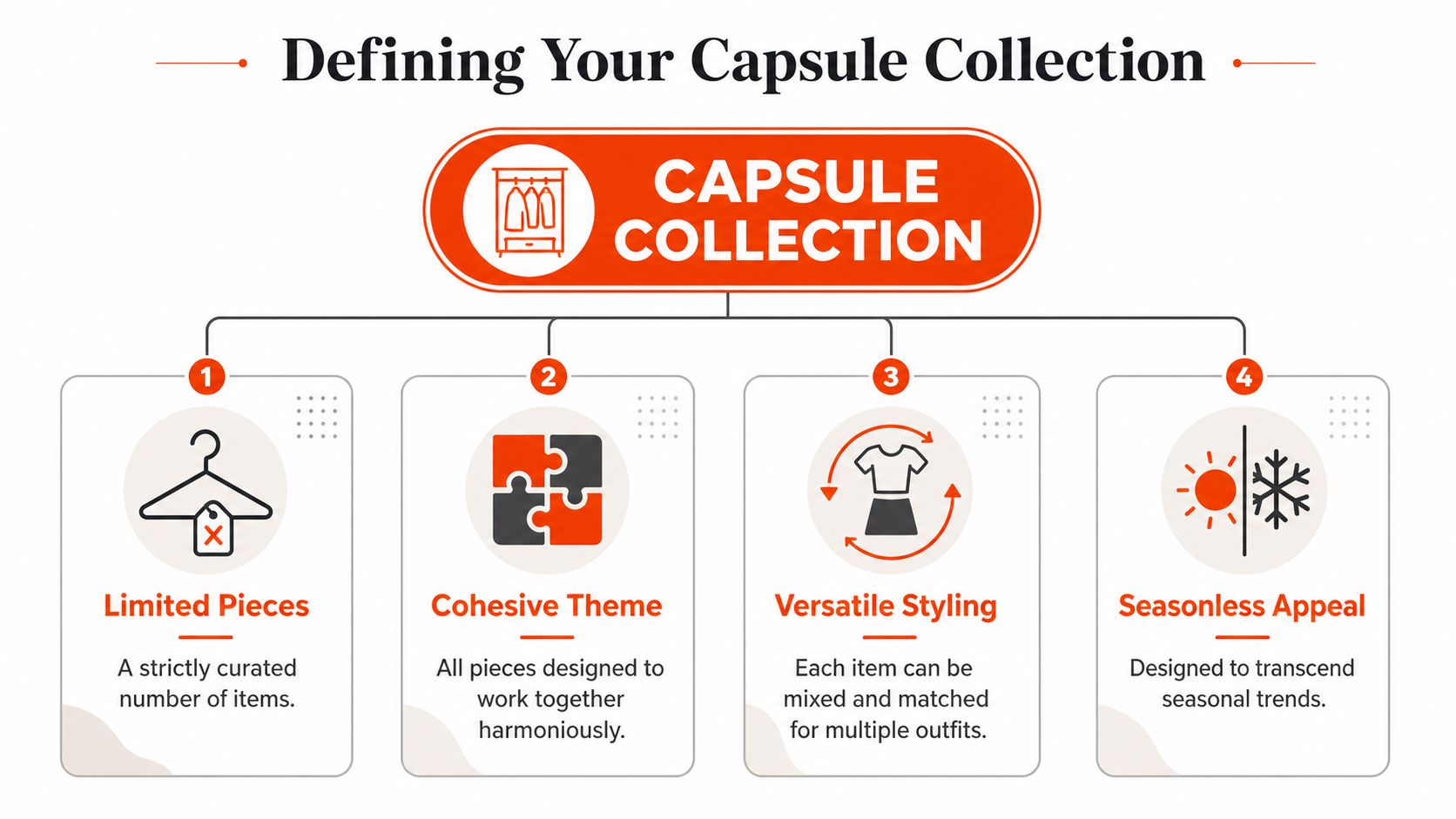
The cleanest definition is structural: a capsule collection is a constrained set of interchangeable garments, usually 8 to 15 pieces, with every piece designed to work with other pieces in the same drop. Luxury brands often compress that to 6 to 8 pieces, and the core requirement is that each item should mix with at least two or three others in the collection, according to this definition of a capsule collection for independent fashion designers.
The hard rules
If you want to answer what is a capsule collection without drifting into vague fashion talk, use these four filters:
- Limited size. You're not building a full range. You're editing aggressively.
- Interchangeability. Pieces need to work together, not just coexist.
- Shared visual language. Fit, fabric, graphics, trim, and color should feel related.
- Seasonless utility. The best capsules don't feel trapped in one trend cycle.
That last point matters more than brands admit. The strongest merch drops aren't built around a novelty moment. They're built around repeat wear.
For apparel-led brands, this usually means starting with foundational silhouettes. A heavyweight tee. A clean hoodie. A structured cap. A crewneck. Maybe one outerwear or accessory piece if it earns its spot. If you're building on premium blanks, this guide to premium blank t-shirts is a useful reference point for fit, weight, and finish.
Capsule collection versus standard merch drop
Here's the fastest way to see the difference:
| Approach | Capsule collection | Standard merch drop |
|---|---|---|
| Piece count | Tight, edited, intentionally limited | Often expanded without discipline |
| Design logic | Built as one system | Built item by item |
| Styling | Items mix across the set | Items stand alone |
| Perceived value | Feels like a drop | Feels like leftovers from a logo application exercise |
| Brand signal | Strong and focused | Diluted |
A capsule collection is less about having fewer products and more about making every product justify its existence.
What should actually be inside one
Not every brand needs the same capsule. But every strong one needs balance.
A practical mix often includes:
- A hero piece that carries the drop visually.
- Core daily-wear pieces that people reach for without thinking.
- One accent item that adds identity without breaking cohesion.
What you don't need is category inflation. More SKUs don't make the drop smarter. They usually make it weaker.
The Strategic Advantage for Your Brand
Brands love to talk about aesthetics because it's easy. The harder question is whether the merch is doing real work.
A capsule collection does, because it concentrates attention. Instead of scattering budget across disconnected items, you build a smaller line where each piece carries more meaning, more wearability, and more brand weight.

Why curation beats volume
The strongest business case is simple. Capsule collections push higher ROI per piece because the focused structure of 6 to 12 items cuts waste and forces better design judgment, turning merch from a cost center into a justifiable brand asset, as discussed in this analysis of capsule collection meaning and business value.
That matters if you're a founder, events lead, or VP Marketing trying to defend budget. Random merch is hard to justify because random merch doesn't build memory. A curated drop does. It gives your brand a point of view people can recognize.
Three brand gains show up fast:
- Story gets cleaner. A collection communicates one idea clearly instead of five weak ones.
- Merch feels more premium. Limited, coordinated pieces carry more perceived value than a pile of mismatched freebies.
- Internal adoption improves qualitatively. Teams are more likely to wear something that feels designed, not distributed.
Exclusivity changes behavior
Limited product changes how people treat it. They keep it, style it, post it, and remember where they got it.
That logic applies especially well to events. If you're building a conference capsule, the apparel should align with the rest of the physical experience. Stage design, signage, packaging, and staff presentation all need to read as one system. For teams planning activations, this piece on expert advice on event branding is worth reading because it frames branding as a full environment, not just a logo placement exercise.
This short video gives a useful visual sense of how fashion-led capsules create identity through editing, not excess.
The smartest merch strategy isn't "more options." It's fewer, better options people actually want.
If you're building for community, not just distribution, that's the whole game.
Bringing Your Capsule to Life The Production Playbook
Taste matters. Operations matter just as much.
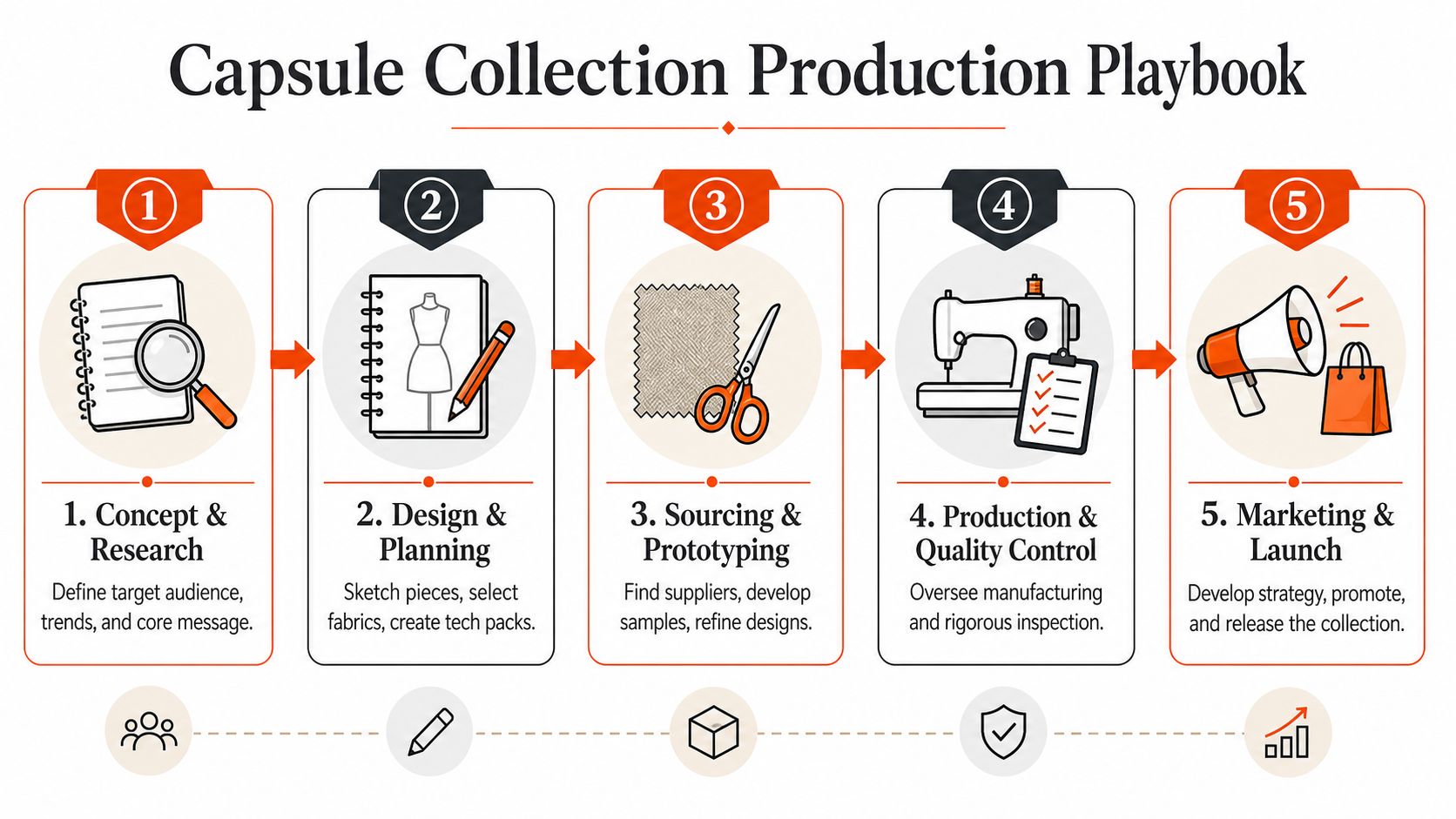
A lot of strong concepts die in production because nobody translated the idea into a buildable line. A capsule works when design, sourcing, customization, and launch planning all pull in the same direction.
Start with a system not a moodboard
Moodboards are easy. Merch systems are harder.
Begin by choosing one central idea for the drop. Maybe it's tied to a product launch, a community milestone, a city-based event, or a visual theme that already lives inside your brand. Then lock the line architecture. Decide which pieces are foundational and which piece earns hero status.
A clean planning sequence looks like this:
- Pick the silhouettes first. Choose the garments people will wear repeatedly.
- Set one fabric language. Similar handfeel across pieces makes the drop feel intentional.
- Choose decoration methods by garment. Embroidery, screen print, patches, and woven labels should serve the item, not fight it.
- Design packaging early. Unboxing is part of the collection, not an afterthought.
Don't design five good products separately. Design one coherent collection expressed through five products.
If the project needs full control over shape, trims, and fabrication, going custom from the ground up becomes the right move. That's where cut and sew apparel makes sense, especially when off-the-shelf blanks won't deliver the fit or details your brand needs.
Build the line like a manufacturer
The production logic of a capsule is one of its biggest advantages. Sharing fabrics and trims across 5 to 12 styles reduces sourcing complexity and lowers MOQ pressure, and the typical timeline from concept to delivery runs 14 to 20 weeks with a dedicated pre-launch marketing window, according to this glossary on capsule collection production.
That should shape your planning calendar. If the drop is tied to a conference, fundraiser, offsite, or product moment, you need creative approval early enough to protect quality.
A disciplined production playbook usually includes:
- Material consolidation. Fewer fabrics means smoother sampling and cleaner consistency.
- Trim discipline. Repeating labels, zip pulls, patches, or packaging elements keeps the line unified.
- Launch runway. Don't finish production and then start marketing. Build anticipation before inventory lands.
- Quality control at sample stage. Fix fit, print scale, stitch placement, and finishing before bulk.
What smart teams get right
They don't try to express everything.
They choose a lane, make the product feel credible, and leave room for the next drop. That's what gives a capsule collection rhythm. It doesn't need to solve your whole merch strategy in one launch.
Capsule Collections in Action Use Cases for Modern Teams
A capsule collection gets more interesting when you stop viewing it through fashion media and start viewing it through brand behavior.
The mistake a lot of teams make is confusing a personal capsule wardrobe with a commercial capsule collection. Those are not the same thing. A capsule wardrobe is about personal longevity. A commercial capsule is a limited, often off-season release built for impact and fast sell-through, which makes it especially useful for community drops in tech and Web3, as explained in this overview of the capsule wardrobe concept.

Use case one conference merch that feels intentional
A fintech team heading into a flagship event shouldn't hand out one generic tee to everyone in the room.
A better move is a tiered mini-capsule. Staff wear one version. Speakers get a more premium package. VIP guests receive a tighter edit with better finishing and packaging. Same design language, different role in the ecosystem.
That approach makes the event feel designed end to end. If you're mapping the broader attendee experience, these EventUploader's tips for memorable events are a useful complement because they focus on engagement touchpoints that people remember after the event is over.
Use case two community drops for internet-native brands
Here, capsule strategy gets sharp.
A creator can build a focused apparel line around one visual world instead of releasing random merch every month. A Web3 protocol can reward top contributors with a limited drop that marks a governance milestone. A remote startup can send a cohesive onboarding kit that feels like culture, not HR admin.
The key is controlled distribution. Some capsules are for sale. Some are invite-only. Some are earned.
Here are a few strong applications:
- Remote team onboarding. A coordinated set of wearable basics makes the first week feel intentional.
- Quarterly contributor rewards. Small commercial capsules create status inside communities.
- Launch-week founder kits. Limited internal drops can mark major product moments without going broad.
- Creator merch resets. A smaller edited line feels more credible than a crowded storefront.
Once the collection exists, execution matters. Teams sending drops to distributed staff, partners, speakers, or creators need logistics that don't break the experience. That's where reliable merch fulfillment services become part of the strategy, not just the backend.
A good capsule doesn't just carry a logo. It gives people a reason to feel inside the brand.
Common Questions from Marketers and Events Leads
The practical questions are usually the ones that decide whether a capsule gets approved or stalled. Here are the straight answers.
How many pieces should we launch with
Start smaller than your instincts tell you.
A capsule collection only works if the edit is disciplined. If this is your first serious drop, don't try to cover every category. Build around the pieces your audience already wears most. For many teams, that means a tee, hoodie, cap, and one complementary item. If you need flexibility without committing to large volume, options for custom apparel with no minimum can help you test categories more intelligently.
How far ahead should we plan
Earlier than most event teams expect.
If the capsule includes custom finishing, packaging, or multiple garment types, you need real planning room. The production timeline discussed earlier is a good discipline check. Then add internal review time, fit approvals, shipping coordination, and content capture.
A simple planning order helps:
- Creative first. Lock concept and product mix before debating minor logo placements.
- Approvals second. Get decision-makers aligned early so revisions don't drag into production.
- Distribution third. Decide whether this is for attendees, staff, customers, creators, or community members before you place the order.
What if we need low minimums or multi-address shipping
Then design the capsule around that reality instead of pretending you're a global fashion house.
Most modern teams don't need huge inventory piles. They need flexibility. That means smaller runs, selective gifting, and clean shipping workflows across offices, homes, speakers, or talent partners. This matters even more when the apparel is part of a trade show or expo setup, where the booth, the team uniform, and the takeaway item should all feel aligned. If you're planning the physical environment too, reviewing custom exhibit booths can help frame how apparel and space design work together.
What budget should we expect
Treat budget as a function of complexity, not just quantity.
Fabric upgrades, garment weight, trim development, packaging, and customization method all move the number. So does whether you're using premium blanks or building cut and sew from scratch. The right budget question isn't "What's the cheapest version?" It's "What version will people keep wearing without embarrassment?"
Can a capsule work for internal culture, not just public merch
Yes. In a lot of cases, that's where it works best.
Internal drops create belonging fast when they feel wearable. New hires read the brand through what they receive. Speakers and community contributors read status through what they get access to. The apparel becomes a social signal inside a company or ecosystem.
If your team wouldn't choose to wear it off-camera, it isn't doing enough brand work.
A good capsule collection is a filter. It removes weak ideas, sharpens the strong ones, and gives your brand something rare in merch: restraint. That's usually what makes it memorable.
If you want to build merch your team wants to wear, Banger is built for exactly that. From premium European blanks and cut-and-sew capsules to French atelier production, low minimums, and worldwide fulfillment, Banger helps internet-native teams launch sharper branded apparel without falling back into throwaway swag. Explore the catalog, request a quote, or get product previews within 24h.