Alpaca Wool Beanies: The Premium Merch Upgrade
You've probably seen this play out. A team orders a pile of beanies for a launch, the photos look decent, the box gets opened in the office, and then half the hats disappear into drawers before winter even hits. That usually isn't a logo problem, it's a fiber problem. If the beanie feels boxy, itchy, sweaty, or too bulky under a hood, nobody's “building brand love” by wearing it twice.
Alpaca wool beanies solve a very specific merch problem, they feel premium fast, they wear light, and they don't read like disposable swag. The catch is that not every alpaca hat is worth the money. Grade, knit density, and how honest the sustainability story is all matter a lot more than most product pages admit.
Table of Contents
Why Most Branded Beanies End Up in a Drawer
The classic failure mode is easy to spot. Someone grabs a free beanie at an event, wears it once on the way home, then never reaches for it again. The fit feels generic, the fabric has no personality, and the hat behaves like a promo item instead of a real accessory. That's why even decent logos can't rescue bad headwear.
The issue is that most brands optimize for decoration, not wearability. They pick the cheapest knit that can hold a mark, then act surprised when the beanie doesn't become part of anyone's actual rotation. If you want merch people keep wearing, start with the material, not the artwork. A good logo on a bad hat still looks like a bad hat.
That's where premium natural fiber changes the equation. Alpaca wool beanies feel like an upgrade the second someone touches them, and that matters more than a flashy launch strategy. If you're planning branded headwear, the smartest starting point isn't “what color should the patch be,” it's “what fiber deserves to carry the brand?”
If you want a wider merch menu that doesn't feel like leftover convention inventory, I'd pair this thinking with better swag ideas that are built to get worn, not just handed out.
The beanie itself decides whether people wear it daily. The logo just gives it a reason.
What Alpaca Wool Is
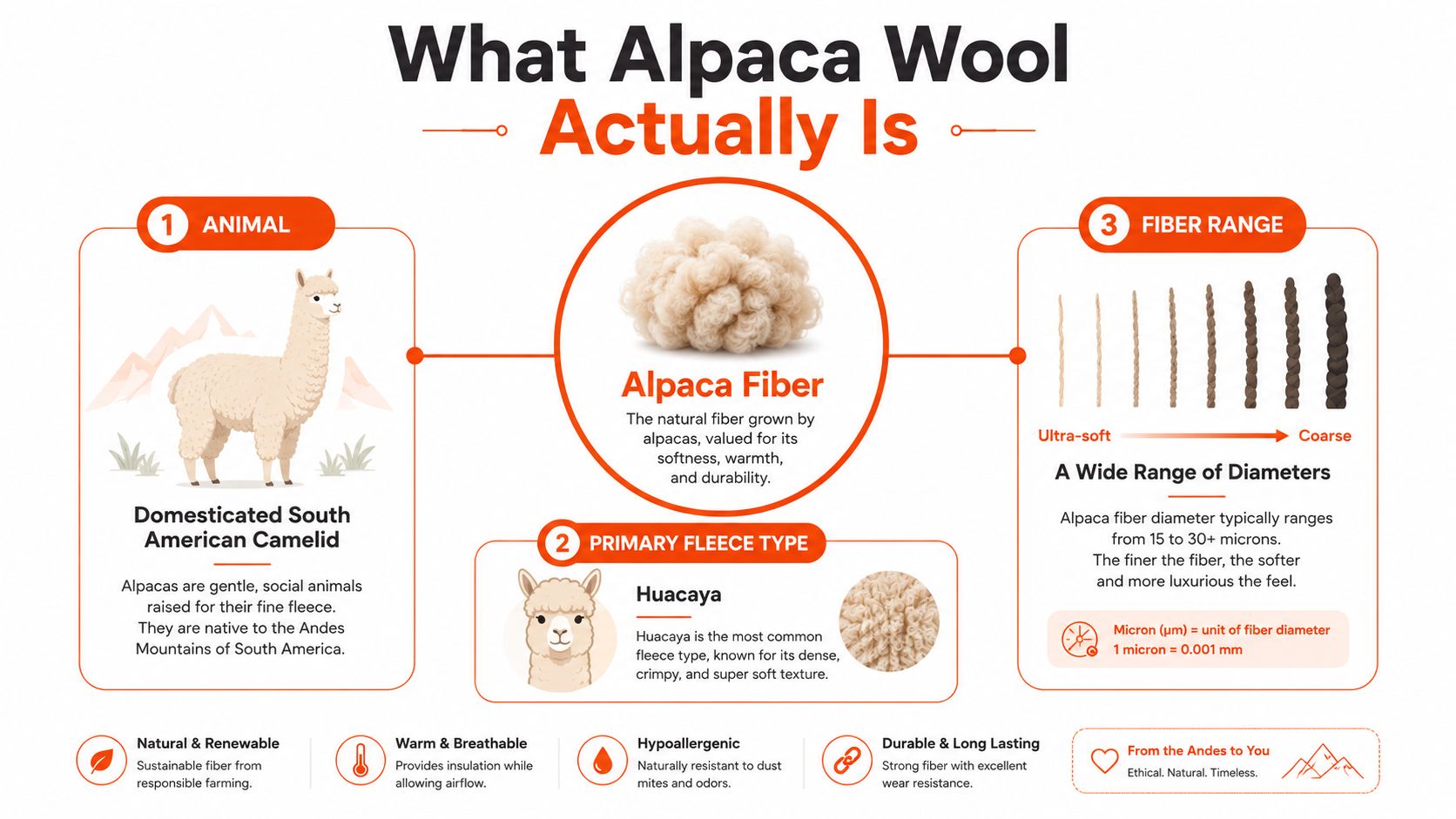
Alpaca is a domesticated South American camelid, and the fleece is the natural fiber harvested from the animal. The most common fleece type is Huacaya, which has a texture closer to wool than to a silky drape. That matters because beanies need structure, not just softness. A hat has to hold shape, sit cleanly on the head, and still feel good after repeated wear.
The fiber range is wide, roughly 16 to 30 microns, with young adult fleece often cited around 18 to 22 microns (Happy Wool). In plain English, that puts good alpaca in the zone where it can feel soft without turning flimsy. The fiber itself is part of the product story, but the supply picture matters too, because alpaca production is concentrated enough to stay traceable and premium rather than diffuse and commodity-like.
Textile Exchange reports more than 6 million alpacas globally, with Peru accounting for 71.7% and Bolivia 8.6% of the herd, while the Discover Natural Fibres Initiative estimates around 3 million head worldwide and says about 80% are in the Andes (Textile Exchange). That same source says one alpaca yields about 3 kg of fibre annually, and Peru's annual output is about 6,500 tonnes, with roughly 80% exported to textile makers in China, Germany, and Italy. So when you buy alpaca, you're buying into a supply chain that already sits in the premium lane.
What the fiber tells you about the hat
A beanie made from alpaca starts with a material that behaves in a very specific way. Fine fiber improves hand feel, while a concentrated supply chain explains why the product tends to price like a premium accessory instead of a basic knit cap. That is the mental model to keep in your head when evaluating product pages.
For teams thinking about merch planning and category strategy, AI commerce growth tips are useful context, because the same sourcing logic that makes a hat feel premium also affects how well it fits a branded merch lineup.
Why Alpaca Beanies Feel Warmer and Lighter
The reason alpaca works so well in headwear is structural, not mystical. Alpaca fiber has a semi-hollow, medullated core, and that trapped air is what gives it serious insulation without adding a lot of weight. Independent textile guidance says this structure can deliver roughly 20 to 30% more thermal insulation than merino wool of the same weight while staying lighter on the head and neck (Wolpakka).
That matters in everyday life. A commuter beanie needs to disappear under a hood, fit under a bike helmet, and still keep the wind off your ears. A heavier knit can be great for brutal cold, but it can also get annoying fast if your use case is walking to the office, jumping on a train, or moving between indoors and outdoors. Alpaca gives you more room to stay warm without overbuilding the hat.
Practical rule: if the beanie has to work under other gear, choose a lighter profile with a tighter knit before you add bulk.
Knit density beats brute thickness
Buyers love to over-spec thickness because it feels safer. That's usually the wrong move. A tighter knit often does more useful work than a chunkier hat that traps heat but feels bulky and compressive. If you're designing for a broader audience, I'd bias toward warmth through construction, not just yarn volume.
For teams thinking about merch planning and category strategy, AI commerce growth tips are useful if you want to see how modern buyers respond to products that are easy to choose and easy to wear. The same logic applies here, make the hat feel obvious, not complicated.
The useful buying mindset
Don't ask whether alpaca is “warm enough.” Ask whether the beanie is warm in the right way for the climate and the wearer. If it's a city beanie, keep it sleek. If it's for outdoor winter events, you can go denser. Either way, the fiber's warmth-to-weight profile is the whole point.
Alpaca vs Merino vs Cashmere vs Acrylic
If you are buying beanies for a brand, the decision is straightforward. Merino is the safe default. Cashmere is softer, but it only makes sense when the moment feels premium enough to justify the cost. Acrylic is cheap, and it usually looks cheap too. Alpaca sits in the premium lane where warmth, lightness, and longevity all pull in the same direction.
Alpaca fiber ranges from 16 to 30 microns, with young adult fleece often cited around 18 to 22 microns, and it is described as softer, more durable, and lighter than sheep's wool. That is the core of the comparison. Alpaca does not win because it is the softest fiber on the rack. It wins because it gives you a strong mix of comfort, performance, and a premium hand feel without feeling fussy. For a broader product line, our guide to choosing hoodie blanks makes the same basic point, the base material sets the ceiling for how the finished piece will wear and feel.
| Fiber | Warmth-to-Weight | Next-to-Skin Softness | Durability | Typical Price Tier |
|---|---|---|---|---|
| Alpaca | High | High | High | Premium |
| Merino | High | High | High | Mid to premium |
| Cashmere | Very high | Very high | Moderate | Luxury |
| Acrylic | Moderate | Low to moderate | Low to moderate | Low |
How I'd actually choose
If you need predictable wear across a wide audience, merino is still the safest call. It is familiar, easy to wear, and does not ask the buyer to think too hard.
If the drop needs to feel noticeably better than standard knitwear without jumping all the way into cashmere territory, alpaca is the sweet spot. You get a more refined touch and a stronger premium signal without turning the beanie into something precious. If the goal is a high-status piece for a small, intentional audience, cashmere can make sense, but only if the rest of the product and pricing are built to match.
Acrylic belongs at the low end of the stack. Use it when the budget is tight and the role of the hat is to fill a simple merch need, not to become a piece people reach for all winter.
The Honest Sustainability Story
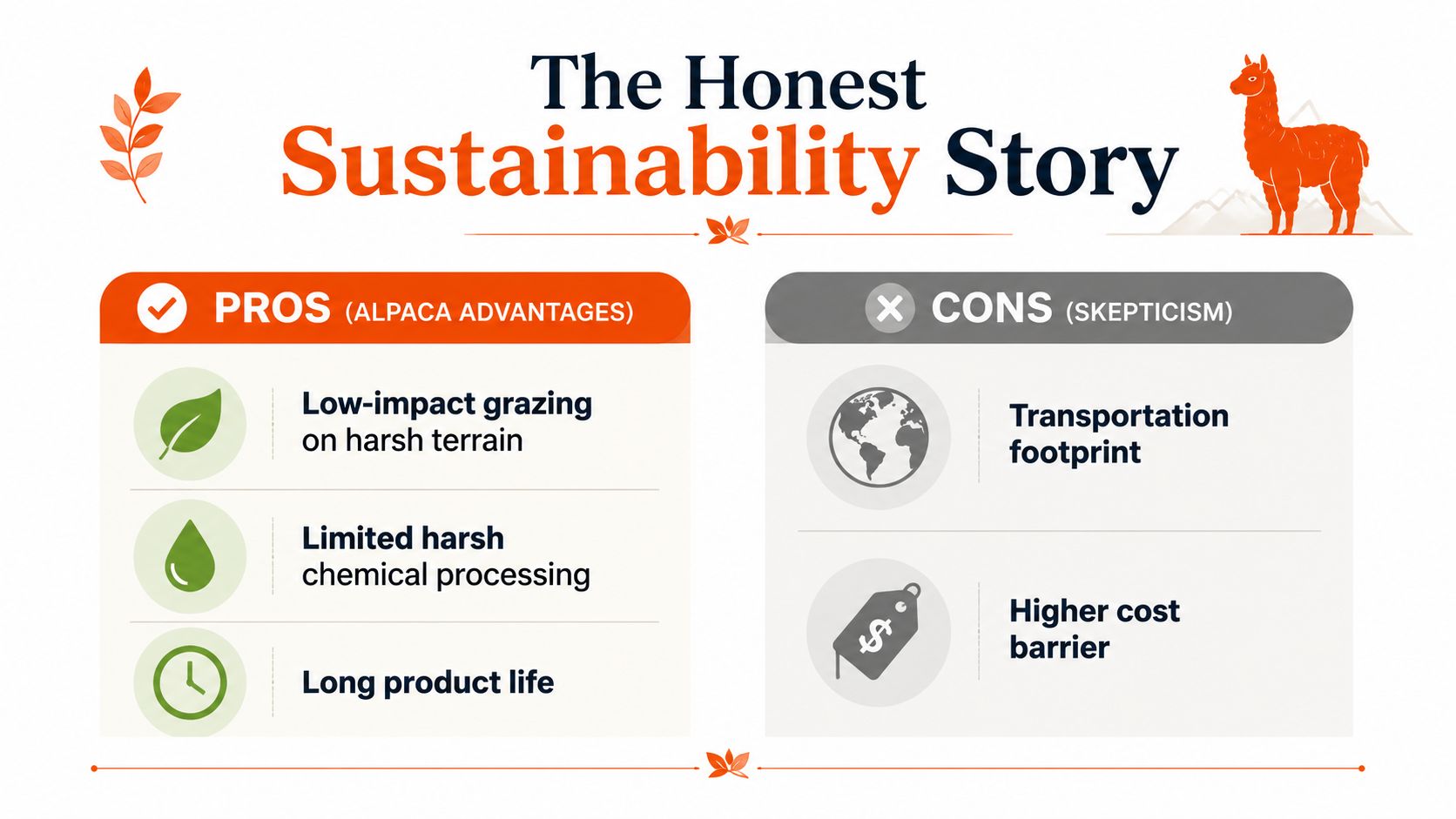
Alpaca gets a lot of clean-eco branding, and some of that is deserved. Independent commentary argues it can be one of the more sustainable options because of low-impact grazing on harsh terrain, limited harsh chemical processing, and durability. That said, no manufacturing process is footprint-free, and anyone selling alpaca as pure virtue is skipping the hard part of the conversation.
That's why the better pitch is restrained. Alpaca can be a good sustainability story because the material is long-lasting and the animal-to-fiber process is relatively low intervention, but transport from South America still exists, and the final product still has real cost. Don't oversell it. Buyers can smell greenwashing from a mile away, especially in merch.
Why premium pricing is part of the story
High-quality alpaca fiber sells for roughly $2 to $4 per ounce at retail, with average wholesale around $0.50 to $0.75 per ounce (Classical Alpaca). That pricing is a clue, not a flaw. You're not buying a commodity material that can be treated like throwaway event stock. You're buying into a fabric class that naturally wants to be used as a long-life accessory.
The skeptical teammate test
If someone on your team asks whether alpaca is “sustainable,” give them the balanced answer. It has genuine material advantages, but it's still a premium product with tradeoffs. That framing is stronger than vague eco language because it sounds like someone who has shipped merch before, not someone reading from a recycled brand deck.
Choosing Grade, Knit, and Care for Real Wear
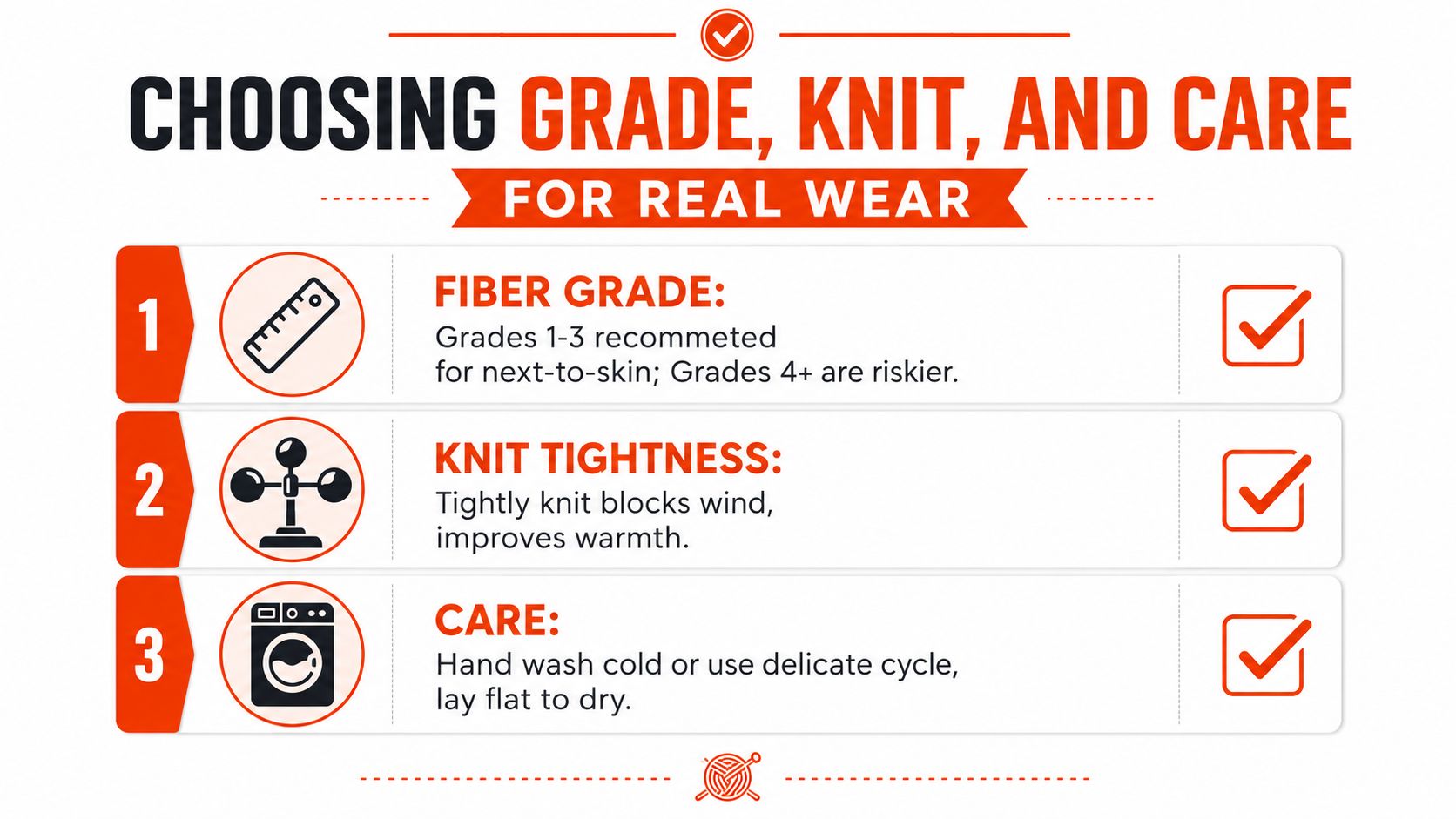
A lot of buyers get sloppy. A beanie can look gorgeous in a mockup and still fail in practice if the fiber grade is too coarse or the knit is too loose. A buying guide warns against using alpaca grade four or greater for garments worn next to skin and also notes that a tighter knit increases warmth by blocking wind (Cotton Creek Farms). That's the kind of detail that separates a wearable hat from one that sits in storage.
What to specify before you order
- Fiber grade: keep it in the softer range if the hat touches skin directly.
- Knit tightness: go tighter if the wearer needs wind resistance.
- Fit profile: choose slouchier only if you want a fashion-led shape, not a technical one.
- Cuff depth: use a deeper cuff if you want more forehead coverage and a more substantial look.
Care that keeps it premium
Use gentle washing, avoid high heat, and store it folded, not hanging. That's not glamour advice, it's what keeps a natural-fiber beanie looking like a premium item after repeated winters. If you want the hat to behave like a long-term wardrobe piece, you've got to treat it like one.
A clean rule: buy less bulk than you think, then let grade and knit do the work. If you need help thinking in fabric weights instead of vibes, GSM guidance is the right lens to borrow from apparel, even though beanies don't always get discussed that way.
Turning Alpaca Beanies Into Branded Merch
Alpaca beanies are better when the branding respects the knit. Flat embroidery works when the mark is clean and the placement is simple. 3D embroidery can work too, but only if you keep the design compact. Woven patches, leather patches, and custom labels are often the safest routes because they preserve the softness and loft of the hat instead of crushing it under too much ink or coverage.
Heavy screen printing is usually the wrong move on alpaca knits. It flattens the texture and makes the hat feel less like a premium accessory and more like decorated inventory. If you're building a team drop, keep the customization tactile and minimal. The goal is to make the beanie look intentional from across the room and still feel good in-hand.
What a real merch flow looks like
A solid production partner should be able to show you blanks, decoration options, and preview files before you commit. One option in this space is Banger, which works with premium custom merch, including beanies, and handles product sourcing, decoration, and fulfillment under one roof. The point isn't to overcomplicate the process, it's to reduce the number of places where a good hat can get ruined.
If you're coordinating with creators or brand partners, connect with verified brand influencers only after you've locked the product spec. Influencer gifting works when the object is wearable. It fails when the product looks like it was chosen for the spreadsheet instead of the audience.
Don't skip the merch math
The alpaca apparel-and-accessories market was valued at USD 706.9 million in 2024 and is projected to expand at a 7.6% CAGR through 2030, with growth driven by demand for natural, sustainable, and luxury fibers (Grand View Research). That's exactly the lane premium branded beanies benefit from. You're not fighting the market when you choose alpaca, you're aligning with it.
For the full production path, how to create merchandise is the right practical reference if you're moving from idea to actual drop.
When Alpaca Wool Beanies Are Worth It
Use this test. First, who's going to wear the hat, and what climate are they in? Second, how long do you want it to last? Third, does the brand moment justify a material that signals premium from the first touch?
If the answer is “cold-weather audience, long wear life, and a brand moment that matters,” alpaca is worth it. If you're handing out thousands of units at a noisy event where price matters more than retention, you probably don't need it. That's not a moral judgment, it's just product fit.
The smartest teams treat alpaca like a deliberate merch upgrade, not a default. It works for launches, VIP gifting, executive kits, and winter drops where people will notice the difference. It's less useful for mass giveaways, where the hat is mainly a vehicle for volume.
If you want a broader lens on distribution and merchandising decisions, apparel selling strategies are useful because they force the same question every time, will people choose this when they have other options? That's the right bar for an alpaca beanie too.
If you're building a drop and want help choosing the right hat, team apparel supplier is the practical next read. Then request a quote, compare a few mockups, and only move forward if the beanie feels like something your team would keep on their heads.
A CTA for Banger.