On Demand Shipping for Merch: A Guide for Modern Teams
The worst merch jobs always start the same way. There's a stack of hoodies in the office, a customs form for a single tee, and a spreadsheet with 50 addresses that somehow all need different labels, different countries, and different timing. By the time someone from marketing starts asking where the launch box is, the whole thing already feels like logistics wearing a brand hat.
For modern teams, on demand shipping is the clean way out of that mess. It lets premium merch be stored, picked, packed, and shipped piece by piece only when someone needs it, which is a much better fit for distributed teams, event moments, and creator drops than old-school bulk guessing. If sizing has ever been part of the headache, understanding sizing challenges in fashion is a useful parallel, because the core problem is rarely just shipping, it's the mismatch between inventory decisions and real human bodies.
Table of Contents
- The End of the Merch Logistics Nightmare
- What On-Demand Shipping Actually Means for Premium Merch
- On-Demand Versus The Old Way of Doing Things
- Game-Changing Use Cases for Modern Teams
- The ROI Beyond Simple Logistics
- Your Playbook for Launching a Drop
- Ship Merch Like a Modern Brand
The End of the Merch Logistics Nightmare
A good merch program should feel like a brand moment. Too often, it feels like someone in ops is babysitting boxes, chasing missing sizes, and reworking addresses at midnight because a conference attendee moved hotels. That's not a merch strategy, that's damage control.
On demand shipping fixes the part nobody wants to talk about, the pile-up between production and delivery. Instead of sending everything to one office and hoping for the best, the merch lives in a fulfillment setup until a recipient detail comes through, then it goes out as an individual shipment. That's the difference between a one-off campaign and a repeatable system.
For teams shipping globally, that matters fast. One department can send onboarding kits to new hires in different cities, another can send creator boxes to a shortlist of partners, and events can push branded apparel directly to attendees without moving inventory through three temporary locations first. It's also a better fit for categories where fit and presentation matter, especially if you've spent time working through merch fulfillment services.
Practical rule: if your team is spending more time coordinating labels than thinking about the creative, the fulfillment model is wrong.
The shift is simple. Merch shouldn't behave like warehouse filler. It should behave like a controlled brand asset that ships when needed, where needed, and in the form the recipient expects.
What On-Demand Shipping Actually Means for Premium Merch
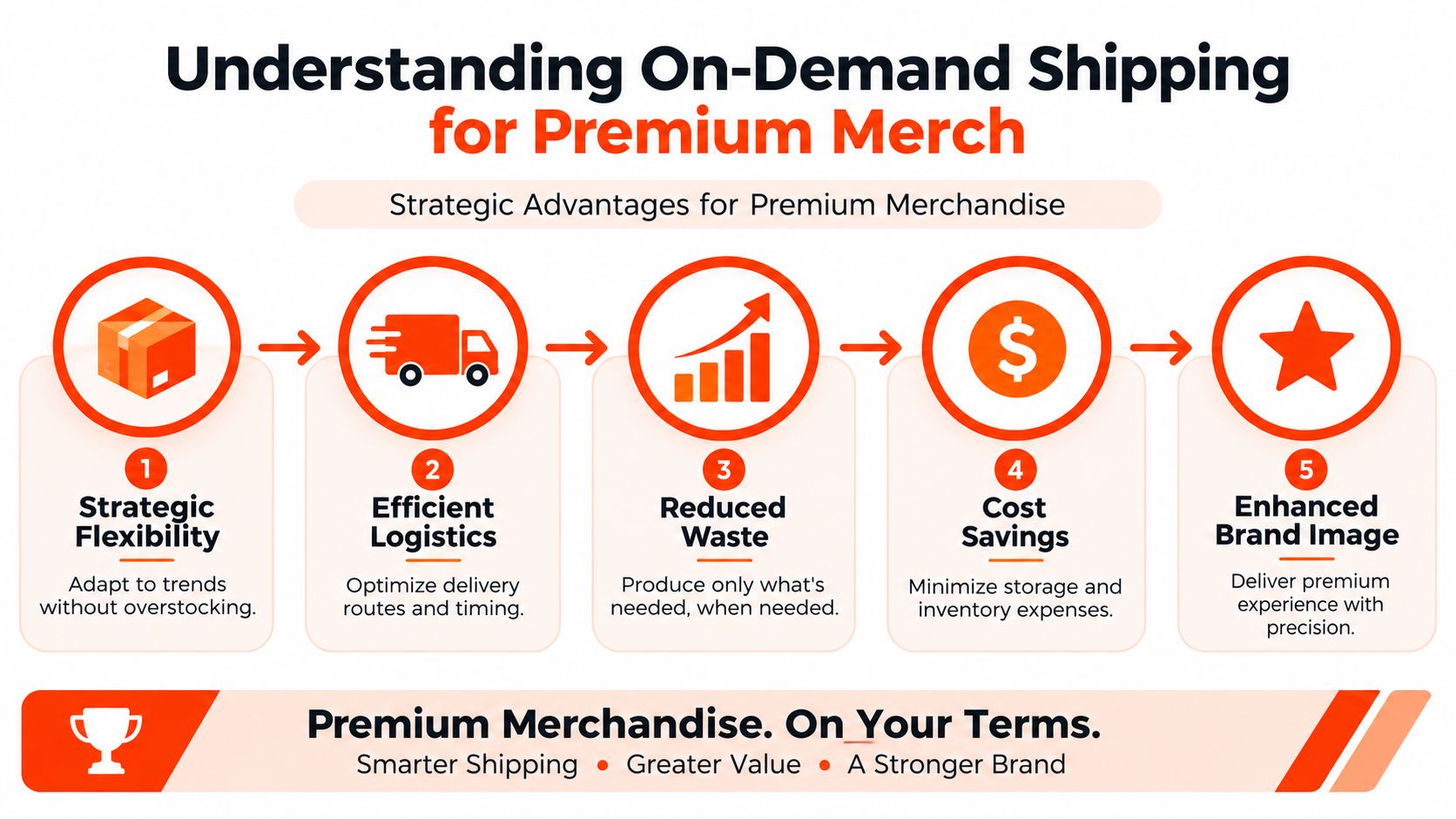
Think of it as a global merch closet for your brand. The product is already made, stored securely, and ready to move the moment an order or recipient list is confirmed. For a premium apparel program, that means the creative team can design the piece once, then keep the experience consistent across launches, offices, communities, and countries.
The actual workflow is more practical than flashy. Inventory sits in a fulfillment facility, the order comes in, the item gets picked, packed in branded packaging, and dispatched to a single person or a list of recipients. That's materially different from batch shipping, where everything leaves in one big wave and the brand has to absorb the friction after the fact. If you're comparing operational setup options, custom apparel no minimum is a useful companion read because it shows how low-volume production and on-demand delivery can work together.
The reason this model works is timing. On-demand systems are built for real-time dispatch, using live data for order capture, route assignment, and customer tracking as a continuous flow, which is how they can support delivery windows from hours to a few days rather than behaving like a batch process, according to Elite Extra's guide to on-demand delivery. That structure matters for merch because the brand isn't just shipping fabric, it's shipping anticipation.
A premium shipment feels better when it arrives as a precise handoff, not as a bulk cleanup task.
The strategic upside is control. You're not guessing who needs what, you're keeping the product ready until the moment it's wanted. For culture-driven brands, that's the whole point.
On-Demand Versus The Old Way of Doing Things
A bulk buy still looks tidy on a spreadsheet. The trouble starts after the PO clears, because someone has to store the cartons, sort sizes, replace damaged pieces, and answer the steady stream of “can you send me one in large?” requests. Print-on-demand removes inventory risk, but it often gives up too much on fabric handfeel, finishing, and presentation, which is where premium merch either feels intentional or disappears into the background.
A better comparison starts with the brand moment, not the shipping label. On demand shipping keeps control over the product, the packaging, and the timing without forcing a brand to hold a large pile of stock. That matters for high-value merch, because the delivery itself becomes part of the experience, not a generic courier drop. If your team is still sorting out whether storage should sit in-house or with a partner, this merch fulfillment and storage FAQ is a useful reference for the operational side.
The trade-off is real. A logistics guide notes that on-demand shipping can carry a higher per-unit transport cost, so the decision often comes down to whether that expense is lower than the cost of micro-warehousing for a brand that has outgrown ad hoc fulfillment, according to ShipBob's on-demand logistics overview. For teams managing shipping vendors across regions, a comprehensive guide to comparing shipping rates can help frame the carrier side of that decision. The model makes sense when flexibility, presentation, and timing matter more than squeezing every last dollar out of the shipment itself.
| Fulfillment Model Comparison | On-Demand Shipping (Banger) | Traditional Bulk Order | Print-On-Demand (POD) |
|---|---|---|---|
| Attribute | Stored, then shipped per recipient when needed | Shipped in large batches, then redistributed | Produced after each order |
| Brand control | High, including packaging and presentation | High on the product, weaker on distribution | Often limited on finishing and packaging |
| Quality consistency | Strong when the catalog and production are controlled | Strong if the team manages inventory well | Varies widely by vendor and blank |
| Operational friction | Low after setup | High, especially for multi-address shipping | Low on inventory, but often weak on experience |
| Best fit | Team drops, events, gifts, and distributed orgs | Large predictable replenishment runs | Simple designs and commodity merch |
The practical takeaway is simple. Bulk is about volume. POD is about convenience. On-demand shipping keeps a premium brand flexible without turning the office into a storage unit, and it does that while preserving the details that matter to culture-driven teams.
Game-Changing Use Cases for Modern Teams

Distributed teams make the pain obvious first. HR doesn't want to become a shipping desk, and office managers don't want to field size swaps from three time zones. With on demand shipping, onboarding kits can go to each hire directly, which keeps the rollout tight and makes the first week feel intentional instead of improvised. For teams planning launch assets and giveaways, best swag ideas can help shape the creative side before anything goes out.
Global events are the other obvious win. Nobody wants to drag branded boxes through airports, and nobody wants to trust a last-minute local print shop with the entire look of a conference presence. Sending event merch on demand means the right pieces can reach speakers, VIPs, partners, or staff wherever they are, without turning the event team into a freight coordinator.
Creators and communities use the model differently, but the logic is the same. Limited-edition drops work because people want the drop to feel scarce, current, and well executed. If you're not holding excess inventory, you can keep the line cleaner, react faster to demand, and avoid the awkward dead stock situation that makes a “limited” run feel less special.
The market context backs up the direction of travel. By 2019, 65% of retailers offered same-day delivery, and 60% of U.S. consumers were willing to pay more for it, which shows how ingrained delivery speed had already become as a brand expectation, according to SeaRates. That expectation doesn't stop at retail. It shows up in event swag, new hire kits, and creator boxes too.
The practical read is straightforward. If the merch has a moment attached to it, on-demand delivery is usually the cleaner move.
The ROI Beyond Simple Logistics
Merch is never just a line item. For a strong brand, it is a physical extension of taste, which makes the return on an on-demand model bigger than postage and handling. It protects cash flow, cuts waste, and keeps quality from slipping through a messy fulfillment process.
The first gain appears as soon as teams stop overbuying. You produce only what is needed, so less inventory sits in storage and less money is tied up in boxes no one has asked for yet. The second gain is consistency. Every recipient gets the same packaging, the same product finish, and the same experience, which matters when you are sending to employees, conference guests, or creators who notice when one shipment feels cheap.
There is also a broader market signal. The global on-demand logistics market was valued at $16.3 billion in 2023 and is projected to reach $80.3 billion by 2032, growing at nearly 20% annually, according to Allied Market Research. That does not mean every brand should chase scale for its own sake. It does mean the category is no longer experimental.
The ROI shows up when finance, brand, and ops all like the same decision.
For teams comparing shipping methods across carriers and service levels, a guide to comparing shipping rates is a useful lens for the transport side, while custom apparel packaging shapes the perception side. Good merch programs have to win both.
One more thing matters here. A structured on-demand setup also makes it easier to scale a launch without rebuilding the process every time. That is why it is increasingly a strategic choice, not just a shipping choice.
Your Playbook for Launching a Drop
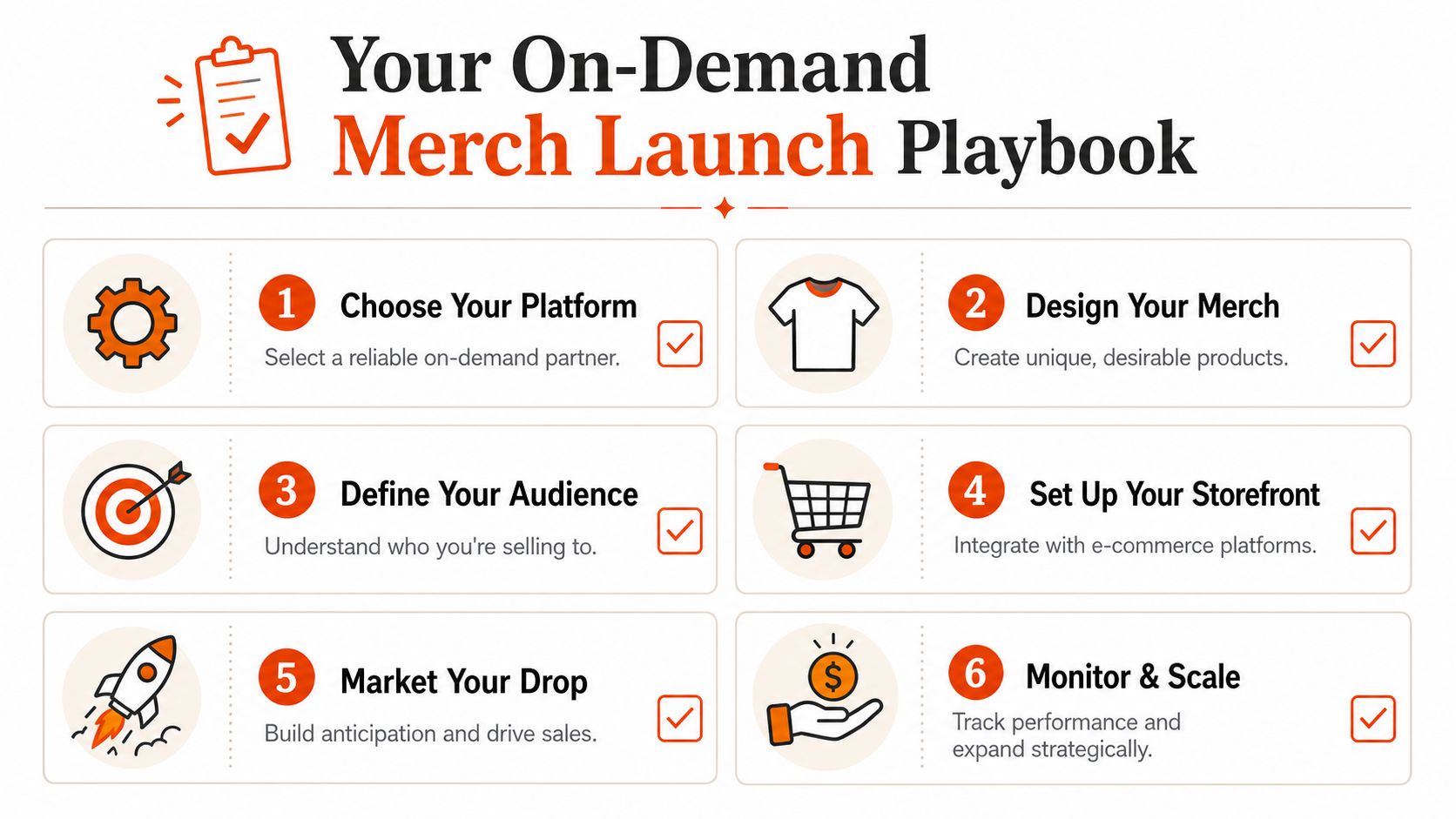
Start with the partner, not the product page. A good on-demand setup needs quality blanks, reliable fulfillment, and the ability to handle multi-address shipping without chaos. That's where teams should look for low minimums, global reach, and real packaging control, not just a storefront that prints a logo on the front and calls it a day.
Then lock the product direction. Premium blanks, better-weight hoodies, and thoughtful finishing details are what separate a true merch drop from disposable swag. If the garment feels right, the whole shipment feels more expensive, even before the box is opened.
The operations side should stay simple. A dashboard or store integration should let the team send to one address or many, without requiring someone to manually rebuild the list every time. For teams using a more controlled provider model, Banger supports storing inventory and triggering shipment when recipient details are provided, which is the kind of setup that works well for distributed teams and gift-based campaigns.
Practical rule: if the unboxing feels generic, the merch probably will too.
The final layer is packaging. Custom mailers, inserts, tissue, and labels matter because they make the shipment feel deliberate, not transactional. When you're building a drop for a modern brand, the delivery itself is part of the creative brief.
A few operators should think about geography before launch. On-demand shipping can get less predictable outside major cities, and cross-border work needs more care, especially around DDP and regional hubs, as noted by Kase. Dense markets are usually where the model shines first.
Ship Merch Like a Modern Brand
The old merch model treats fulfillment like a clean-up task. The modern model treats it like part of the brand. That's the difference between sending boxes and sending something people want to receive.
On demand shipping fits internet-native teams because it respects the way they already work, distributed, fast-moving, and obsessive about presentation. If you care about the quality of the fabric, the label, and the box, the shipping model should support that standard, not dilute it. For brands that also think about production materials and finish choices, custom films for e-commerce businesses is a smart reminder that the packaging layer shapes the whole experience.
The cleanest merch programs don't feel logistical. They feel native.
If you want merch that ships like a modern brand, Banger handles custom apparel, branded packaging, and worldwide fulfillment for teams that care about quality and presentation. Visit Banger to build your next drop and make the shipping experience match the product.