Premium Blank T Shirts: The Guide for Modern Brands
You're probably here because you need t-shirts for a launch, an offsite, a conference, a creator drop, or a new hire kit, and you already know the usual outcome. The box arrives. Everyone says “nice.” A week later, the shirts are gym backups, sleep shirts, or buried under cables in a drawer.
That's not a merch problem. It's a brand judgment problem.
A t-shirt is one of the fastest ways to show people what your standards are. In a category where the global blank apparel market reached USD 15,912.4 million in 2025, with T-shirts holding a 65% share according to Congruence Market Insights, the blank is still often treated like a commodity. That's where the quality drop starts.
Table of Contents
Why Most Company Merch Ends Up in a Drawer
Most bad merch follows the same script. Someone needs shirts fast. Procurement picks the cheapest blank that looks acceptable on a spreadsheet. A logo gets dropped on the chest. The team wears it once because they're being polite.
Then the shirt disappears.
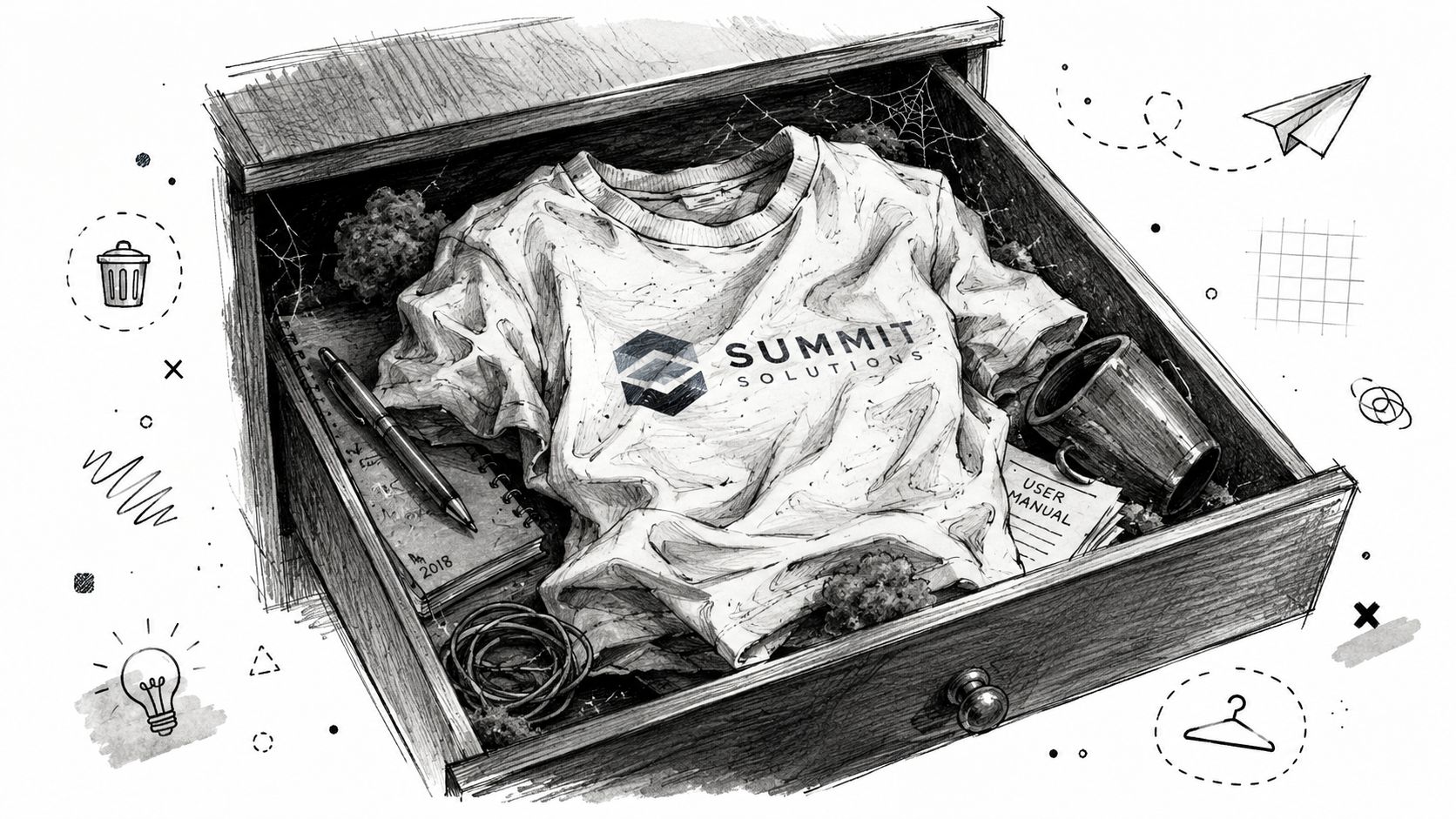
The issue usually isn't the graphic alone. It's the combination of a stiff body, weird fit, scratchy hand-feel, and the general vibe of “free conference tee.” Once a shirt feels promotional, people treat it like a disposable object. That's why good design can still die on a bad blank.
Cheap blanks send a message
Founders often think merch quality is a nice-to-have. It isn't. A t-shirt tells people how seriously you take your own brand. If your company says it cares about product, detail, and taste, but your onboarding tee feels flimsy and shrinks weird after one wash, people notice.
Practical rule: If you wouldn't wear the blank yourself without a logo on it, don't print on it.
This matters even more for internet-native teams. Your community already has reference points. They know what good streetwear feels like. They know the difference between a clean retail fit and an event giveaway. They can spot the cheap option fast.
The real waste isn't just the budget
The obvious loss is money. The less obvious loss is momentum. A good shirt gets worn in public, reposted, packed for trips, and folded back into someone's weekly rotation. A bad one becomes internal clutter.
That's why the right move is to treat the blank as part of the creative direction, not an afterthought. Teams that care about fit, fabric, and finish usually get better outcomes from the same logo because the base garment is doing half the work.
If you need help shaping that direction before production, it helps to look at how custom merch design services approach the garment, the print, and the brand system together instead of as separate decisions.
A premium blank t shirt isn't just there to hold ink. It's there to make the brand feel real.
Decoding Premium What It Actually Means
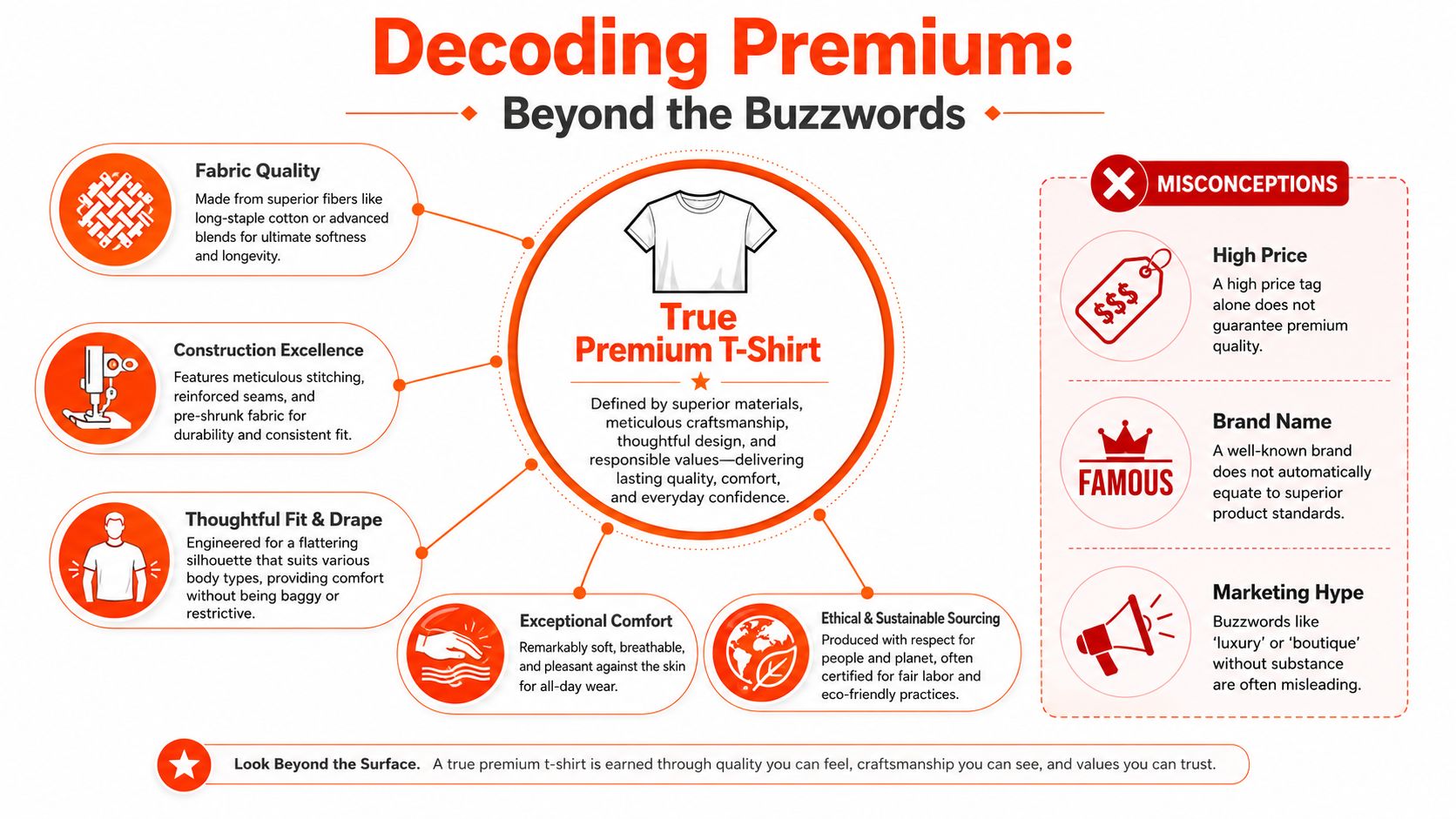
“Premium” gets abused in apparel. Sellers use it for anything with nicer packaging, a trendier fit, or a higher price. None of that tells you much.
The useful question is simpler. What makes a blank worth decorating in the first place?
Price is not the product
One of the biggest myths in blank apparel is that expensive means better, or that a famous label guarantees quality. That logic breaks fast once you look at sourcing.
A 2024 viral investigation found that 40% of “premium” blanks come from the same Chinese mills as budget brands, while pricing differs by 300%. The same report also noted that 55% of EU and US brands in 2025 prioritize sustainable sourcing such as GOTS-certified cotton over factory location, which shifts the definition of premium away from origin mythology and toward materials and ethics, as covered in this factory origin investigation.
That lines up with what buyers run into in practice. Two shirts can come from the same broad manufacturing ecosystem and still land very differently because of fiber selection, finishing, quality control, and trim decisions.
What premium actually looks like
When I evaluate premium blank t shirts, I don't start with the country on the label. I start with the spec.
Look for these signals:
- Better fiber prep: Combed cotton usually feels cleaner and softer because shorter fibers are removed before spinning.
- Better construction: Necklines recover better, seams sit flatter, and the shirt keeps its shape after decoration and washing.
- Better fit logic: The garment hangs like retail, not like a giveaway.
- Better sourcing standards: Material safety and production oversight matter, especially if the shirt represents a public-facing brand.
If you're also trying to sort through fit issues across unisex and mixed team orders, these fashion sizing tips are useful because sizing confusion ruins otherwise good blanks.
Premium isn't a logo on the neck label. It's the sum of choices nobody sees individually, but everyone feels when they put the shirt on.
Material ethics matter too. Organic and certified fabrics aren't just a brand story add-on. For a lot of teams, they're now part of what makes a garment worth producing at all. If you want a plain-English breakdown of that side of the spec, this guide on organic cotton fabric is worth reviewing before you lock a supplier.
The Anatomy of a Perfect Blank Fabric Weight and Fit
A founder usually notices this part too late. The samples arrive, the logo looks fine, and then someone tries the shirt on. The body is too long, the neck collapses after one wash, or the fabric has that flat promo-tee feel that tells people this was bought by spreadsheet instead of by taste.
That is why blank selection is a brand call, not a line-item purchase. Fabric weight and fit decide whether the shirt reads like team culture, product, or leftover event swag.
Fabric first
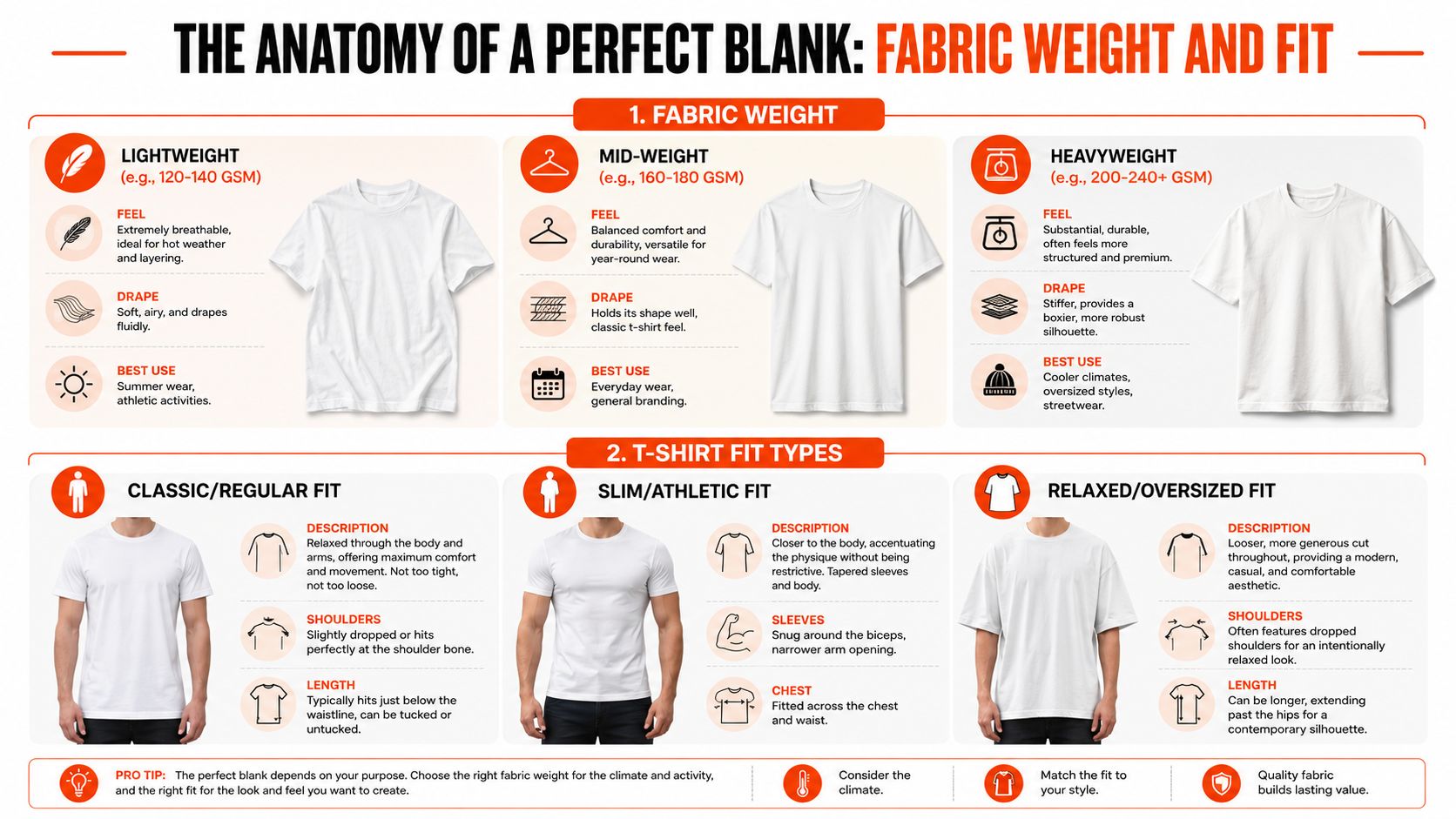
For premium retail-soft t-shirts, the standard spec is 4.5 oz (153 GSM) 100% combed cotton, according to this blank t-shirt buying guide. That spec works because it gives you a cleaner surface, softer handfeel, and enough stability for decoration without turning the shirt stiff.
Combed cotton earns its place here. Short fibers are removed before spinning, so the face feels smoother and prints with better edge definition. That difference shows up fast on branded apparel. A startup team tee, creator merch drop, or community giveaway has to feel like something people would choose to wear on its own.
If you need a plain-English explanation of the numbers, this guide to GSM fabric weight is useful in a buying context.
Weight changes the whole read
Weight changes more than comfort. It affects drape, shape retention, and whether the shirt feels like merch or product.
Here's the practical breakdown:
| Weight direction | What it feels like | Typical outcome |
|---|---|---|
| Lighter blanks | softer, more fluid | easier daily wear, more relaxed |
| Mid-weight blanks | balanced | safest all-rounder for branded apparel |
| Heavyweight blanks | structured, dense | stronger streetwear posture and a more intentional silhouette |
Heavier jersey can look expensive, but only when the pattern is built for it. If the armhole, sleeve, and body width are off, extra weight just makes the flaws more obvious. A dense tee with a bad cut feels bulky, not premium.
A lighter blank has its own trade-off. It wears easily and usually wins on comfort, but it can lose authority if your brand wants presence, structure, or that modern oversized shape people associate with better retail.
Here's a useful visual reference for how these choices affect the garment in practice:
Fit is where most blanks fail
This is the part that separates wearable merch from shirts people post, keep, and attach to your brand. Good fit builds repeat wear. Bad fit turns a decent graphic into a shirt that lives in a drawer.
The best premium blank t shirts avoid two common mistakes. One is the generic boxy cut with no drape and no shape. The other is an over-designed fashion fit that looks good on a sample model and causes returns, swaps, or awkward team sizing.
Check these details before you approve a blank:
- Shoulder line: The shoulder seam should sit clean and stable. If it drops or pulls, the whole shirt loses polish.
- Body shape: Tubular tees often read more generic. Side-seamed bodies usually feel more considered and hang better.
- Length: Too long looks dated and promo-driven. Too short creates sizing risk across a mixed team order.
- Sleeve opening: This changes the silhouette more than most buyers realize. A tighter sleeve can sharpen the look. A wide one can make the tee feel sloppy fast.
- Neckline recovery: A premium blank keeps its collar shape after wear and wash. If the rib loses tension early, the shirt reads cheap even when the fabric is good.
The blank is the product. The print is support. People will forgive a quiet graphic on a great body. They will not keep wearing a loud graphic on a bad one.
Matching the Blank to Your Customization
A lot of merch problems get blamed on the print method when the problem lies with the shirt underneath it. Customization only looks premium when the blank can support it.
Print needs a clean surface
Detailed prints want a smooth, stable face. That's why combed cotton works so well for DTG and water-based screen printing. Fine lines land cleaner. Solid fills look more intentional. The finished graphic feels integrated with the shirt instead of sitting on top like a sticker.
When teams skip this step, they usually end up over-correcting with heavier ink, bigger artwork, or louder placements. That rarely fixes the issue. It just makes the cheap base more obvious.
If you're comparing decoration routes, this guide to custom shirt printing is useful because it connects print technique to the garment rather than treating every tee like the same canvas.
Embroidery needs structure
Embroidery asks for something different. The blank needs enough body to carry stitch density without puckering, especially for front chest logos, sleeve hits, or larger graphics. Collar construction matters too.
For high-quality blank t-shirts, craftsmanship standards call for four stitches per cm, a hidden seam neckline, and a hemming strip behind the collar to prevent stretching, as outlined in this blank t-shirt and polo sourcing guide. Those details sound small. They're not. They're what keep the shirt stable after customization and repeated washes.
This is also where supplier capability matters. Some teams need classic embroidery. Others need DTG, DTF, patches, woven labels, or more fashion-led finishing. One option in that lane is Banger, which handles premium customization through French ateliers and works across multiple decoration methods for branded apparel and team drops.
A great logo on the wrong shirt still looks wrong. Start with the blank, then choose the technique.
Sourcing Sustainability and Ethical Production
Modern teams don't just care how the shirt looks. They care how it was made, what standards sit behind it, and whether the supply chain creates risk for the brand.
That's a smart shift.
Factory transparency matters
Premium European blank manufacturing, especially in Portugal and France, often follows OEKO-TEX® certified standards for fabric safety and ethical production, with quality control run through European headquarters to protect high GSM consistency and color-fastness, according to this European blank manufacturing overview.
That matters because “ethical” and “premium” shouldn't be vague brand language. A regulated production environment gives buyers clearer answers around fabric safety, wash stability, and consistency between sample and bulk. If you're ordering for employees, customers, creators, or a public event, that clarity protects more than the garment. It protects the brand attached to it.
What to ask before you order
Ethical production isn't one checkbox. It's a set of sourcing habits.
Ask questions like these:
- Certification proof: Can the supplier show fabric safety or material certification documents?
- Quality control ownership: Who checks color consistency, shrink behavior, and finishing?
- Production geography: Where is the blank made, and where is customization done?
- Traceability: Can they explain the chain without getting vague?
For a broader perspective on how manufacturers talk about labor and process, Los Angeles Apparel's manufacturing ethics guide is a useful reference point.
If European production is part of your sourcing criteria, it helps to compare how different partners structure manufacturing and QC. This overview of European clothing manufacturers is a good place to start.
Navigating MOQs Pricing and Turnaround Times
A lot of otherwise solid merch projects break at this point. The product might be right, but the buying model is built for someone else.
Why the old model frustrates startups
The blank apparel business still leans heavily on bulk. Eighty-five percent of volume is sold in packs of 6 to 72 units at wholesale pricing, and that model delivers 25% to 35% margins for manufacturers, according to this global t-shirt volume and sourcing breakdown. For large buyers, that structure can work.
For smaller teams, it creates friction fast.
You don't always need a huge size run. You might need a tight founder team order, a small creator seeding batch, an event test, or a limited internal drop. Traditional suppliers often push volume because their economics depend on it, not because your project does.
What a modern buying process should feel like
Good merch ops should feel clear. You should know what drives price, what changes lead time, and what parts of the order create complexity.
Watch for these issues:
- High minimums hiding behind “wholesale” language: That usually means the supplier is optimized for bulk inventory movement, not agile production.
- Unclear setup fees: If pricing feels hard to decode, your margin probably isn't the only thing being padded.
- Loose turnaround promises: “Fast” means nothing unless sample approval, production, and shipping are defined.
Small-batch ordering isn't a niche edge case anymore. It's how a lot of modern teams actually operate.
Factory-direct pricing helps because it removes extra markup layers between the blank, the customization, and the buyer. That doesn't automatically make the order cheap. It makes the price easier to trust.
The Ultimate Supplier Checklist
A supplier call can sound great for 20 minutes and still end with shirts nobody wants to wear. That usually happens because the conversation stays at the level of pricing, color options, and vague quality claims, instead of getting into the details that decide whether the final piece feels like real product or disposable merch.
For internet-native teams, that difference matters. The blank you choose shapes how your brand shows up in photos, at events, in creator packages, and inside your own team. A good supplier protects that. A weak one turns your merch into a cost center with a logo on it.
Questions worth asking every supplier
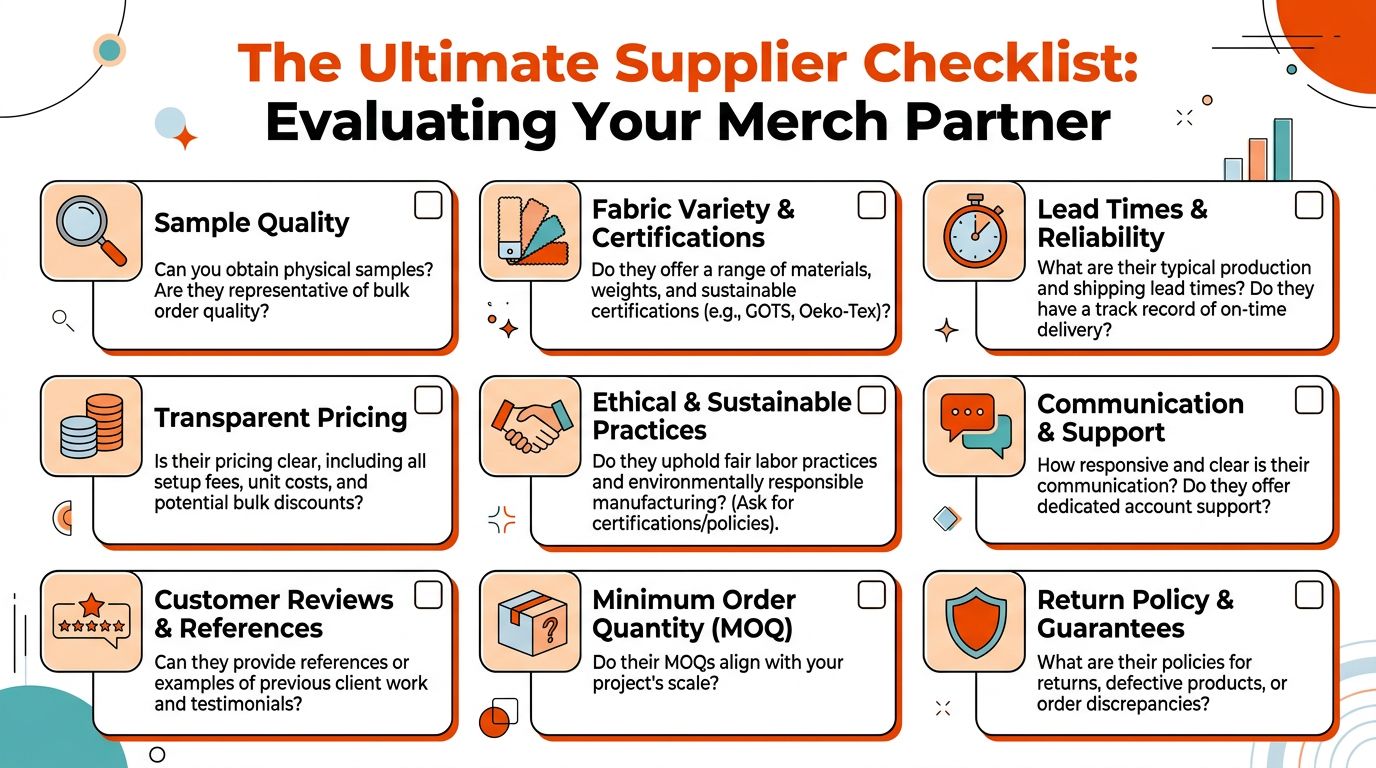
Use this list before you approve any premium blank t shirt program:
- Ask for production-relevant samples: Request the exact blank, color, size range, and decoration method you plan to order. One perfect showroom sample proves very little.
- Read the fabric spec line by line: Confirm weight, fiber composition, knit type, shrinkage expectations, and finishing details. If the supplier cannot explain the sheet clearly, expect problems later.
- Inspect the collar and neck construction: Rib recovery, topstitch consistency, and neckline shape tell you a lot about how the shirt will age.
- Ask how the garment behaves after washing: Print quality means less if the body torques, the collar waves, or the hem twists after a few cycles.
- Review sourcing and certification documentation: Clear answers here signal operational discipline. Vague answers usually mean the opposite.
- Get lead times broken into stages: Sampling, approvals, production, and shipping should each have their own timeline.
- Test communication before you commit: Response speed, clarity, and willingness to answer technical questions are part of the product.
What good answers sound like
Good suppliers answer with specifics. They can tell you why a tighter, smoother surface helps DTG hold detail, why a heavier cotton jersey gives embroidery more presence, or why a boxier cut changes the way the graphic reads on body. They can also explain the trade-off. A softer finish may feel better out of the box but react differently under certain print methods. A low MOQ may solve flexibility but narrow your color options.
That is the filter.
Weak suppliers hide behind language that sounds expensive. “Premium.” “Luxury.” “Top quality.” None of those words matter if the shirt loses shape, the print sits poorly on the fabric, or the fit feels dated the moment it comes out of the polybag.
The teams that get strong results treat blanks the same way they treat packaging, product UI, or retail presentation. As a brand decision. That shift is what turns merch from leftover marketing spend into something people choose to wear.
If you're comparing partners now, judge them on five things. Spec transparency, sample honesty, sourcing credibility, order flexibility, and customization judgment. Those are the signals that separate a vendor moving units from a supplier helping you build culture.
If you want to build merch your team wants to wear, Banger offers European-sourced blanks, premium customization, low minimums, French atelier production, and worldwide fulfillment. You can explore the catalog or request a quote and get product previews within 24h.