Tech Swag Ideas Your Team Will Actually Use
The most repeated advice on tech swag ideas is also the reason most merch fails: put your logo on something cheap, order a lot of it, and call it brand awareness.
That approach burns budget twice. First on the item. Then again when nobody uses it.
The issue isn't swag itself. It's that too many teams treat it like disposable media instead of a physical expression of taste, standards, and culture. In tech, people already sit inside branded ecosystems all day. If you're going to put another branded object into their bag, on their desk, or in their closet, it has to earn that space.
Good tech swag doesn't behave like a giveaway. It behaves like a product. It has standards, a use case, and a reason to exist.
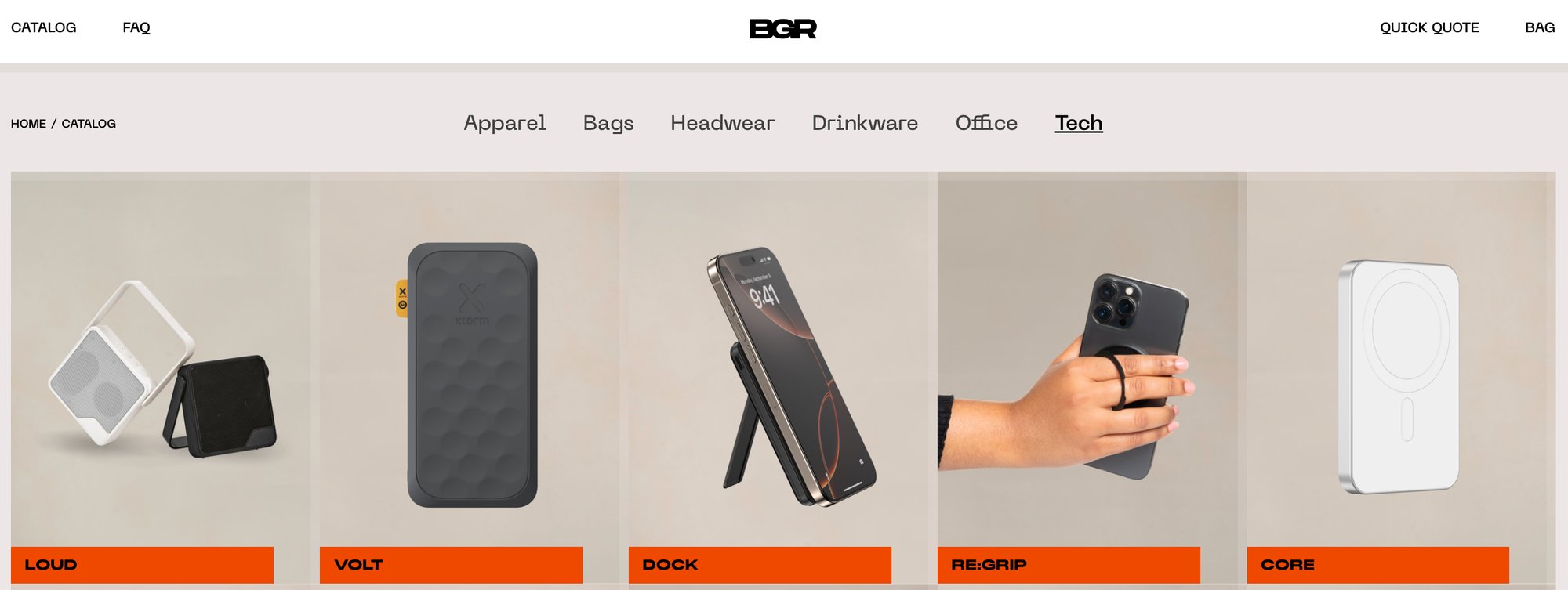
Here's part of our tech catalog. Loud, a Bluetooth speaker. Volt, a portable power bank. Dock, a foldable phone stand. Re:Grip, a MagSafe phone grip. Core, a MagSafe wireless charger. Five objects, five clear use cases — not novelty items but things people pull out of their bag every day. The kind of branded objects that earn space on a desk because they actually solve something.
Table of Contents
Most Tech Swag Is a Waste of Money
Most bad swag fails long before production. It fails in the brief.
A founder says “we need conference giveaways.” A marketing team says “let's get something affordable.” Procurement narrows it down to the usual pile of low-cost objects with a giant logo on top. The result is predictable: drawers full of branded clutter, tote bags nobody reuses, tees with awkward fits, and gadgets that feel flimsy the second they leave the box.
That's not a merch problem. It's a standards problem.
The popular advice says more units means more reach. In practice, more units often means more waste. If the item has no daily use, no aesthetic value, and no fit with the audience, your logo just travels faster into the trash.
Most teams don't need more swag. They need fewer, better pieces with a clear role.
There's also a measurement gap. Teams are usually good at counting handouts and terrible at judging whether the item changed perception, started a conversation, or kept living in someone's routine. If you're trying to think more clearly about merch as a channel, this guide on how to measure marketing performance is worth a look because it pushes the conversation past vanity metrics.
A lot of the standard event playbook still leans on volume. That's exactly why smarter teams are moving toward tighter, more intentional event swag ideas built around utility and design instead of filler.
What usually doesn't work
Cheap novelty items: They get a quick laugh, then disappear.
Oversized logo placement: It makes the item feel like an ad before it even gets used.
Random assortments: If the pieces don't belong together, the kit feels thoughtless.
One-size-fits-all apparel: Nothing kills a merch drop faster than bad fit.
The fix is simple, but not easy. Treat tech swag ideas like a small collection. Edit hard. Choose items people would pick even if your logo wasn't on them.
The Shift From Giveaway to Brand Asset
Tech swag sits inside a much larger gifting economy, and that matters because it explains why serious teams don't treat merch like an afterthought. One industry compilation projects the corporate gifting market at $956.93 billion in 2026, up from $886.56 billion in 2025, with a projected 7.9% CAGR through 2030. The same source reports that 68% of technology companies use corporate gifts for onboarding and remote team engagement, while 59% use gifting initiatives to support employee engagement, according to these corporate gifting statistics for 2026.
That scale changes the framing. Swag isn't just a side quest for the events team. It's part of how companies welcome talent, mark moments, and turn brand values into something people can hold.
Why the old promo model feels dated
The old model was simple. Print the logo, distribute at volume, hope for recall.
That model breaks down fast with internet-native teams. People who care about product, interface, brand voice, and visual language can spot lazy merch instantly. If your app looks sharp and your hiring deck looks polished, but your hoodie feels thin and your conference giveaway feels generic, the disconnect is obvious.
A good merch piece sends a signal about standards. It tells a new hire what kind of company they joined. It tells a conference attendee whether your team has taste. It tells a creator or partner whether the relationship is transactional or considered.
Why stronger teams think like brand builders
The smartest teams handle merch the way they plan immersive events. They think about sequence, mood, audience, and memory. The item isn't the whole experience. It's the object that survives after the moment ends.
That's also why packaging matters more than people think. A clean insert, a custom shipper, a considered unboxing flow. Those details push merch out of promo territory and into product territory. If you're building kits or drops, thoughtful custom packaging design often does as much heavy lifting as the item itself.
Practical rule: If the swag says one thing and the rest of your brand says another, people believe the swag.
Good tech swag ideas work because they carry identity without shouting. The item becomes part of someone's desk setup, travel routine, or wardrobe rotation. That's what makes it a brand asset.
The Playbook Five Modern Tech Swag Drops
A useful merch strategy looks less like a shopping list and more like a drop calendar. Different moments need different energy. Conference handouts shouldn't feel like onboarding kits. Community rewards shouldn't feel like vendor freebies.
This is the part most generic tech swag ideas miss. The item matters, but context matters just as much.
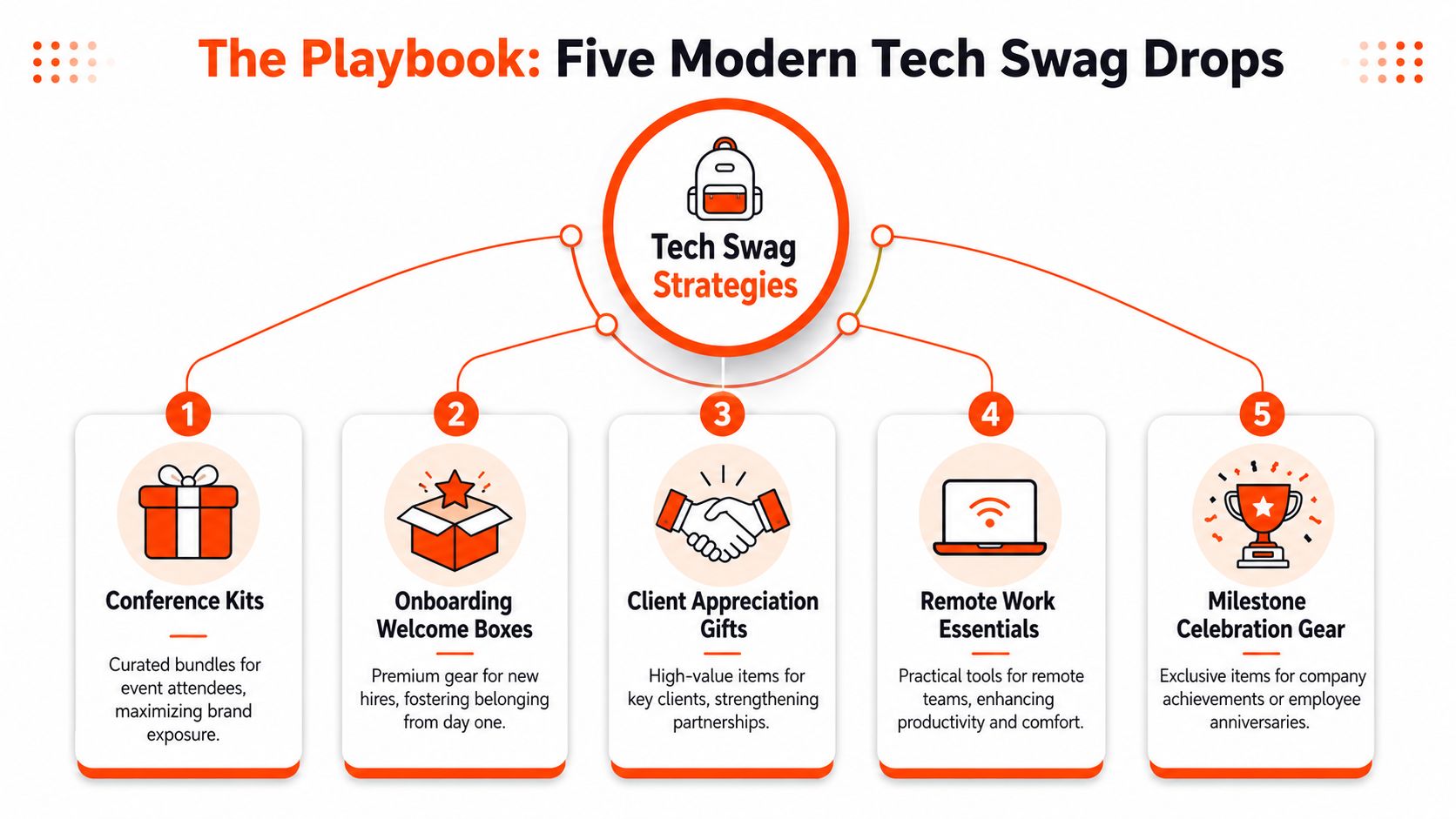
For event environments, the strongest categories tend to be portable and useful. One 2026 guide highlights conference winners like charging cables, portable phone chargers, wireless earbuds, webcam covers, and laptop sleeves, alongside reusable bottles, notebooks, and desk accessories in this roundup of conference swag people actually keep.
Conference kits that survive the flight home
Conference merch should solve a problem before it tries to impress. People are moving fast, carrying too much, low on battery, and deciding in a split second what stays in the tote.
A strong conference kit usually has one hero item and one or two supporting pieces.
Hero utility item: Portable charger, charging cable, webcam cover, or laptop sleeve.
Supporting carry item: Reusable bottle or slim notebook.
Soft brand layer: Sticker sheet, card insert, or subtle pouch branding.
What doesn't work is stuffing the bag with filler. Every extra low-value piece makes the whole kit feel cheaper.
For teams trying to make conference merch less wasteful, this piece on finding sustainable swag for your brand is useful because it pushes the conversation toward retention and practical design, not just eco claims.
Onboarding boxes that feel like joining something real
New hire merch has a different job. It needs to create belonging.
The best onboarding boxes usually combine one wearable piece, one desk item, and one everyday utility object. A heavyweight hoodie, a clean notebook, a well-made bottle, or a laptop sleeve can do more for company identity than a box full of tiny branded objects ever will.
A few details matter here:
| Element | Better choice | Why it works |
|---|---|---|
| Apparel | Premium tee or hoodie | Sets the tone immediately |
| Desk item | Notebook or mouse pad | Gets seen and used often |
| Daily utility | Bottle or charger | Lives beyond day one |
Subtlety wins. New hires don't want to feel like walking billboards on day one.
Remote work gear people keep on their desk
Remote swag should remove friction from the workday. That's the filter.
Think phone stands, USB-C hubs, cable organizers, mouse pads, desk mats, good mugs, or laptop sleeves. These aren't flashy, but they get used constantly. That gives them staying power.
Remote-team swag works best when it can move between home office, coworking table, and travel bag without feeling out of place.
Avoid “fun” objects that only make sense once. Remote setups reward consistency, not gimmicks.
Creator drops for community, not just employees
If your brand has a community layer, treat merch like fandom infrastructure.
This is where a lot of tech companies get interesting. A creator drop can include a washed cap with tonal embroidery, a graphic tee with insider references, a patch set, a notebook with custom endpapers, or a limited accessory tied to a launch. The point isn't broad appeal. The point is cultural accuracy.
These drops should feel collectible, not corporate.
If apparel is part of the mix, a solid place to start is looking at screen printed t-shirts as a format, then deciding where print should be loud, quiet, or replaced by embroidery.
Capsule collections for brand-defining moments
Some moments deserve more than standard swag. Fundraises. product launches. annual offsites. milestone anniversaries. big collaborations.
That's when you build a small capsule.
A capsule collection can include:
Outer layer: Hoodie, overshirt, or jacket
Headwear: Cap or beanie with restrained branding
Accessory: Tote, laptop sleeve, or pouch
Packaging layer: Numbered insert, custom wrap, or collectible card
This format works because it creates coherence. Everything belongs to the same visual world.
The biggest mistake is trying to make every item say everything. Pick one design language. Stick to it. Let the collection carry the story.
Beyond the Logo Materials and Customization
The difference between promo merch and premium merch is evident before it's even touched. The shape is better. The hand feel is better. The branding is quieter. The whole thing looks edited.
That difference doesn't come from the logo. It comes from material and finish.
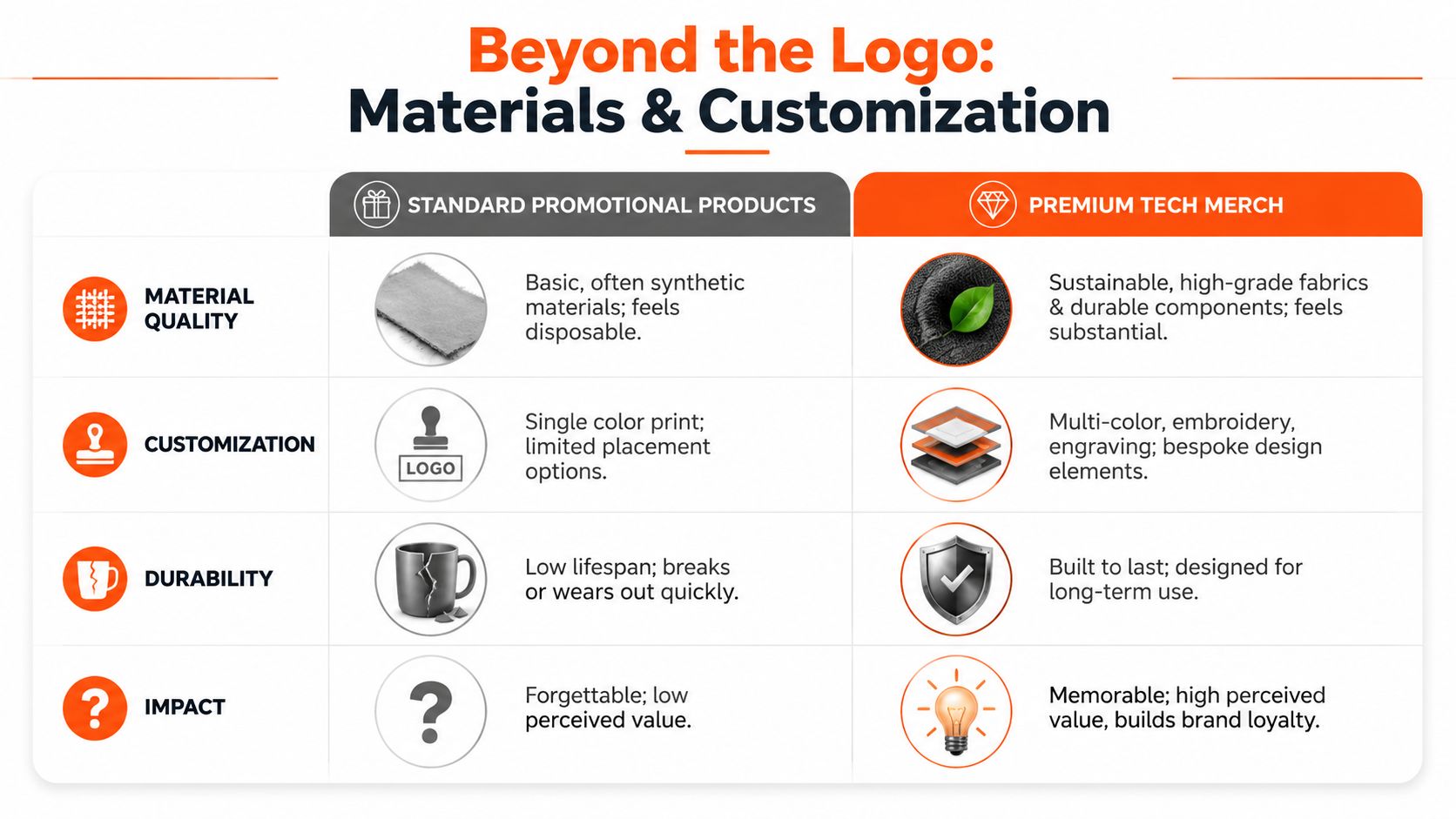
Independent swag guidance keeps landing on the same point. Items with daily-use utility, especially products tied to charging or device protection, tend to stay in circulation because people reuse them, as noted in this overview of tech swag with daily-use utility. That retention gets stronger when the object also feels good to own.
Why material choice changes everything
A bad blank ruins a good idea fast.
In apparel, fabric weight, drape, wash, stitching, and fit do most of the work. In accessories, the equivalent is texture, zipper quality, hardware, lining, and structure. A laptop sleeve can be forgettable or excellent depending on the closure, the profile, and whether it feels protective instead of flimsy.
Use this mental split:
Standard promo thinking: What's the cheapest version that can hold a logo?
Brand thinking: What's the best version someone would keep without being asked?
That's why premium blanks matter. A tee with the right cut and a heavyweight hoodie with clean ribbing don't need oversized graphics to feel valuable. The object already carries weight.
Customization that feels designed, not stamped
Great customization supports the product instead of overpowering it.
Some of the strongest options are quiet:
Tonal embroidery: Better for hats, hoodies, and outerwear
Debossing or embossing: Strong on notebooks, leather goods, and packaging
Laser engraving: Clean on metal drinkware and hard accessories
Woven labels: Better than giant chest prints when you want restraint
Inside details: Neck labels, hem tags, lining prints, or hidden messages
A loud front logo still has its place, especially on event tees or campaign merch. But for culture-led drops, less branding often makes the item more wearable.
If the branding is the first thing people notice, the product probably isn't doing enough.
There's also a customization hierarchy. Some products want print. Some want embroidery. Some should stay almost blank except for packaging and trim details. Teams that understand that difference end up with merch that feels closer to streetwear and farther from promo inventory.
A deeper creative route is using custom design services to build a complete merch system instead of treating each item as a separate object. That usually produces a tighter visual language, especially for drops with multiple SKUs.
A quick quality filter
Before approving any item, ask four things:
Would someone use this weekly?
Would they wear or carry it without being paid to?
Does the branding match the product category?
Does it still feel good after repeated use?
If the answer is shaky, keep editing.
Making It Happen Budget Timelines and Fulfillment
Good ideas usually get compromised. Not because the concept was wrong, but because nobody scoped the operational side with sufficient realism.
Merch projects fall apart on three things: bad timing, bloated assortments, and shipping chaos.
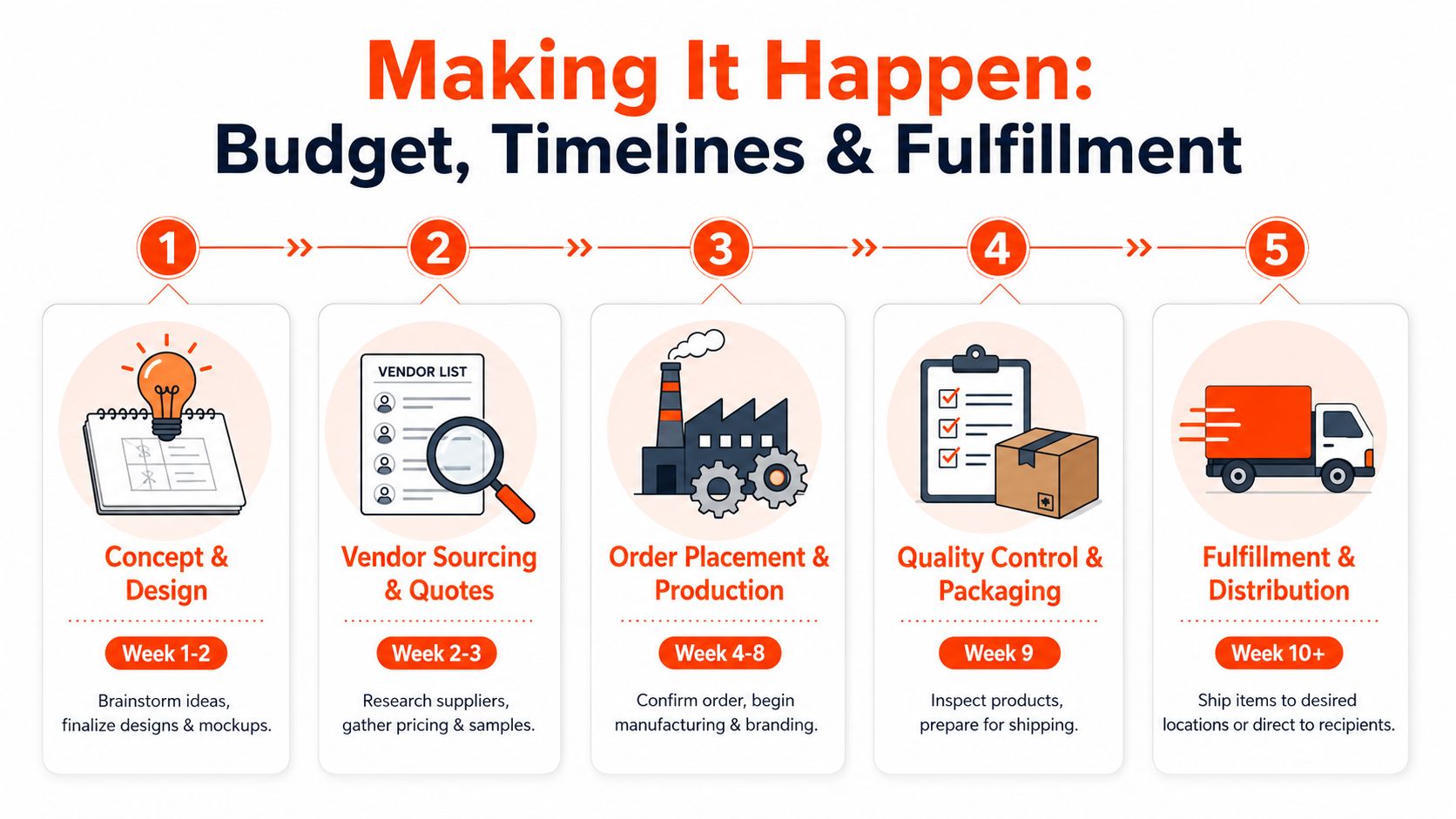
For conferences and remote teams, portability and cross-context use matter more than people expect. Compact items that work in transit and at a desk, like portable chargers and laptop sleeves, tend to hold up better in real life according to this guide on swag for tech companies. That should shape budget decisions early.
Where teams usually overspend
They overspend when they buy too many categories at once.
A tighter drop with two strong items almost always lands better than a bloated set with six average ones. Complexity creates hidden costs. More SKUs means more proofing, more packaging decisions, more inventory mistakes, more address issues, and more room for substitutions that weaken the whole set.
Common traps:
Too many sizes: Apparel-heavy orders need disciplined forecasting.
Late-stage changes: New artwork requests can throw off approvals.
Custom everything: Not every item needs full bespoke treatment.
Ignoring shipping format: A kit going to one office is very different from a kit shipping globally to individual homes.
A cleaner production workflow
The easiest way to keep a merch project sharp is to decide what's fixed and what's flexible.
| Fixed early | Flexible later |
|---|---|
| Hero product | Insert copy |
| Core design direction | Secondary add-ons |
| Packaging format | Final quantity mix |
| Delivery deadline | Small finishing details |
That keeps the project from drifting.
A practical workflow usually looks like this:
Lock the use case first. Conference giveaway, onboarding kit, team drop, community reward.
Choose the hero item. Everything else should support it.
Approve one visual system. Colors, placement rules, packaging style.
Sample before scale. Especially for apparel fit, print feel, and accessory quality.
Plan fulfillment as part of the concept. Not as an afterthought.
For distributed teams, shipping often is the product. If the unboxing is sloppy, late, or inconsistent, the merch loses half its impact. That's why a lot of growing brands now rely on dedicated merch fulfillment services instead of trying to coordinate storage, pick-pack, and multi-address delivery manually.
A beautiful hoodie in the wrong size, arriving late in a damaged mailer, is still bad merch.
Budget-wise, the cleanest decision is usually to protect quality on the hero item and simplify the rest. Don't trim the one piece people will remember.
How Modern Teams Are Doing It
The best merch programs don't look alike. They reflect the team behind them.
What they do share is intent. Each drop has a reason to exist, a clear audience, and a tighter aesthetic than the usual promo pile.
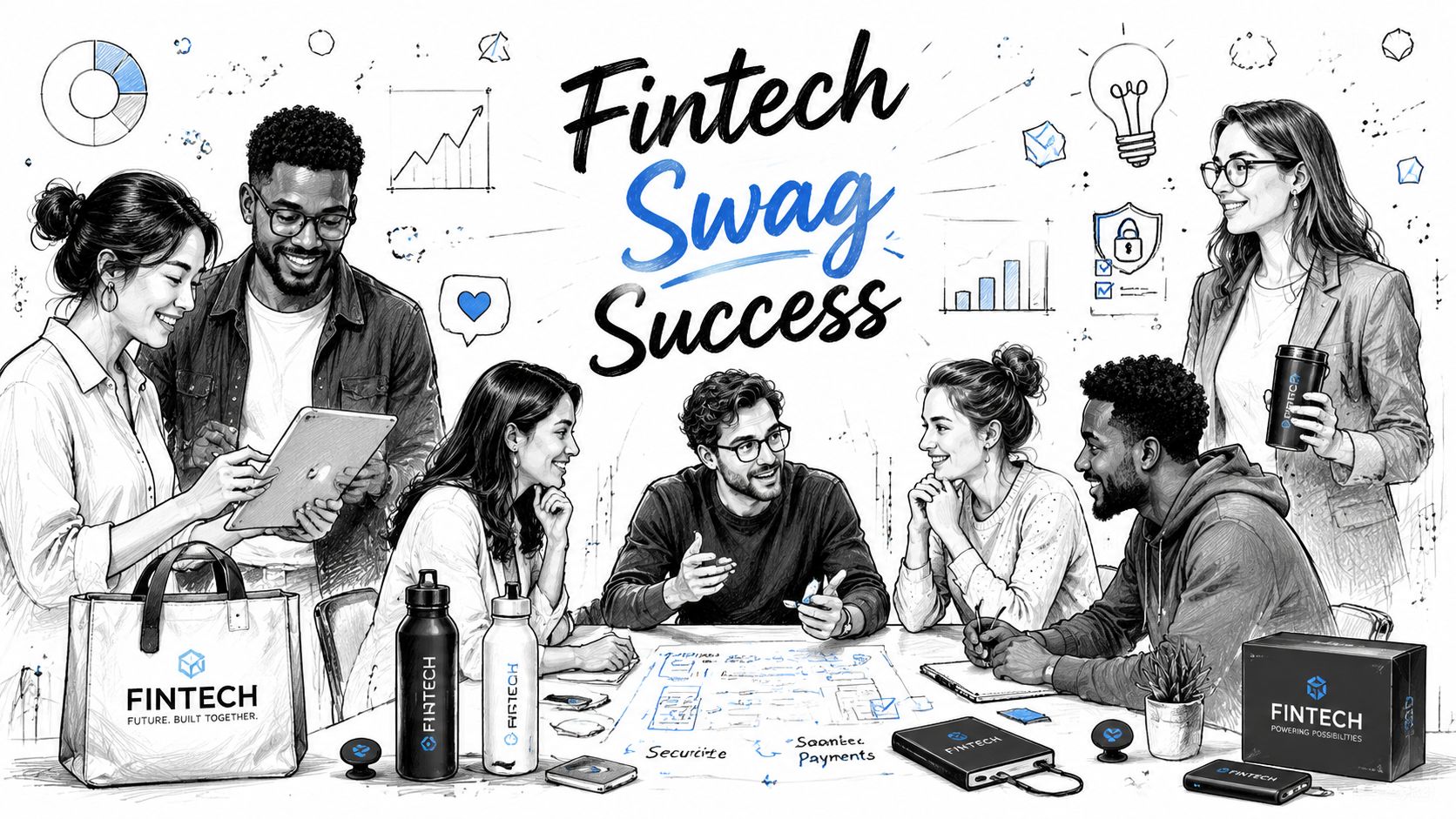
The fintech welcome box
A fintech team usually wants to signal trust, polish, and control. The strongest version of that isn't loud.
Think a heavyweight navy hoodie with tonal embroidery, a structured notebook with a debossed mark, and a clean bottle or laptop sleeve in a restrained color palette. Nothing feels random. Nothing feels cheap. The box tells the new hire, “we care about details.”
This kind of kit works because the brand values show up through finish, not slogans.
The conference item everyone fights over
Some SaaS teams overbuild their event kits. The smarter move is often one high-utility item that people immediately want.
A good example is a portable charger or premium cable kit with sharp packaging and understated branding. It solves a live problem on the conference floor. People keep it in their bag after the event. The brand stays attached to a useful behavior instead of a throwaway moment.
That's usually stronger than handing out three weaker items at once.
One item with real utility can outperform an entire bag of filler because it earns repeat use.
The contributor drop with actual taste
Web3, creator, and community-led brands often have more freedom. They can be niche on purpose.
A contributor drop might use a washed black tee, tiny chest embroidery, a back graphic with insider references, and a woven tag that rewards the people who get it. Add a cap or tote with a coded phrase instead of a full logo and the whole thing starts to feel collectible.
That's the shift. The drop doesn't beg for mass appeal. It creates belonging through specificity.
The strongest modern teams understand a simple rule: merch isn't separate from brand. It's one of the few brand objects people physically live with.
Build Merch That Represents Your Brand
Good tech swag ideas aren't about finding the coolest object on a vendor sheet. They're about matching item, audience, and aesthetic so tightly that the merch feels inevitable.
That usually means fewer SKUs, better materials, quieter branding, and sharper execution. It means building around utility when the context is events or remote work. It means building around identity when the context is culture, hiring, or community. And it means knowing when a simple object is enough.
Most merch gets ignored because it was never designed to matter.
The teams getting this right treat swag like a collection, not a clearance bin. They think about fit, finish, packaging, and relevance. They edit harder. They choose things people would want in their daily life.
That's the bar now. And it's a better one.
If you want to build merch your team will actually use, Banger is built for that. Premium European blanks, custom tech accessories, apparel, and branded packaging made in France's best production ateliers, low minimums, worldwide fulfillment, and direct factory pricing. Get a free, no-commitment quote with product previews in 24 hours, and build tech swag your team will actually pull out of their bag.