How to Design Customizable Running Hats Your Team Will Wear
You're probably looking at a pile of hats that seemed fine on a screen and already suspect half of them won't make it out of the box. That's the usual trap with customizable running hats. Teams upload a logo, pick a color, and end up with a stiff promo cap that looks decent in a mockup but gets peeled off at the first long run.
The better move is simple. Treat the hat like equipment first, merch second. If it doesn't breathe, fit, and hold its shape in motion, it's dead on arrival, no matter how clean the logo looks. That's why the smartest briefs start with construction, not decoration.
Table of Contents
Why Most Running Merch Gets Left in the Drawer
The bad order usually follows the same script. Someone picks a generic cap, slaps on a big logo, and calls it a running hat. Then the first real runner puts it on, feels forehead stiffness, catches heat under the crown, and goes back to the cap they already trust.
The question is not whether it looks branded. The question is whether someone would choose it for a run. If the answer is no, you made promo merch, not running gear. The headwear market is large and still growing, estimated at USD 37.01 billion in 2025, forecast to reach USD 39.37 billion in 2026, and projected to grow at a 6.9% CAGR to USD 62.83 billion by 2033 (Grand View Research). That is a real apparel category, and it gives you enough room to make better product calls.
Where the hat breaks down: weight, heat, and stiffness
A bad running hat usually fails in one of three ways, sometimes all three. It feels heavy, it traps heat, or the branding makes the front panel rigid enough to annoy the wearer by mile three. If you have watched a team order a cap that looks clean on a desktop render and useless on an actual run, you already know the pattern.
Practical rule: if the hat cannot survive a sweaty tempo run, it does not deserve a production slot.
The cultural side matters too. Runners care about how gear fits into the rest of their routine, not just how it photographs. A straightforward coffee and running guide from Cartograph Coffee shows that running habits are built around what people do before, during, and after the run. A hat has to work in motion, not only in a product drop.
The brief you actually want
Start with the use case. Is this for road runners, trail people, event giveaway bags, or a creator drop that will be worn to and from workouts? Those are different hats. A hat meant for a race weekend needs a different build from a hat meant for all-day travel or casual wear, and your factory brief should say that plainly.
If you want merch people keep wearing, start with the feeling on the head, then work backward to decoration. Banger's swag ideas guide is useful here as a reminder of how fast a promo-first approach gets people to treat the hat like a freebie instead of equipment. For customizable running hats, fabric, fit, and finish come first. The logo comes after the cap already feels right.
Choosing the Right Silhouette and Performance Build
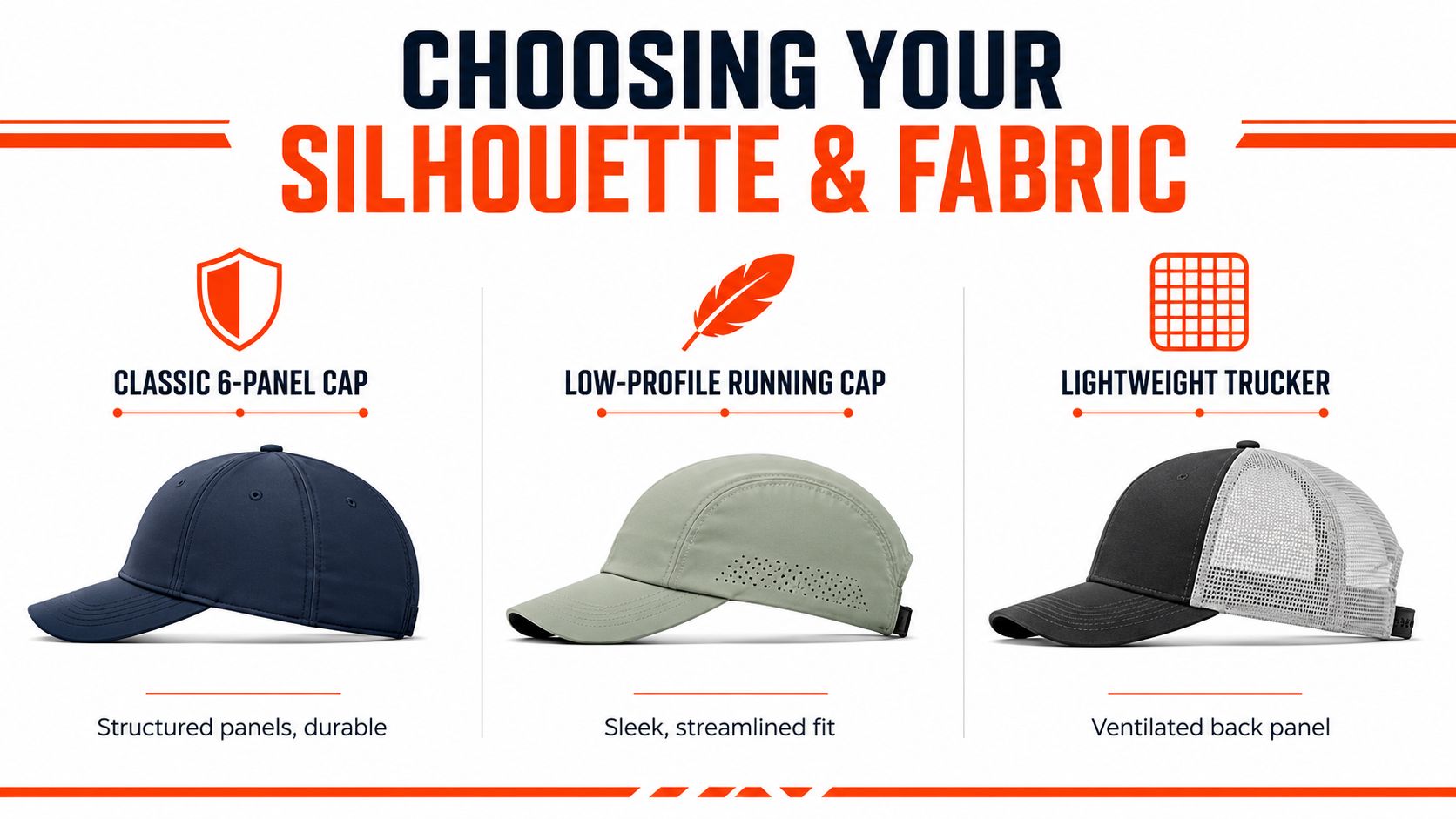
The silhouette decides whether the hat feels like run gear or a souvenir. A classic 6-panel cap gives you structure and a familiar shape. A low-profile running cap sits sleeker and usually feels less bulky in motion. A visor works when breathability matters most and crown coverage doesn't. A trail-style cap with a longer brim makes more sense when sun coverage and extra protection matter.
Pick the build for the run, not the render
For endurance road running, I'd choose a low-profile or 6-panel cap with a pre-curved bill. That shape keeps the profile clean and doesn't fight the face. For hot-weather trail use, I'd prioritize ventilation, because heat management matters more than a pretty side profile. For event giveaways, you still want a performance build, because the cheapest-looking cap is the one people leave in the hotel room.
The materials matter just as much as the shape. A practical running cap usually leans on lightweight polyester or recycled blends, and that's where the difference between “wearable” and “wishful” shows up fast. If you need a reference point, the trail running hats segment is projected to reach about USD 350 million by 2025 and grow at a 12.5% CAGR over 2025–2033, which signals strong demand for specialized running headwear with performance features (Data Insights Market).
Breathability isn't a bonus feature. It's the product.
Ask the supplier about these details
Before you approve a sample, ask about the parts that affect wear:
- Mesh panels: Side or back mesh helps airflow without turning the hat into a flimsy toy.
- Laser-cut perforations: Good for maintaining structure while letting heat escape. One OEM running hat spec explicitly markets a water resistant, quick dry fit, laser cut drilled hole perforated build, which is the kind of construction worth looking at for endurance use (OEM running hat specification).
- Quick-dry sweatbands: These matter more than people think, because the forehead is where comfort dies first.
- Water-resistant finish: Worth it for changeable weather, especially if the hat is meant for training.
- Reflective hits: If the cap will be used early or late, low-light visibility deserves a real place in the brief.
If you want a catalog starting point that's already closer to performance than generic promo headwear, look at Banger's custom caps catalog. For a supplier-specific example of a running-focused product line, the dry fit hat from Swift Running is useful context for how the category gets framed when performance is the point.
Picking a Decoration Method That Survives Sweat
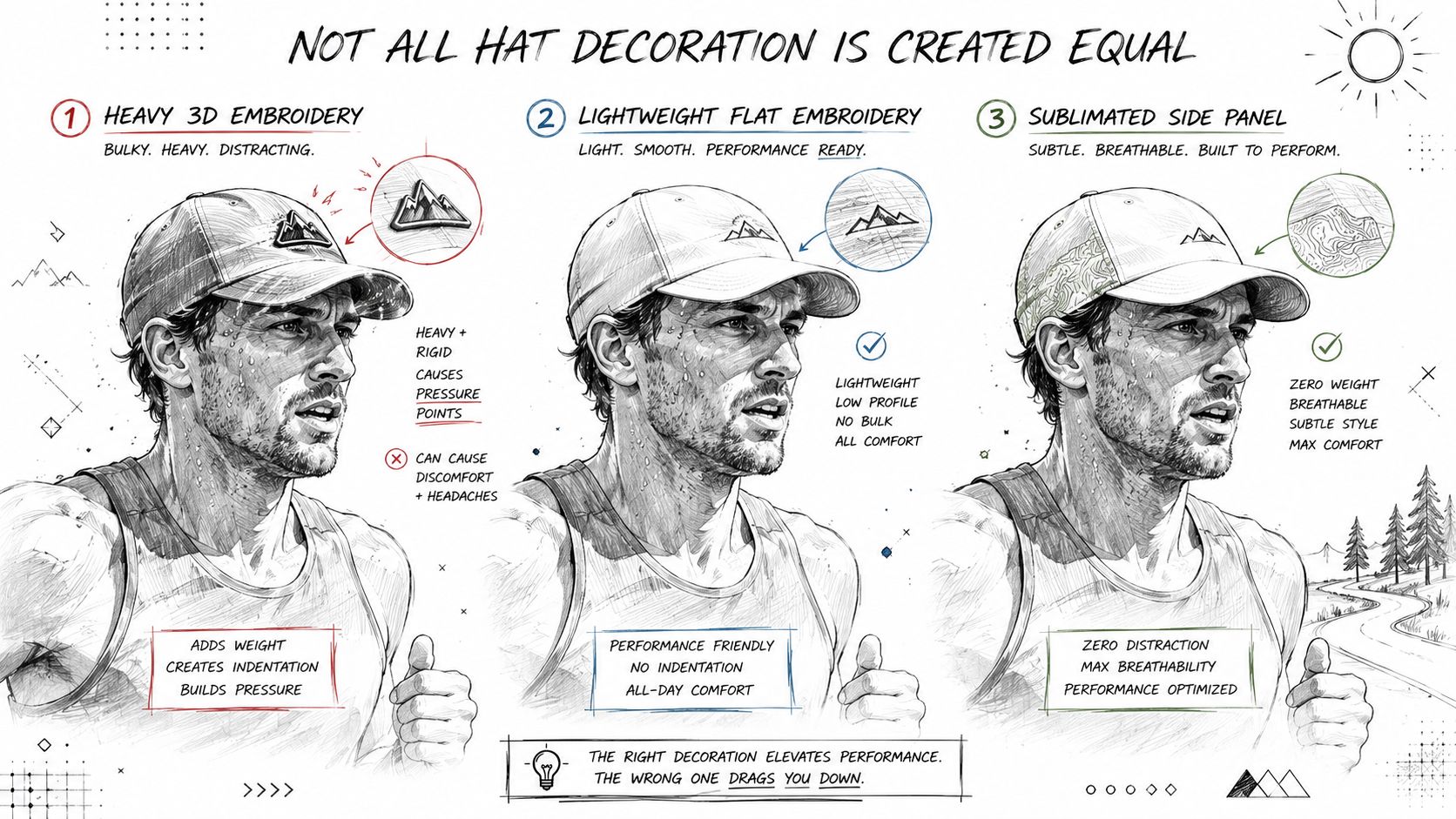
Decoration can make or break the cap. Too much ink, too much thread, or too much coverage, and the hat starts feeling like head armor. Running headwear needs decoration that stays put without turning the front panel into a heat trap.
What actually holds up on a run
Small embroidery still wins for a clean premium mark. It's durable and works well when the logo is modest. Sublimation is the right call when the artwork needs edge-to-edge coverage on polyester, but it can visually dominate the hat if you overdo it. Woven or printed patches sit in the middle, which is useful when you want structure without heavy stitching. DTG and DTF are the flexible choices for complex artwork, especially when the design has lots of color. Laser engraving gives a tonal, minimal finish on performance fabrics when the brand wants restraint.
The criteria that matter at mile 10 are simple. Weight. Stiffness. Sweat interaction. Wash durability. Detail clarity. If a decoration method scores badly on any of those, it's wrong for running.
Match the method to the silhouette
A low-profile cap usually benefits from flat embroidery, small patches, or tonal engraving. It keeps the forehead area soft and doesn't create a lump where the hat needs to sit cleanly. A 6-panel cap can handle a little more structure, but I'd still avoid oversized front embroidery unless the hat is more lifestyle than training-focused. Sublimation is strongest when the whole cap is designed as one visual system, not when it's asked to rescue a basic blank.
Simple rule: the more the cap has to perform, the less the decoration should fight the fabric.
If you want a practical product-development reference for finishing options, Banger's pad printing services are a good example of how branded details can stay controlled instead of loud. For one non-running but relevant tactile comparison point, the idea behind comfortable silicone bands for sensitive skin is the same one you should apply here, materials that disappear on the body are usually the smartest choice.
The decision rule
Use embroidery for small marks. Use sublimation when the fabric and artwork both support it. Use patches when you want a middle path. Use DTG or DTF when the graphic is too detailed for thread. Use engraving when the whole brief says “quiet confidence.” If the logo is the loudest thing about the cap, you've probably already gone too far.
Sizing, Fit, and the Branding Sweet Spot
A running hat that fits badly is the fastest way to waste a good budget. The measurement that matters is the circumference around your head above your eyebrows and ears, just like Runner's World recommends, using a tape measure or string plus ruler if that's what you've got (Runner's World). That's the number the factory should use, not a vague “medium-ish” note in a spreadsheet.
How a real team should spec it
If you're outfitting a 30-person founder running club, don't guess. Ask for a size range, then check whether the supplier can do adjustable closures or a tighter size run. Fitted sizes are cleaner, but they're more annoying when the audience is distributed. Adjustable closures like hook-and-loop, micro-velcro, or elastic toggles are easier when you don't know every head in advance, and they make life simpler for event orders and team drops.
For distributed teams, adjustability usually beats perfection on paper.
A good factory brief also says where the logo goes. Front-panel placement should be intentional, not sprawling. Side-panel branding can work if the front is already reserved for a clean mark. Back-strap logos are useful when the front needs to stay calm. On running caps, minimal branding usually wears better than full-coverage decoration, because it stays lighter visually and doesn't crowd the paneling.
A working placement model
For that founder running club, I'd keep it simple. One modest front mark, maybe a side hit if the cap needs sponsor recognition, and no full wrap unless the whole concept is built around a graphic pattern. If you want more detail on how size runs get handled, Banger's cap size chart guide is the sort of reference teams should use before they approve samples.
The branding sweet spot is usually the point where people can identify the team without feeling like they're wearing a billboard. That's the line. Stay under it, and the cap gets worn. Cross it, and the cap becomes desk merch.
Sustainability, Sourcing, and Production Realities
A lot of teams want the running hat to feel better for the planet, but they still want it to ship on time and look sharp. That's doable if you stop treating sustainability like a separate feature and start treating it like part of the build. European-sourced premium blanks made from organic cotton, recycled polyester, and other sustainable fabrics are the right base when the brand wants both performance and cleaner sourcing.
Why the production label matters
Call it a custom running cap, not a generic baseball cap. That sounds minor, but it changes the conversation with the factory. Performance headwear needs tighter pattern control, cleaner fit, and quicker consultation before order finalization, especially when the decoration, closure, and panel structure all have to work together. Generic language usually gets generic output.
The same logic applies to how the cap gets made. Banger's French ateliers use both traditional and modern customization methods, including embroidery, screen printing, DTG, DTF, and sublimation, which matters because different decoration choices behave differently on performance blanks. Banger also works with low minimums, including 1 unit per item on most products with a 10-unit minimum per apparel order, around 50 units for full cut and sew, plus free no-commitment quotes and product previews in 24 hours. That's useful when you're testing a running cap idea without committing to dead stock.
Keep the sourcing story clean
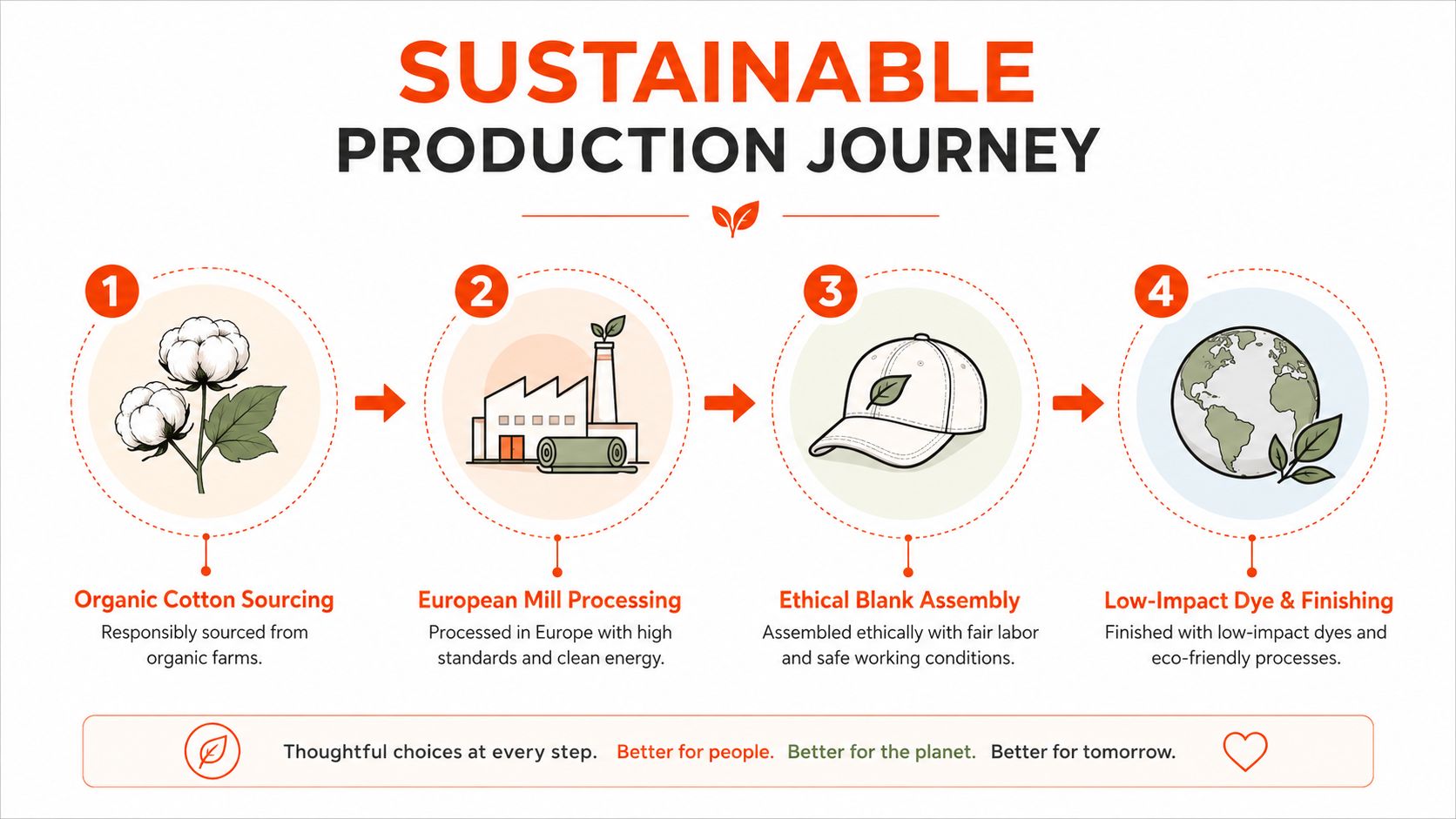
The point isn't to make a moral speech about fabric choices. The point is to get a cap that feels intentional. If the blank is better, the fit is better. If the finish is cleaner, the hat lasts longer. If the customization method matches the material, the product holds together instead of falling apart after a few sweaty washes.
For a straightforward fabric reference, Banger's organic cotton fabric guide is useful context when you're deciding how much of the sustainability story belongs in the item itself versus the packaging and fulfillment layer.
Packaging, Fulfillment, and Cost Considerations
A good running hat can still land wrong if the delivery feels lazy. If it shows up in a plain bag with no thought, the product reads like an afterthought. For team drops, creator merch, and event pickups, packaging is part of the experience, not a bonus layer.
Custom labels help here fast. Woven neck labels, screen-printed neck labels, hang tags, embroidered name tags, and full label and trim development all push the hat away from generic retail energy. Packaging can stay simple with bulk cartons, or it can move into branded mailer boxes, tissue paper, stickers, and inserts if the use case is influencer gifting or a conference handoff.
Where cost actually moves
The biggest cost drivers are the ones buyers can control. The blank tier matters. Decoration method matters. Panel count matters. Packaging complexity matters. Shipping mode matters. If you want the cleanest possible spend, keep the silhouette simple, keep the decoration restrained, and don't add packaging layers unless they support the drop.
Banger also handles single or multiple-address shipping worldwide in one order, which is a real advantage for distributed teams and community sends. It offers DDP duties-paid delivery to the US, UK, Canada, Australia, Switzerland, and Norway, and supports both stablecoin and fiat payments, including USDC and USDT as well as standard invoice rails. That matters if you're planning a crypto-native drop or a geographically scattered team shipment.
Good fulfillment doesn't need to be flashy. It just needs to arrive clean, on time, and in the right place.
If you're comparing options, look at the full stack. Product, decoration, packaging, and shipping all shape whether the cap gets worn or forgotten. A cheap unit price doesn't help if the unboxing feels generic and the hat never makes it into someone's running rotation.
Your Pre-Quote Checklist for Customizable Running Hats
Use this before you ask for pricing. If you skip these details, you'll get a quote that sounds cheap and a sample that's wrong.
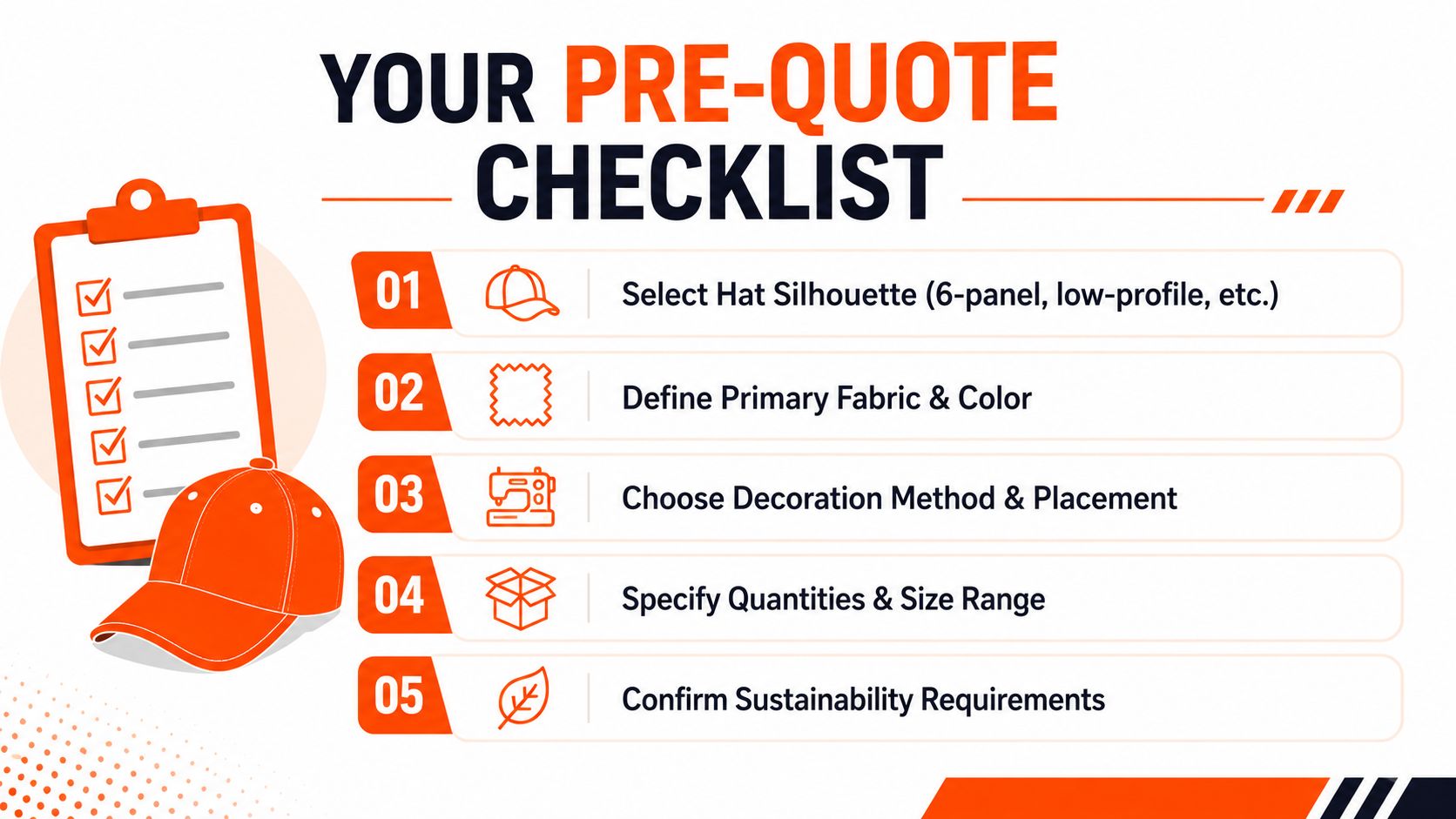
Lock these five inputs
- Select the silhouette. Decide whether you want a 6-panel cap, a low-profile running cap, a visor, or a trail-style shape.
- Define the fabric and color. Pick the performance material first, then choose the color swatch that matches the brand.
- Choose decoration and placement. Keep the logo size honest and decide whether the mark lives on the front, side, or back strap.
- Specify quantities and size range. Note whether the order needs fitted sizes or adjustable closures for a distributed audience.
- Confirm sustainability needs. Say whether recycled materials, organic blanks, or specific sourcing rules matter.
Add the details people forget. Reflective hits if the hat will be worn at night. Sample lead times versus production lead times. Reorder timing if this is a repeat drop. Packaging tier if the hat needs to feel giftable. If you're sending it to multiple locations, list every destination before the quote goes out.
The fastest way to pressure-test your brief is to turn those notes into one clean spec and ask for a product preview. If you want a simple next step, request a quote from Banger.