Create a Printed Canvas Pouch That Wows: 2026 Guide
You've probably seen the pattern. A campaign ships, the tote bag gets the attention, and the rest of the swag ends up forgotten by the time people are back at their desks. A printed canvas pouch is different because it earns a place in someone's bag, not just in their hands for five minutes. It's small enough to feel intentional, useful enough to stay in rotation, and premium enough to signal that the brand behind it cares about details.
That matters because canvas isn't a novelty material. Canvas sits at the intersection of a centuries-old utility material, historically used for durable goods like sails and backpacks, and the modern commercialization of printed branding, which became widespread with the printing press (Canvas history). In other words, the format already carries a functional, lasting feel before you print a single logo on it.
Table of Contents
Why Most Merch Fails And How Pouches Win
Most merch fails because it behaves like noise. It's the flimsy thing people accept at an event, then leave on a counter, or the branded item that looks fine on a mockup and forgettable in real life. A pouch wins when it solves a real use case, cables, makeup, chargers, travel bits, the stuff people carry around every day.
That's the practical edge. A pouch creates repeated brand contact without demanding attention. It doesn't need to be loud to work, and it doesn't need to dominate a desk to stay visible.
Practical rule: if an item only looks good in a photo, it's merch. If it still works after six months of friction, it's a brand asset.
The deeper reason pouches outperform throwaway swag is that canvas already feels established. The material has lived a long life in utility contexts, so a branded pouch reads as considered rather than promotional. That's why the best executions feel closer to a fashion accessory than a giveaway.
There's also a useful crossover with packaging strategy. If you've ever thought carefully about effective food packaging branding, the logic is similar, the container carries part of the message before the product even gets used. A pouch does that too, just in a smaller, more portable format.
The Foundation Choosing Your Canvas and Style
Start with the weight
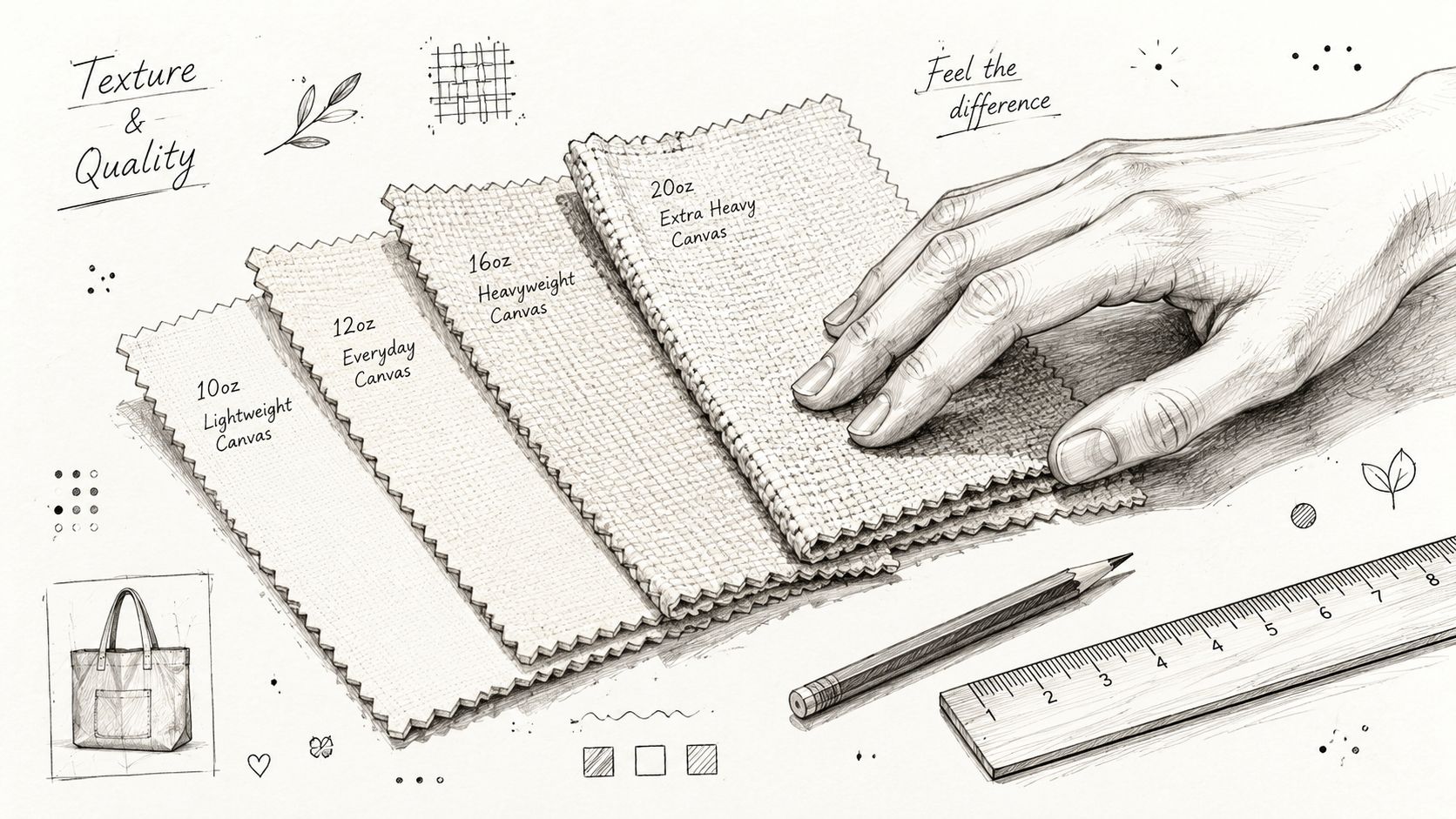
Canvas weight is measured in ounces per square yard. Lighter canvas for bags is often 6 oz to 9 oz, while heavier, more industrial-grade canvas used for durable totes and pouches is typically in the 10 oz to 24 oz range, offering more structure and longevity (canvas fabric guide). For a pouch, that choice changes everything. A lighter fabric feels softer and more casual, while a heavier one reads as structured, sturdier, and more premium.
If the pouch is meant to disappear into a tote or backpack until needed, a lighter canvas can be enough. If it needs to stand on its own at a conference table, hold shape on a shelf, or signal retail-level quality, heavier canvas usually makes more sense.
Practical rule: the more the pouch needs to hold form, the more the fabric weight should do the heavy lifting.
A useful way to think about it is through silhouette. Slim, flat pouches feel clean and minimal. Heavier, denser canvas gives you more presence, which helps when the pouch is supposed to feel like part of the brand system, not just a utility item.
Then choose the build
Construction is where a decent pouch becomes a great one. Flat pouches keep the profile tight and modern. Gusseted bottoms give you more volume and a better stance, which matters if the pouch has to carry bulkier contents. Metal zippers usually feel more substantial, while nylon zippers lean lighter and softer in hand.
Interior lining also changes the mood. A lined pouch can feel more finished, especially if the outer canvas is rugged. An unlined pouch can look more raw and utilitarian, which works when the brand language is stripped back and functional.
For anyone trying to translate fabric weight into a real product brief, this guide to GSM and fabric weight is a useful companion read, even though canvas is usually discussed in ounces per square yard rather than GSM.
The Art Nailing Your Design and Print Method
Design is where a pouch either looks expensive or feels like a rushed handout. The trick is matching the artwork to the print process instead of forcing one setup to do everything. A clean logo on a strong canvas base usually beats a complicated print that tries to say too much.
Screen printing and DTF do different jobs
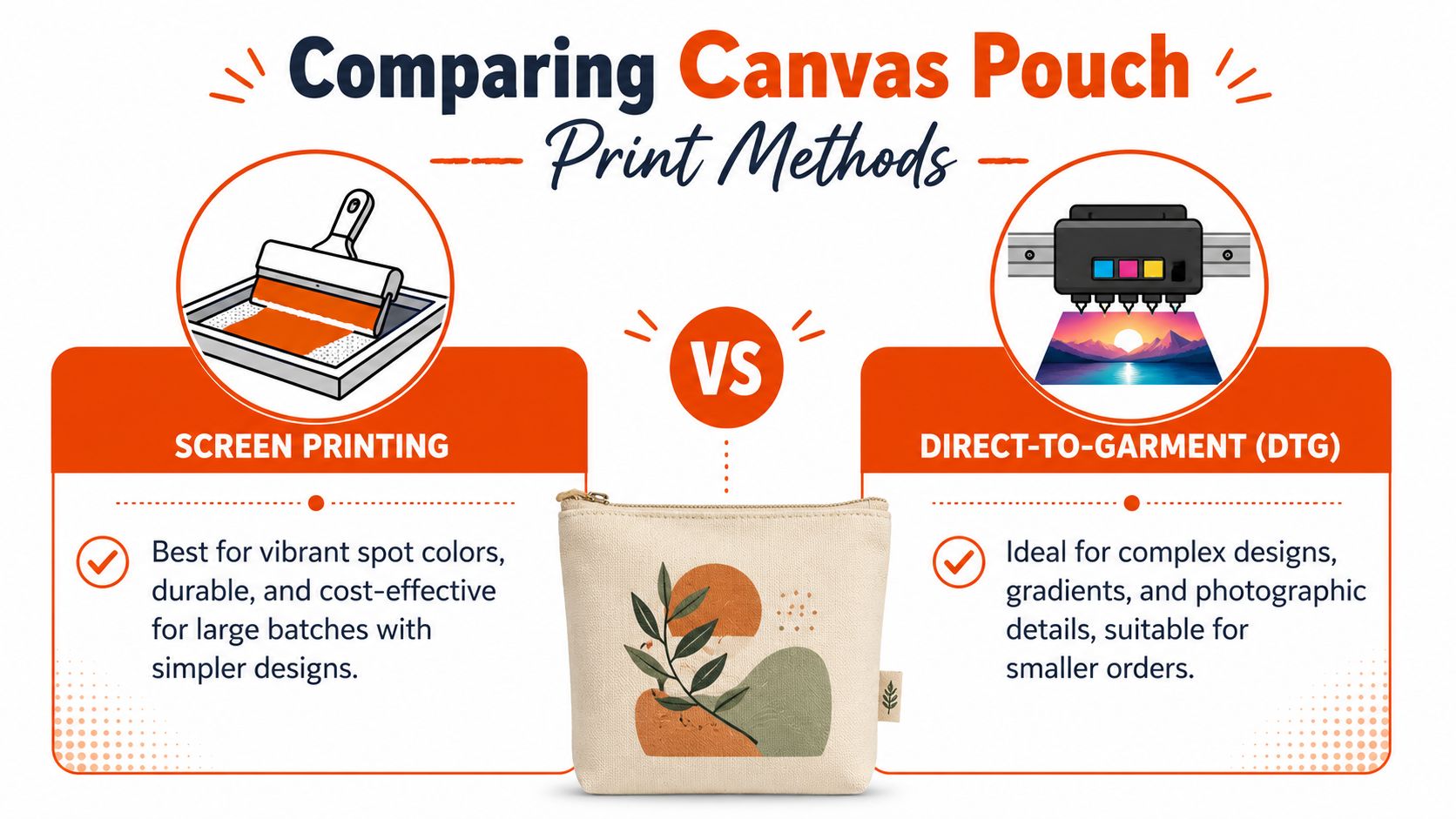
Screen printing is the move for bold spot color, cleaner edges, and a graphic look that feels intentional. It's especially strong when the logo is simple, the branding is restrained, and the goal is a pouch that looks like it belongs in a premium kit. A technical guide for canvas pouch material recommends 43 to 61 threads/cm, or 110 to 155 T/in, mesh for coarse canvas because finer meshes at 200 T/in or above clog quickly and move ink poorly; it also specifies at least 25 µm dry emulsion film, 65 to 72% NV low-viscosity ink, at least 22 N/cm frame tension, and climate control at 23°C ±1°C and 50% RH ±3% to limit tension loss during printing (screen printing on canvas guide).
DTF, by contrast, makes sense when the artwork needs gradients, fine detail, or a more complex full-color treatment. It gives you more visual range, but that doesn't automatically make it the better option for every pouch. For premium merch, the cleaner and more restrained print often ages better.
The durability trade-off matters. A useful guide on canvas bag printing notes that for a pouch exposed to friction in bags, a durable screen print can outperform a more colorful digital print if the goal is longevity and a cleaner fashion look, since full-coverage digital work can crack or fade over time (screen printing durability trade-off).
Prep the artwork like production depends on it
It does. Vector files are the safest starting point for screen printing because they scale cleanly and keep edges sharp. If the design is going digital, color management matters just as much, because what looks alive on a monitor can go flat on fabric if the file isn't handled properly.
Designer's note: the best pouch graphics are usually the simplest ones. Strong typography, one clear mark, and enough breathing room around it.
A lot of bad merch comes from designs that were built for a screen, not for cloth. Thin lines, tiny type, and overworked compositions get soft fast once they meet canvas texture. Keep it legible, keep it deliberate, and let the material do some of the aesthetic work.
For teams deciding between production methods more broadly, this DTF overview helps frame where digital decoration excels.
The Numbers MOQ Pricing and Sampling
Pricing on custom pouches gets confusing because buyers are usually asked to chase quotes before they understand the drivers. That's frustrating for event teams, especially when they need to compare landed cost, setup fees, and timing across multiple destinations. Public product pages often leave those answers vague, which makes planning harder than it should be (pricing transparency gap).
What drives the unit cost
Quantity still matters most. Bigger runs usually open better pricing, while smaller runs tend to carry more of the setup burden. Decoration complexity matters too, especially with screen printing, because every extra color or special effect adds another layer of work.
File readiness matters more than commonly anticipated. Clean vector artwork moves faster, while messy files slow everything down. If the pouch has multiple print areas, mixed finishes, or custom hardware, those choices can move the quote more than the pouch shape itself.
Sampling is the non-negotiable step
An e-proof is useful, but it's not the product. A digital mockup shows placement and proportions, not fabric feel, zipper quality, ink texture, or how the print sits on the actual canvas. A physical sample catches the mistakes that matter, the ones that only show up once you hold the thing.
The pouch you approve on a screen is never the pouch you'll hand to your team.
That's why sampling should happen before a full run, not after the first box arrives. You're checking whether the color feels right against the fabric, whether the print is too heavy or too thin, and whether the pouch has the kind of hand-feel that matches the brand.
For teams that want more flexibility in order planning, this no-minimum overview is a useful reference point for how lower quantities change the decision-making process.
The Impact Sustainable Options and Packaging
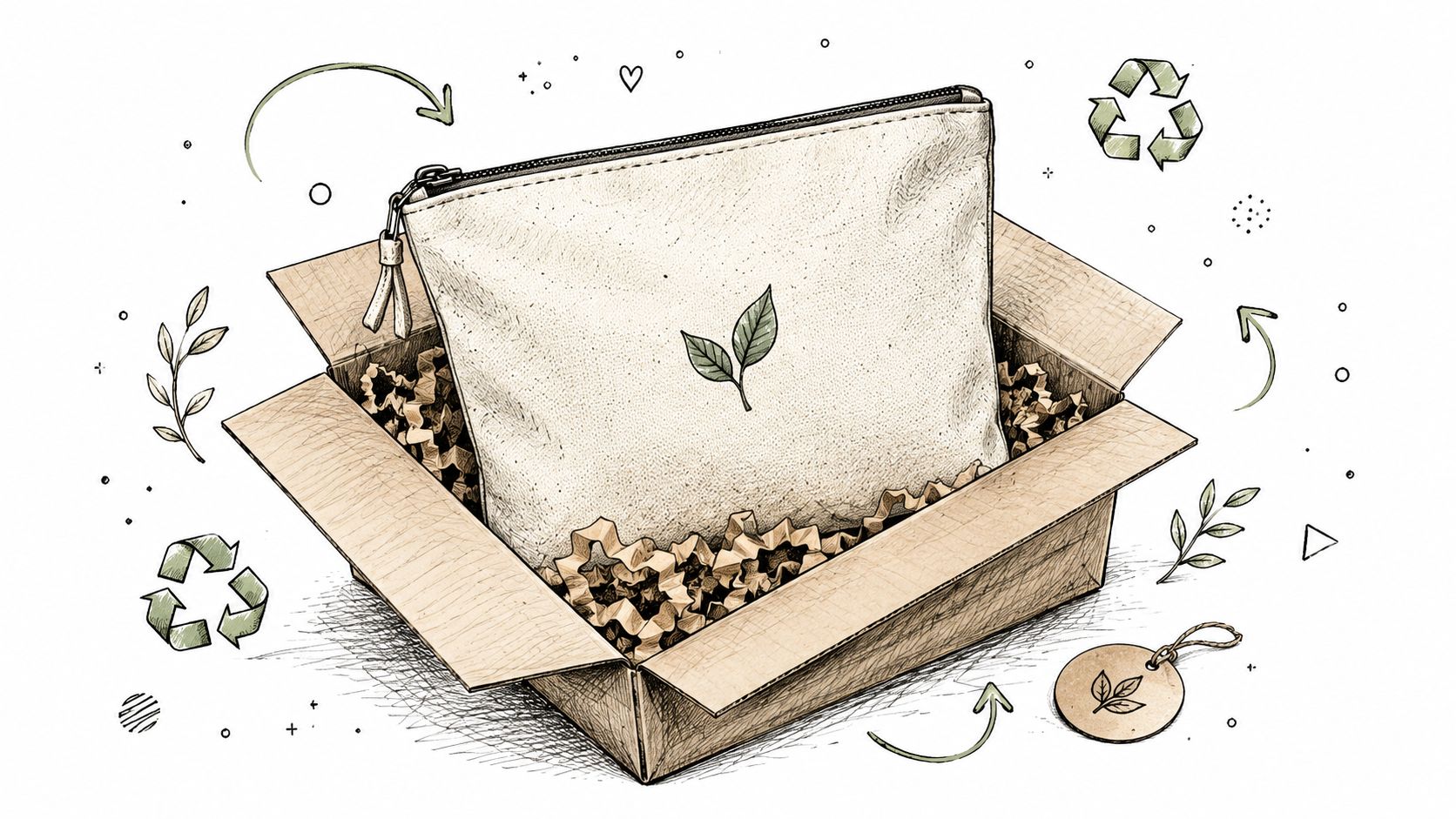
Sustainability isn't a garnish on premium merch. It changes how the whole object is read. A pouch made from organic or recycled materials feels more aligned with culture-driven brands because the values are visible in the physical thing, not just written in a brand deck.
Materials should match the message
If the brand talks about responsibility, the pouch shouldn't feel disposable. Organic canvas and recycled canvas both support a more thoughtful story, especially when the print is restrained and the palette is calm. The ink choice matters too, water-based inks usually support a softer finish and a less plasticky impression.
The key is consistency. A sustainable material paired with a glossy, overworked print creates mixed signals. A cleaner mark on a natural-feeling base usually reads more credibly.
This guide to organic cotton fabric is useful if you're deciding whether the fabric story should sit closer to apparel or accessory positioning.
Packaging turns the pouch into a moment
A pouch arriving in a cheap polybag feels like inventory. A pouch arriving in a branded mailer, with tissue, a note, or a structured insert, feels like a deliberate moment. That difference matters for onboarding, event gifting, and client sends, because the first unboxing shapes how people judge the piece before they even unzip it.
The best packaging doesn't compete with the pouch. It frames it. Keep the materials minimal, keep the inserts clean, and avoid anything that makes the experience feel bloated or noisy.
**Good packaging disappears after the reveal. Bad packaging is what people remember for the wrong reasons.
The Delivery Logistics Timelines and Fulfillment
The design can be perfect and the order can still miss if the logistics are sloppy. That's where merch programs usually get exposed. A finished pouch only helps if it lands where it needs to land, when it needs to land there, and without customs headaches that create last-minute stress.
Build backward from the event date
A realistic flow starts with approval, then moves into production, quality check, packaging, shipping, and delivery. Banger's process notes a free, no-commitment quote with product preview in 24 hours, followed by production and worldwide delivery in 10 to 15 business days end to end, with reorders of previously approved designs shipping in 5 to 7 days (Banger fulfillment process).
That timeline works best when the brief is already tight. Loose specs slow everything down. If you're working toward a conference, launch, or onboarding date, the safest move is to lock the pouch spec early and leave room for transit, not just production.
Multi-address shipping and customs need real attention
Distributed teams want one order and many destinations. That's normal now, and it saves a lot of operational overhead when done well. The catch is cross-border shipping, because the paperwork has to match the goods, and a small classification mistake can turn into a delay.
If you're shipping internationally, it's worth reviewing a resource like avoiding customs compliance errors before the order is finalized. The point isn't to become a logistics expert overnight, it's to avoid preventable friction when the pouches cross borders.
For teams planning broader rollout programs, this merch fulfillment overview is useful because it frames how single-address and multi-address shipping should be handled as part of the merch strategy, not as an afterthought.
The cleanest orders are the ones where creative, production, and fulfillment all agree on the same version of the pouch. That's what keeps a premium drop feeling premium all the way to delivery.
If you're planning a printed canvas pouch for onboarding, an event, or a client gift, build it like a product, not a promo item. Request a quote from Banger, compare the sample in hand, and launch something your team will actually want to keep using.