Running Caps Custom: The Complete Guide for 2026
You ordered the caps, approved the mockup, and felt good about the event. Then race day ends, the team gets home, and most of the hats disappear into closets. That's the usual failure mode of running caps custom. The logo looked right in the proof, but the cap felt hot, the visor sat awkwardly, or sweat turned the inside into a damp headband.
A custom running cap isn't just a logo placed on a blank. Fabric mapping, crown shape, visor curve, sweatband construction, closure, and decoration placement decide whether runners keep wearing it. Branding comes after those choices, not before them.
Table of Contents
Why Most Custom Running Caps End Up Unworn
A few weeks after the event, the organizer sees the result. The caps looked sharp in a flat digital render, yet runners leave them at home for the next run. A six-panel silhouette that seemed premium on screen can feel stiff in motion. Dense embroidery can add weight to the front, while a cotton-heavy body can hold sweat against the face.
That gap between mockup appeal and real-world performance causes most custom cap failures. Runners notice glare, airflow, sweat control, packability, and fit before they notice a polished logo. If the cap fails those tests, the decoration will not save it.
Use the Dirt Cheap Headwear running hat guide to compare running-hat styles, decoration options, and ordering considerations. Treat it as a baseline, not a template for generic event merchandise. Decide which product details must work first, then spend time refining the artwork.
The category is bigger than event swag
Caps remain a serious apparel category with strong everyday use. One market estimate valued global headwear at USD 37.01 billion in 2025, with caps representing 37.87% of revenue, and projected the market to reach USD 62.83 billion by 2033, implying a 6.9% CAGR from 2026 to 2033. Those headwear market figures help explain why runners, teams, and brands continue investing in caps after other giveaways lose relevance.
A separate estimate in the same market overview placed hats and caps at 60.70% of headwear market share in 2025, while offline retail accounted for 70.05% of revenue. Those figures reinforce a practical point: caps still depend on physical distribution, events, retail, and repeated wear.
The product has to earn its place in a runner's kit. A logo gets the cap noticed once. Comfort gets it worn again.
Start with construction. Build the identity system around that decision. Banger's custom design services fit projects where the cap must work with a team drop, event kit, or broader branded apparel system instead of functioning as a one-off logo application.
Choosing the Right Cap Construction and Materials
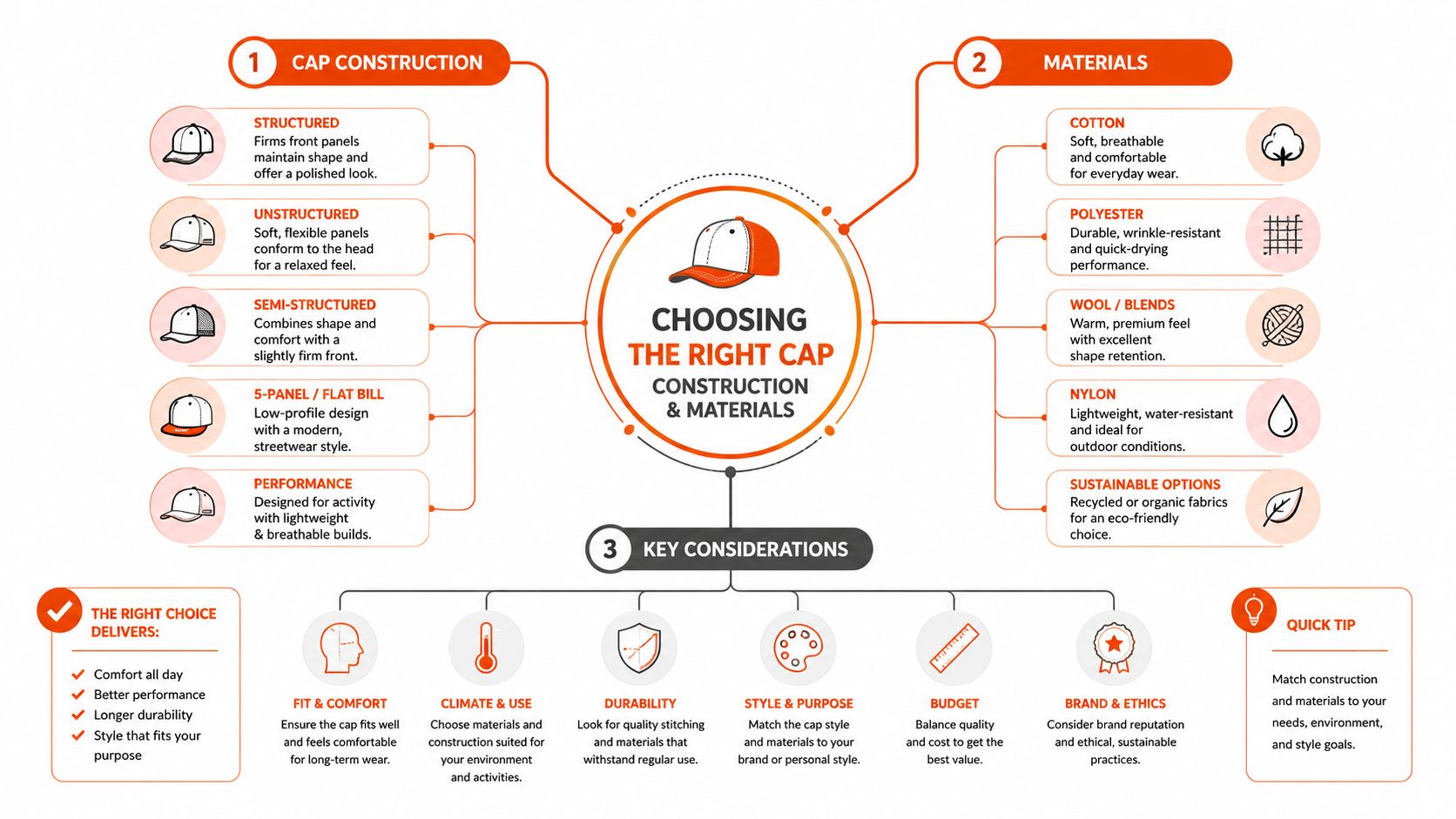
The right cap depends on the run, the climate, and the brand's intended role. A race-day giveaway can be lighter and more universal than a technical team cap used throughout a season. Don't choose a silhouette because it looks familiar. Choose it because its construction supports the way people will wear it.
Start with the pattern
A five-panel cap gives you a clean front panel and a modern, streetwear-adjacent profile. It works well for bold wordmarks, compact symbols, and internet-native brands that want the cap to feel like a real product rather than event merchandise. The panel layout can also create a smoother decoration zone, but the front seam and crown shape still need checking before artwork is locked.
A six-panel cap feels more traditional and can distribute the crown shape naturally around the head. It's a strong choice for classic running clubs, outdoor programs, and brands that want a familiar athletic silhouette. The trade-off is that seams can interrupt the visual flow and limit how large or wide a front decoration feels.
Structured fronts hold their shape and create a more defined branding surface. Unstructured fronts pack down more easily and tend to feel softer, but they can wrinkle around decoration if the backing and stitch density aren't controlled. Crown height affects both perceived style and fit. A low crown feels athletic and compact, while a taller crown can create more room but may look less sleek on smaller heads.
Materials should follow the route
For performance-led drops, recycled polyester is a strong starting point because it supports lightweight, moisture-managing construction. Organic cotton makes more sense for lifestyle-leaning caps where texture and natural hand feel matter as much as technical performance. Cotton can look excellent, but don't position it as a high-sweat race solution without testing the sweatband and drying behavior.
Mesh side panels, laser-cut ventilation, and breathable zones can reduce heat buildup. UPF-rated fabrics add a useful protection layer for exposed routes, especially when the cap will be worn for longer periods in direct sun. Recent running-cap trend coverage points toward hybrid-mapped fabrics, breathable sides, and UPF protection as important product features, not decorative extras. The 2025 running-cap trend summary reinforces the practical buyer question: which construction works in heat, glare, and sweat?
Shortlist the cap before opening the logo file:
- Performance race cap: lightweight recycled polyester, breathable side zones, moisture-managing sweatband, secure bungee or hook-and-loop closure.
- Team training cap: five or six panels, stable visor, adjustable closure, moderate structure, embroidery zone that can survive repeat wear.
- Lifestyle event cap: organic cotton or a cotton blend, softer crown, restrained decoration, and a silhouette people can wear away from the event.
Review hat decoration and proofs before committing to a construction. Then compare available silhouettes in the custom caps catalog, keeping the performance brief in front of you. Comfort specifications should make the shortlist. Decoration specifications should refine it.
Customization Techniques That Actually Work on Caps
Cap decoration is a production problem disguised as a design problem. A logo that looks minimal in Illustrator can become expensive once the file includes small text, outlines, tight curves, multiple color changes, and dense fills.
Flat embroidery remains the default for most branded running caps. It gives a clean, durable mark and works especially well for symbols, short wordmarks, and simple monograms. Three-dimensional puff embroidery creates more volume and streetwear energy, but it needs larger shapes, less tiny detail, and a cap front that can support the added structure. Printed, woven, or patch-based methods are useful when the artwork has gradients, fine illustration, or a deliberately softer badge effect.
The numbers that affect the quote
Embroidery stitch count means the actual number of needle penetrations in the final file. A typical 5 cm-wide logo often lands around 4,000 to 7,000 stitches, while a 7 cm design with small text, outlines, and three or more colors can reach 12,000 to 20,000 stitches. This stitch-count guide also estimates machine time at roughly one minute per 1,000 stitches per head, with trims and color changes adding about 15% to 30% more time.
That's why a “simple” logo can impact the production budget. More stitches mean more machine time, more thread, more trims, and more chances for registration problems on a curved surface.
| Technique | Best For | Typical Stitch Count | Run Time Impact | Cap Front Fit |
|---|---|---|---|---|
| Flat embroidery | Clean logos, symbols, short wordmarks | 4,000 to 7,000 for a typical 5 cm logo | Roughly one minute per 1,000 stitches, plus trims and color changes | Keep the design within about 4.5 by 2.25 inches |
| 3D puff embroidery | Bold marks with strong relief | Often 1.5x to 2x flat embroidery for the same footprint | Longer runs and more production handling | Use large shapes and avoid tiny text |
| Printed or patch-based decoration | Illustrations, gradients, detailed artwork | Not measured as embroidery stitches | Depends on print, patch, and finishing process | Flexible, but check curvature and edge behavior |
An independent embroidery guide recommends keeping structured cap-front flat embroidery at or below 10,000 stitches, and gives a practical front-panel limit of about 4.5 inches wide by 2.25 inches high. Those cap embroidery thresholds are useful guardrails when the artwork is still being designed.
Pick the method by the artwork
Use flat embroidery when the mark needs to feel permanent, legible, and athletic. Choose puff when the brand wants a bold raised hit and the design can survive simplified geometry. Use a patch or print when the artwork depends on fine detail that thread can't reproduce cleanly.
The strongest caps usually don't stack every technique on the front. Put the primary mark on the front, add a small woven label or side hit if the system needs another brand cue, and reserve an interior print for a hidden detail. The merch printing techniques FAQ can help compare methods across the broader apparel program.
Decision rule: If the logo only works when it's dense, tiny, or oversized, redesign the logo before changing the cap.
Branding Placement, Colors, and Finishing Details
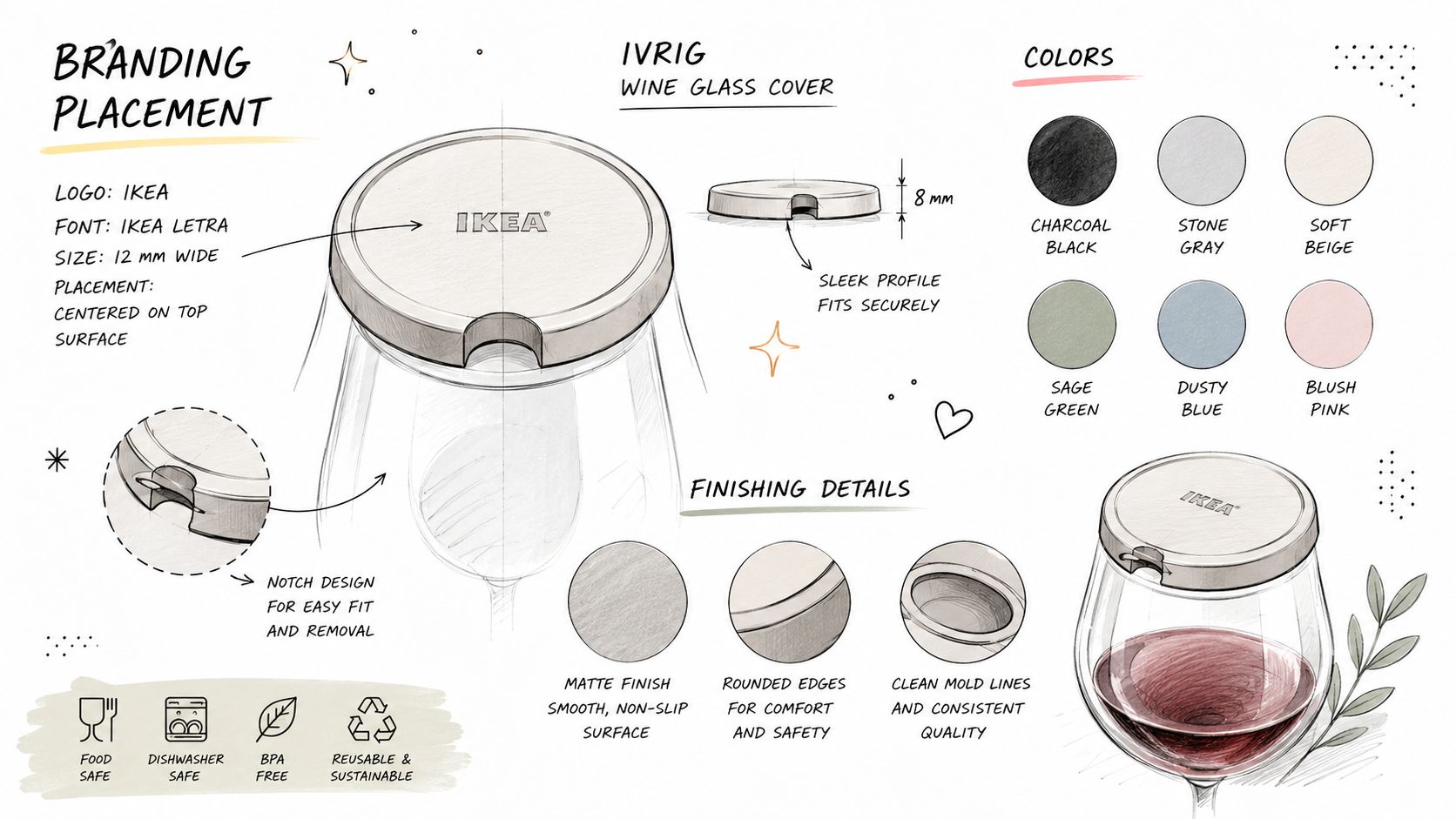
The cap has limited real estate, and every placement carries a different visual signal. Front-panel embroidery is the main brand zone because it reads immediately in photos, on course footage, and across a group of runners. Keep it aligned to seam reference points rather than trusting a flat center mark.
A small side embroidery on the wearer's left feels quieter and more fashion-led. It works for a symbol, team code, or secondary identifier. The back arch and closure area suit short words, dates, or compact marks, but the available height is tight. Interior sweatband printing is the hidden layer. It can carry a message, URL, or community detail without turning the cap into a billboard.
Lock color before decoration
Use a Pantone TCX reference for branded programs, especially when the cap body, thread, trims, and packaging need to feel like one system. A practical target is Delta-E under 2.0 for branded color matching, as specified in the technical production guidance for custom running caps. The running-cap production specification also calls for a digitized embroidery preview, thread brand, needle count, and decoration method.
The proof should show more than the logo. Check the fabric color, thread color, backing, placement, visor curve, sweatband, closure, and any contrast binding. A small placement shift can look obvious on a curved front. The same production reference notes that even a 0.8 mm shift can be visible when the logo isn't anchored precisely to seam references.
After the cap itself is right, add finishing details with restraint:
- Woven labels: useful for side panels, rear arches, or interior branding.
- Screen-printed neck-style labels: suited to soft interior messaging where a sewn label would add bulk.
- Hang tags: helpful for retail-style drops, care information, or campaign storytelling.
- Embroidered name tags: practical for team identity and small-group personalization.
- Recycled trims and organic cotton labels: visible sustainability signals when the material choices support the claim.
Keep the front clean. Premium customization usually comes from better decisions, not more decoration.
The visual proof should be followed by a physical or photo-based confirmation before bulk production. This short video gives useful context on branded product development and proofing:
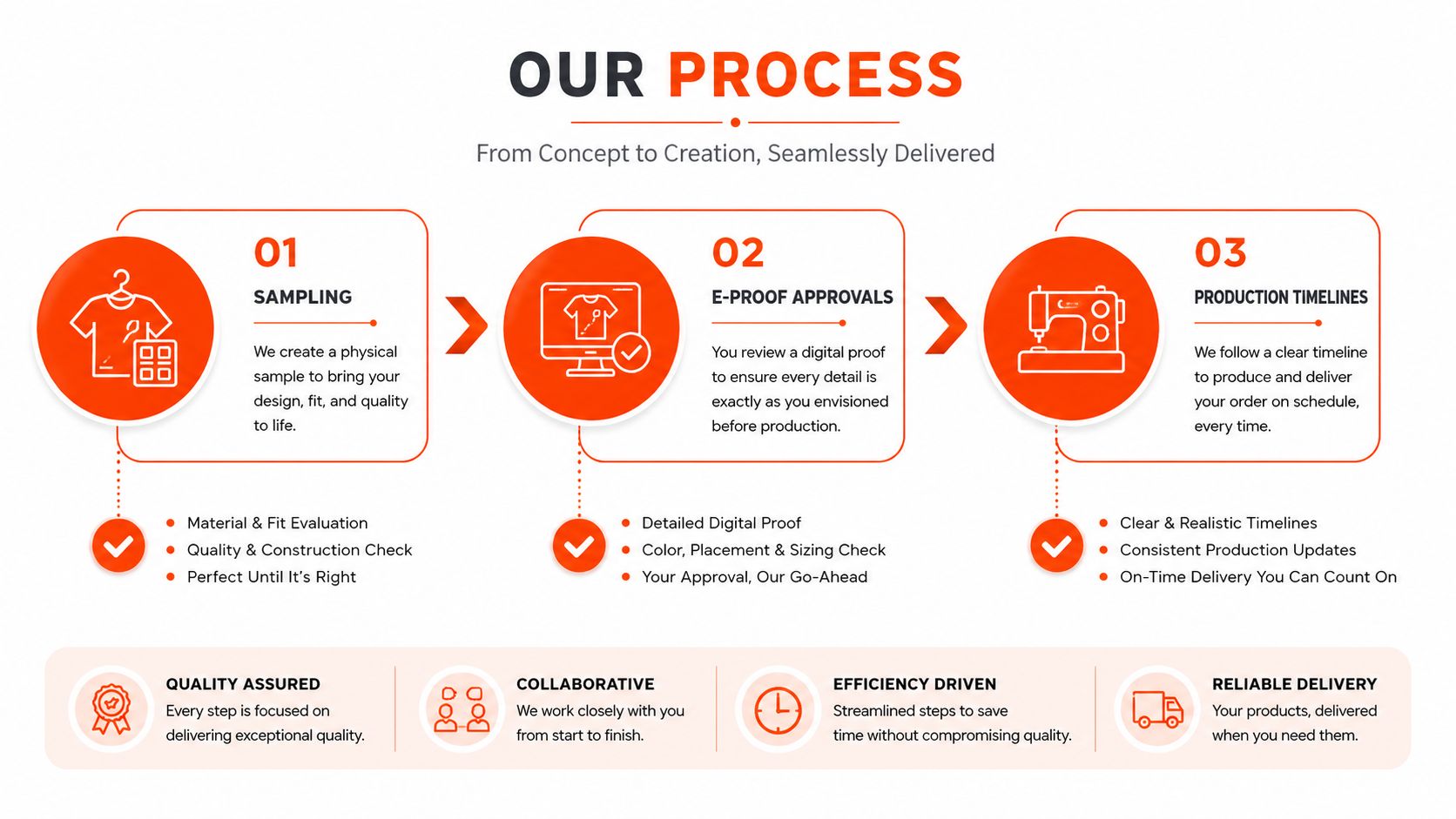
Sampling, E-Proof Approvals, and Production Timelines
A serious supplier should make the production sequence visible. Start with a written spec sheet covering panel count, crown height, fabric, color references, visor, sweatband, closure, decoration method, placement, packaging, and delivery addresses.
The workflow should look like this:
- Spec confirmation: approve the construction and artwork requirements before digitization.
- Pre-production sample: review the actual cap, not just a render.
- Photo proof or BAT: receive atelier photos showing the sample from useful angles.
- E-proof approval: check placement, colors, stitch behavior, and finishing before bulk production.
- Bulk production: manufacture against the approved version.
- Pre-shipment inspection: confirm workmanship, count, packaging, and shipping labels.
The embroidery file preview should show stitch direction and density. Ask for the thread brand, needle count, Pantone reference, decoration method, and physical sample photos. If a supplier can't provide those details, you're approving a promise rather than a product.
Tolerances worth writing into the spec
The production brief should define crown symmetry within 3 mm, visor curve consistency, stitch density by panel, sweatband attachment strength, and embroidery registration. The technical spec for custom running caps recommends those controls because vague approval language creates avoidable disputes after delivery.
Use the merch e-proof approval process to keep comments centralized. Approve one final file and one final sample reference. Don't let a late artwork swap create a second version that the factory interprets differently.
For planning, request a quote and product preview within 24 hours, then allow 10 to 15 business days end to end for production and worldwide delivery. Previously approved designs can be reordered in 5 to 7 days. Those timelines come from Banger's stated production process, so confirm the exact schedule against quantity, decoration complexity, and destination before announcing a launch date.
Sizing, Fit, and Minimum Order Quantities
Fit and MOQ belong in the same conversation because the closure determines how much size planning you need. A snapback, hook-and-loop strap, buckle, or bungee closure can cover a broad range of wearers, while a fitted cap forces a more deliberate size run. A stretch sweatband can improve tolerance, but it doesn't replace accurate head measurements.
For team drops, choose an adjustable construction unless the cap is part of a tightly managed performance kit. Use the caps size chart to organize head-circumference guidance and communicate fit before people receive the order. A cap that technically fits but feels unstable during movement will still end up unworn.
MOQ rules vary by design
One wholesale running-cap source lists 25 hats as its entry minimum, with no minimum per color or size, but sets the customization minimum at 50 hats. It also allows buyers to mix up to two sizes or two colors for every 50 hats purchased. Those wholesale running-cap rules show why buyers need to ask about the decorated order, not just the blank inventory.
Another running-hat supplier sets a minimum of 50 hats per design, which makes the design-level minimum more important than the available SKU quantity. For smaller teams, Banger's stated minimums are 1 unit per item on most products, 10 units per apparel order, and around 50 units for cut and sew. Treat those as a useful counterpoint, then confirm the current product-specific requirement.
The practical move is simple. If the supplier permits it, distribute each 50-cap personalization run across two sizes or two colors. That keeps the order useful for a mixed team without creating a pile of one-size inventory.
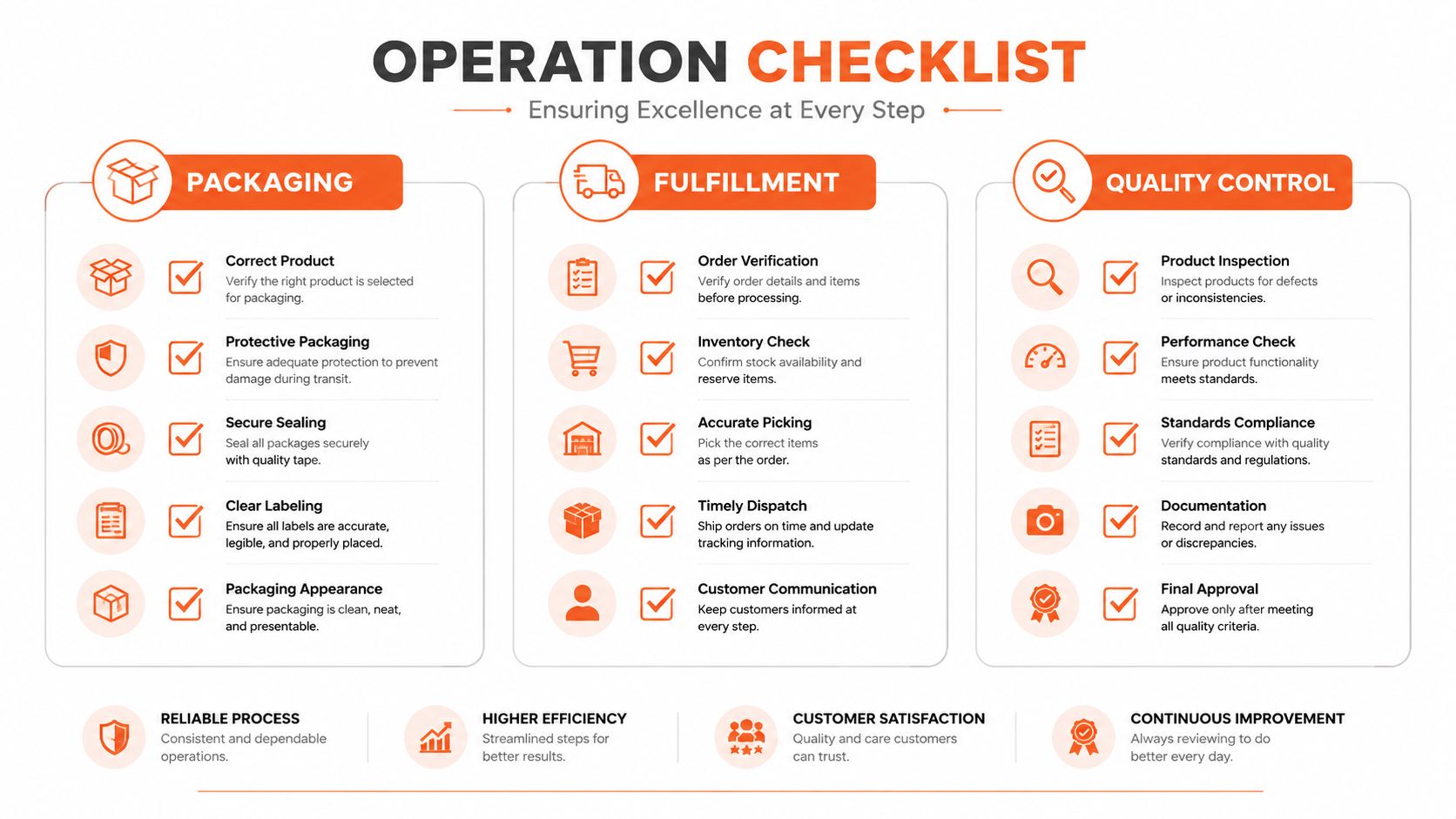
Packaging, Fulfillment, and Quality Control
A cap drop isn't finished when the embroidery machine stops. The buyer experiences the product through the package, the delivery process, and the condition of the item inside. A branded mailer box, tissue paper, sticker, hang tag, and short insert can make a team drop feel intentional instead of pulled from a warehouse carton.
That matters even more for distributed teams, creator communities, conference gifting, and customer programs. Plan whether caps ship to one location or multiple addresses worldwide. Banger supports single or multi-address shipping, worldwide fulfillment, and DDP options for the US, UK, Canada, Australia, Switzerland, and Norway, with payment available in stablecoins or fiat across EUR, USD, GBP, CHF, CAD, and AUD.
Inspect the parts that affect wear
Use an in-line and pre-shipment checklist, not a vague “looks good” approval. The quality-control workflow for running caps specifically calls out comfort, construction, color, decoration, symmetry, and foreign-object risks. The running-cap QC checklist identifies broken needles, screws, and staples as potential injury hazards, so metal-risk checks belong beside visual inspection.
- Fit: verify head circumference and closure function.
- Crown: check symmetry, wrinkles, and unwanted distortion.
- Visor: compare curve consistency across the order.
- Construction: inspect line blistering, seam tape, and sweatband attachment.
- Color: check fabric chromatic aberration and thread color consistency.
- Decoration: confirm embroidery registration, density, and clean trims.
- Safety: check for retained needles, screws, staples, or other foreign objects.
The final calls are straightforward: choose performance fabric, lock the visor and sweatband, keep the front decoration legible, approve against a real sample, and inspect before shipping. Those decisions determine whether the cap becomes part of someone's rotation or another forgotten event freebie.
Banger offers custom caps, premium European blanks, embroidery and other decoration methods, custom finishing, branded packaging, and worldwide single or multi-address fulfillment for modern teams. Visit Banger to request a product preview and build a running cap people will wear after race day.