Elevate Your Brand with Custom Apparel Packaging
You've got the garments dialed. The hoodie weight is right. The embroidery is sharp. The neck label feels considered. Then the drop lands in a limp, forgettable shipper that looks like it came from the office supply closet.
That's the moment the brand breaks.
For apparel brands, startups, creator drops, and internet-native teams, packaging isn't separate from the product. It's the first physical proof that the taste level is real. It tells people whether this was a thoughtful release or just another bulk order with a logo on it. When the unboxing is strong, the product feels more valuable before it's even unfolded. When it's generic, the whole thing loses tension.
Table of Contents
Your Packaging Is Your First Impression
A lot of teams learn this the expensive way. They invest in heavyweight fleece, custom trims, woven labels, and solid art direction. Then they ship the whole thing in a plain mailer with no structure, no story, and no respect for the product inside.
That disconnect is bigger than people think. If your drop is meant to feel premium, custom apparel packaging has to carry the same logic as the garment. It should feel like part of the system, not the forgotten final step. The market is moving that way too. The global garment packaging market was valued at $18.6 billion in 2025 and is projected to reach $31.4 billion by 2034, reflecting demand for packaging that actively builds brand value, not just protects apparel during transit, according to DataIntelo's garment packaging market outlook.
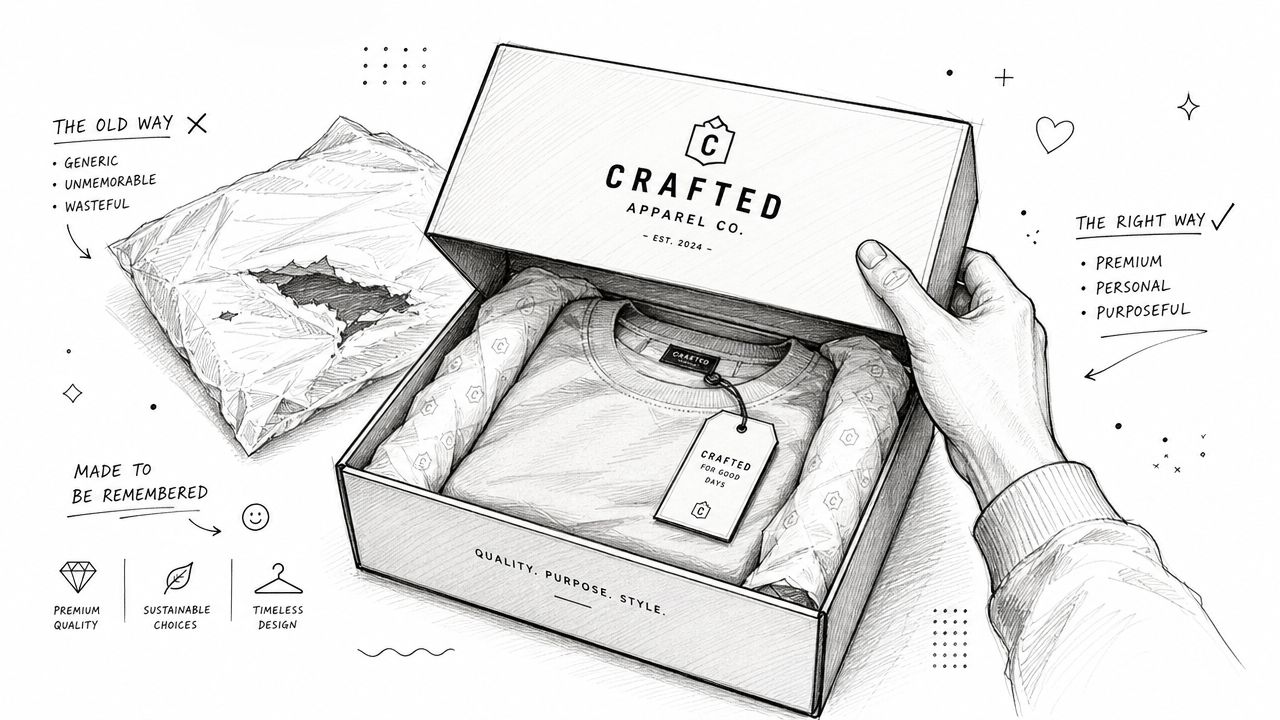
The first touchpoint is doing brand work
When someone receives a team drop, onboarding kit, influencer send, or community reward, the package speaks before the tee does. The board stock, the structure, the print quality, even how the garment sits inside the box, all of it signals whether the brand knows what it's doing.
That matters more now because unboxing has become part of the product narrative. People film it, post it, forward it to the team chat, or stack it next to other brand mailers and compare taste levels instantly.
A premium hoodie in generic packaging feels like procurement. The same hoodie in a considered shipper feels like a release.
Why most packaging fails
Usually it's one of three things:
- The apparel team and packaging team never aligned. The garment gets designed first, and packaging gets rushed at the end.
- The brand overspends on decoration and underspends on structure. Nice graphics can't save a box that arrives crushed.
- Nobody thinks through fulfillment. A package can look great in mockups and still fail once it has to ship to dozens of addresses across multiple countries.
The fix isn't “make it fancier.” The fix is to treat packaging like brand infrastructure. That means the dimensions, material, print file, inserts, and shipping method all need to work together.
If you're already thinking beyond stock templates and want the packaging to carry the same taste level as the garment, it helps to start with a proper custom design services workflow instead of trying to patch premium details onto a generic box later.
The Packaging Playbook Materials and Formats
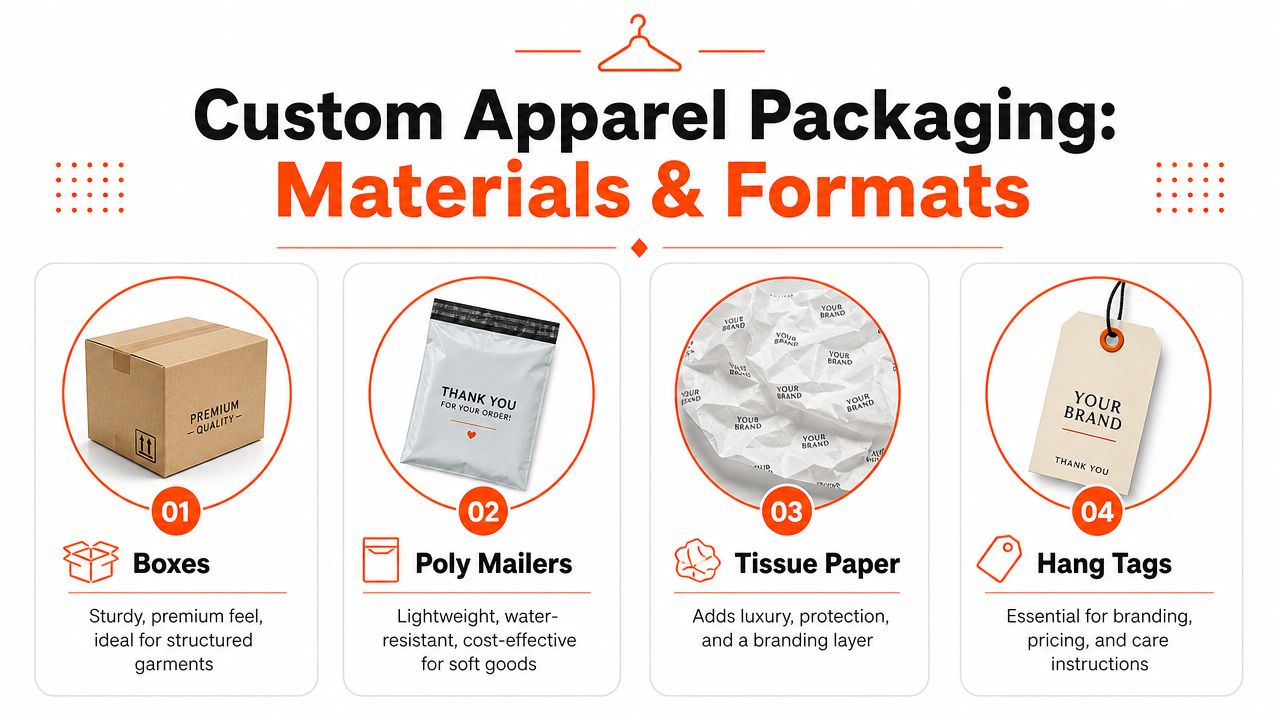
The right format depends less on trend and more on what you're shipping, how far it's going, and what kind of impression you want to make. A tee drop, a heavyweight hoodie, and a multi-item welcome kit shouldn't use the same packaging logic.
Choose the format from the garment backward
Start with the product, not the Pinterest board.
A soft, lightweight tee can work in a flexible mailer if the fold is clean and the outside presentation is still branded. A structured zip hoodie, heavier fleece piece, or premium send with multiple components usually wants a rigid shipper or mailer box. That's not just about aesthetics. It's about preserving shape, preventing ugly compression, and making the arrival feel intentional.
This gets especially obvious with heavy garments. A common challenge is packaging 400 to 500 GSM hoodies without wrecking either recyclability or presentation. At the same time, 81% of recipients in distributed teams still prefer rigid, branded shippers over “eco” alternatives for unboxing prestige, according to EcoEnclose's apparel packaging page. That tension is real. People say they want low-impact packaging, but they still react more strongly to a solid, well-branded box.
A practical comparison:
| Format | Best for | What works | What usually fails |
|---|---|---|---|
| Rigid or mailer box | Hoodies, premium kits, launches | Structure, stacked branding moments, better protection | Oversized cavities, weak board, wasted space |
| Poly mailer | Lightweight soft goods, high-volume sends | Lower weight, simple fulfillment, weather resistance | Feels cheap fast if the branding is lazy |
| Tissue plus sticker | Layering inside boxes or shippers | Adds pacing and polish | Looks flimsy if the fold is messy |
| Hang tags and inserts | Storytelling, care info, campaign tie-ins | Adds detail without overdesign | Becomes clutter if every card says the same thing |
Material and finish change the read instantly
Material choice is brand language. Kraft stock reads grounded, raw, maybe more organic. Coated stock reads cleaner, sharper, more graphic. Matte lamination feels restrained. Gloss can work for louder brands, but it can also slip into giveaway energy if the artwork isn't disciplined.
Use finishes sparingly. Embossing, foil, inside print, or spot treatments should create one strong moment, not ten medium ones. Premium packaging usually isn't about stacking effects. It's about control.
Practical rule: Pick one hero detail people remember. A strong interior print or a clean embossed mark beats a box trying to show every possible finish at once.
For teams developing packaging alongside garments, a focused custom packaging design approach is particularly helpful. You're not just selecting materials. You're matching board, finish, structure, and brand tone to the actual use case.
Designing an Unboxing Experience Not Just a Box
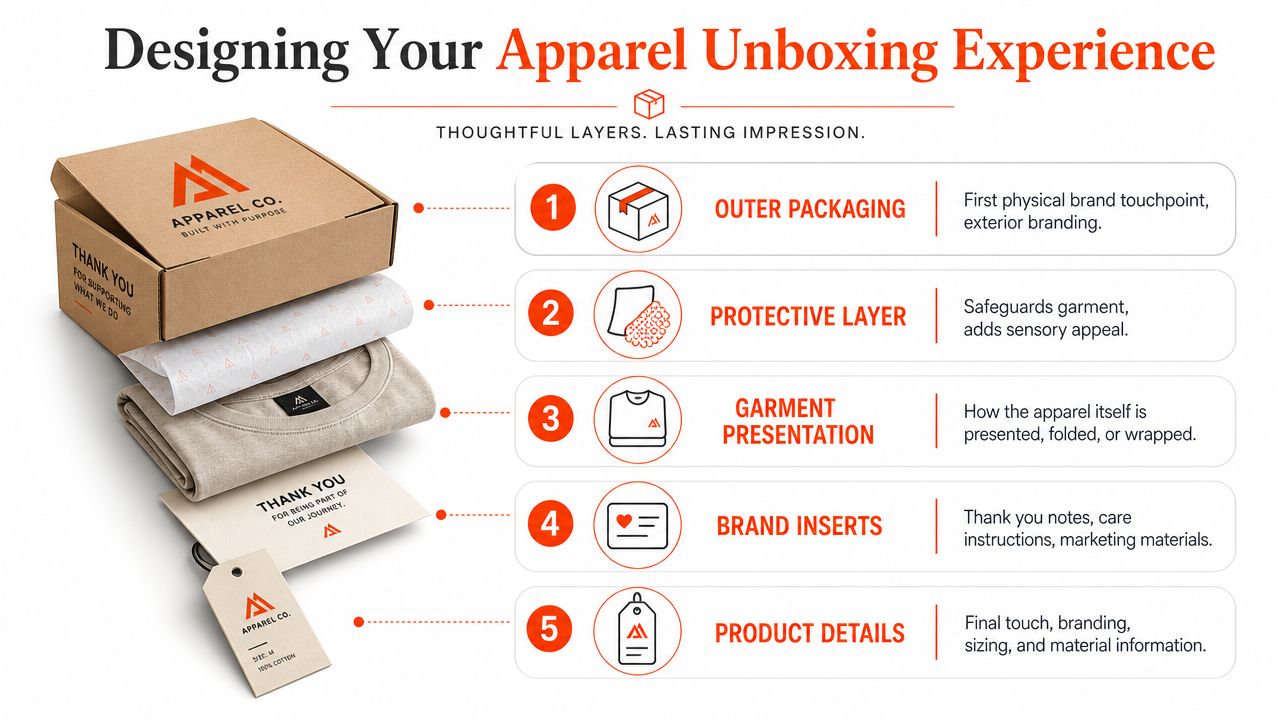
A good package doesn't just open. It reveals. The sequence matters. Exterior first, then protective layer, then garment presentation, then whatever final cue tells the recipient this wasn't assembled by accident.
Build the sequence, not just the artwork
The outer shipper should set the tone fast. Sometimes that means a restrained mark on clean stock. Sometimes it means bold full-bleed graphics. Both can work. What doesn't work is visual noise without hierarchy.
Inside, give the product a proper landing. Tissue paper, a branded seal, a clean fold, a small insert with actual purpose. Brands often get sentimental at this stage and start adding too much. Nobody needs three cards saying “thank you” in slightly different fonts.
A stronger setup looks more like this:
Exterior signal
Let the outside do one job well. Brand recognition, not clutter.Protective layer
Tissue, wrap, or insert should protect the garment and add pacing.Garment presentation
Fold matters. If the first visible surface is wrinkled, the premium illusion is gone.Insert with value
Care guide, campaign note, or QR experience. Not filler.
QR codes can pull more weight than people give them credit for. They can link to a launch page, a behind-the-scenes clip, a playlist, or collectible content tied to the drop. If your team is also building content around the release, examples of creating unboxing video ads can help shape packaging moments that effectively translate on camera instead of dying in still photos.
Get the technical file right
A lot of “bad packaging” is just bad pre-production discipline. The artwork might be fine. The file setup isn't.
A critical technical error is neglecting bleed. That leads to a 22% failure rate in print alignment where logos are cut off, and the fix is simple: include a 3mm bleed zone from the start, based on CarePac's packaging design guide. If you care about premium results, this isn't optional. Neither is checking dielines carefully and making sure logo placement survives folds, flaps, and trim edges.
A few technical habits save a lot of pain:
- Lock the fold before final art. A beautiful top-view mockup doesn't matter if the folded garment bulges the box.
- Design the inside too. Interior print, hidden messages, and underside flaps create memorable moments with very little extra visual clutter.
- Test the sticker and tissue relationship. If the seal rips the tissue badly, it stops feeling premium.
- Keep finishing cohesive. If you're using metallic details, pair them with intention. A good foil hot stamping reference is useful before you commit to metallic accents that look better in theory than in-hand.
Small print mistakes read huge on packaging because people hold the box close. Apparel gets worn at distance. Packaging gets inspected in the hand.
The Hard Numbers Cost MOQ and Timelines
A drop can look tight in the concept deck and still fall apart in the budget review. The usual culprit is treating packaging like decoration, then discovering it behaves like production. Once the packout includes a custom fold, branded tissue, a printed insert, size-specific labeling, and direct-to-recipient shipping, packaging stops being a side cost. It becomes part of the launch system.
What changes the cost
The biggest cost shifts usually come from structure and handling.
A standard mailer with one folded tee is cheap to produce and easy to pack. A custom rigid box with interior print, layered inserts, and multiple components costs more before freight even enters the conversation. Then labor starts to matter. Every extra touchpoint, folding, stickering, card insertion, bundle assembly, QC check, adds time at the warehouse.
That gap is why generic packaging advice misses the mark. Packlane notes on its apparel box guide that customization choices affect unit economics fast, especially once brands move beyond simple one-location shipments. That lines up with what happens in real programs. The box spec is only part of the number. The fulfillment method finishes the math.
Use this table to pressure-test scope before you approve artwork:
| Cost lever | Lower complexity | Higher complexity |
|---|---|---|
| Structure | Standard shipper or mailer | Custom cavity, layered insert, specialty closure |
| Exterior only | Exterior plus interior print, multiple finishes | |
| Components | Garment only | Tissue, sticker, card, tag, QR insert, bundle assembly |
| Fulfillment | Bulk to one location | Individual sends to many addresses |
Pick the premium moment and protect it. That is the move.
If the inside message matters more than the shipper, spend there. If the mailer is the hero because the drop lands with creators or clients on camera, keep the insert simple and put the money into print quality and fit. Premium packaging works when the budget follows the brand hierarchy instead of spreading thin across every layer.
Where teams get blindsided
Three patterns show up constantly with distributed teams:
- Too many customized components. Custom box, custom tissue, custom sticker, custom insert, custom sleeve. The invoice grows faster than the perceived value.
- Packing labor gets ignored. A folded tee in a mailer is one motion. A multi-item kit with sequencing and presentation standards is a packing program.
- The timeline starts after garments are approved. That is late. Packaging needs dielines, samples, revisions, freight planning, and buffer for rework.
MOQ is where strategy matters. Some formats are forgiving. Others are expensive unless volume is there. A custom printed mailer may work at a lower threshold. A specialty rigid box often demands a larger commitment, more storage, and more confidence in forecast accuracy. For seasonal drops, event kits, or onboarding programs with uncertain counts, lower-risk packaging formats usually protect margin better than chasing a hero box that ties up cash in inventory.
Timelines are rarely just print timelines. They include structural sampling, print approval, assembly planning, inbound delivery to the warehouse, and the reality that apparel and packaging need to meet at the same place, in the right sequence, with the same spec. Teams building around online ordering also need the commerce side configured properly so packaging choices, bundle logic, and order routing stay aligned. That is where Crayex Corporation e-commerce solutions can support the operational side of branded merch programs.
If the numbers are still fuzzy, get a packaging-inclusive estimate early through the custom apparel packaging quote process. It is a better way to test your actual budget than approving garments first and hoping fulfillment can make the presentation work later.
Sourcing and Fulfillment The Final Mile
Packaging design gets a lot of attention. Packaging execution wins or loses the drop.
If the box arrives late, if the insert is missing, if the fold spec changes between production runs, or if the warehouse packs the wrong size garment into the wrong shipper, nobody cares how strong the original concept was.
One partner or too many moving parts
Sourcing packaging separately can work. Plenty of teams do it. But the handoff points are where things usually slip. The garment vendor folds one way. The packaging vendor sized the box for another fold. The fulfillment partner uses substitute tissue because the branded stock ran out. Suddenly the drop feels inconsistent before it even leaves the warehouse.
An integrated setup is usually cleaner for any program with real complexity. That includes onboarding kits, event drops, global community sends, influencer gifting, and multi-item merch bundles. When one partner manages customization, packaging, storage, and outbound shipping, you remove a lot of interpretation errors.
That same logic applies on the commerce side. If you're tying branded packaging into a store experience, returns flow, and order routing, teams often need broader infrastructure support too. Resources like Crayex Corporation e-commerce solutions are useful when packaging decisions need to align with the wider storefront and fulfillment stack, not just the box itself.
A few things to lock before bulk packing starts:
- Approved fold method: The fold isn't a warehouse improvisation.
- Kit map: Every box component should be listed in order of assembly.
- Label logic: Multi-size orders and multi-address sends need clean pick-and-pack rules.
- Substitution rules: If a component goes out of stock, decide what can and can't be swapped.
The best packaging system is boring behind the scenes. No heroic fixes, no frantic WhatsApp threads, no last-minute reboxing.
Packaging now has a compliance job too
Packaging isn't just carrying brand anymore. It's carrying product data.
The EU's Ecodesign for Sustainable Products Regulation will require a Digital Product Passport for apparel, which means packaging will need QR codes or tags linking to lifecycle and sustainability data, according to Watershed's overview of the ESPR and Digital Product Passport. That changes the role of packaging in a serious way. The shipper, insert, or hang tag may become the bridge between the physical product and its verified product information.
This matters for global teams because the final mile is no longer just logistics. It's also traceability, disclosure, and consistency across regions.
A quick look at how teams explain fulfillment flows can help ground those decisions in something tangible:
The takeaway is simple. Great custom apparel packaging isn't a box spec. It's a chain of decisions that has to survive production, packing, shipping, and now compliance too.
FAQ Your Custom Packaging Questions Answered
Specific questions always show up once the mood board phase is over. Good. That usually means the team is finally thinking about the actual job.
Common questions that actually matter
| Question | Answer |
|---|---|
| Should apparel packaging always be a box? | No. Lightweight tees and simpler event giveaways can work well in a mailer if the branding and fold are disciplined. Boxes make more sense when the garment is structured, premium, heavy, or part of a kit. |
| What makes packaging feel cheap, even when it's branded? | Usually one of four things. Weak material, oversized dimensions, messy folds, or too many decorative elements fighting each other. Branding alone doesn't create premium perception. Control does. |
| How do you balance sustainability with a premium feel? | Start by reducing wasteful structure, not by stripping away all brand expression. Right-size the pack, choose materials carefully, and make sure the package still protects the garment. If it arrives damaged or crumpled, the “sustainable” choice won't feel successful to the recipient. |
| What should go inside besides the garment? | Only pieces that earn their place. Tissue for presentation, one insert with real information or storytelling value, and tags that support the product. Most brands add too much paper. |
| How early should packaging be planned? | At the same time as the garment finishing details. If packaging starts after production is underway, dimensions, fold method, and fulfillment requirements usually get compromised. |
| Can custom apparel packaging work for small runs? | Yes, but the concept has to be disciplined. For lower-volume drops, it's usually smarter to focus on one or two branded packaging elements rather than custom everything. |
| Where should teams look if they want more packaging-specific answers? | A focused reference point like custom branded gift box FAQs is more useful than broad merch advice, especially when the project involves kitting, inserts, and branded presentation. |
A simple decision filter
If you're stuck between options, run every packaging decision through three questions:
- Does it protect the garment properly?
- Does it match the brand's actual taste level?
- Does it survive the fulfillment setup you're using?
If the answer to any of those is no, it's not the right packaging. Even if it looked good in the mockup.
Good packaging makes the product feel finished. Great packaging makes the whole drop feel intentional.
If you want packaging to feel like part of the product instead of a rushed shipping layer, Banger is built for that. From premium blanks and finishing details to branded mailers, inserts, and worldwide fulfillment, the whole system is designed for internet-native teams that care how the drop lands. Request a quote, get product previews within 24h, and build merch your team wants to wear.