Craft Custom Fuzzy Socks Your Team Will Love to Wear
You're probably looking at fuzzy socks because you want something people will keep. Good instinct. Most merch dies because it tries to be cozy, cute, and branded all at once, then lands as a soft little object nobody reaches for after the launch photo.
Custom fuzzy socks can work, but only if you treat them like apparel, not a novelty. The market backing is real, custom socks sit inside a category that a 2025 report valued at USD 1,492.35 million and projected to reach USD 1,838.2 million by 2033 at 2.64% CAGR (market report). Another analysis puts the custom socks market at USD 2.1 billion in 2024 and USD 4.2 billion by 2033, with a 7.4% CAGR (market analysis). The point is simple, this is a real merch lane, not a cute side quest.
Table of Contents
- Match the method to the fabric
- Use the fiber to protect the hand-feel
- Customization methods on fuzzy socks
Why Most Fuzzy Merch Gets Ignored
The usual failure starts before production. Someone picks a fluffy sample, drops a logo on the cuff, and assumes the softness will do the selling. It won't. If the audience doesn't have a reason to wear the socks, they become desk clutter, then drawer clutter, then landfill.
Start with the job, not the sock
A distributed SaaS team wants something different from a DAO contributor cohort. A creator community wants a different object than a holiday client gift. If you don't name the audience first, the design gets vague fast.
Use case matters more than aesthetic taste. An onboarding kit can handle a restrained logo and strong packaging, while a conference giveaway needs quicker recognition from six feet away. Holiday gifting lives in a seasonal window, so warmth and timing do more work than cleverness.
Practical rule: write one sentence before you contact anyone. Name the audience, the use case, the season, and the quality bar. If that sentence feels fuzzy, the product will be too.
Watch the mistakes that kill wearability
Most bad fuzzy sock designs fail in three predictable ways. They look strong when laid flat but disappear once the pile rises. They place logos where the foot bends, so the branding warps the second someone walks. Or they arrive in packaging that gets crushed before the unboxing even happens.
Use the planning mindset buyers use for better swag decisions, not the impulse-buy mindset that turns merch into a joke. If you want a broader filter for what gets worn, this guide to best swag ideas is a useful sanity check.
Write the brief like this: who it's for, why they'd wear it, when they'll receive it, and what quality means in this context. That's the difference between a launch prop and a real wardrobe piece.
Picking Materials and Customization Methods
Plush socks look simple until you try to decorate them. The pile changes how artwork sits, how edges read, and how much detail survives. If you choose the decoration method first, you usually lose.
Match the method to the fabric
Jacquard knitting is the cleanest route when you want the logo built into the sock itself. It's the most durable option because the design lives in the structure, not on top of it. The tradeoff is obvious, it tends to push MOQ and tooling up.
Embroidery can work on fuzzy socks, but it's touchy. Heavy stitching crushes the loft, and puff embroidery can go lumpy on plush fabric. If you want a cleaner feel, keep the mark small and place it where the fabric won't fold hard.
Sublimation is a better fit for polyester-heavy blends, which makes it useful when you want more color movement or pattern coverage. If you want a deeper dive on that print path, the sublimation printing apparel guide is the right reference.
DTG printing is not the first choice here. On fuzzy pile, ink sits awkwardly unless the surface is prepared very carefully, which makes it a weaker answer than people expect. Woven or printed labels can help with branding, but they work best as supporting details, not the main identity.
Use the fiber to protect the hand-feel
If the sock is meant to feel premium, the fiber blend matters as much as the logo. Recycled polyester blends can help with consistency, while brushed acrylic and wool mixes change the warmth and texture in different ways. The right call depends on whether you want a softer lounge feel, a warmer winter feel, or a more structured retail look.
Best practice: pick the decoration method based on the fabric, not the other way around. That one decision saves a lot of ugly sample rounds.
Customization methods on fuzzy socks
| Method | Best on fuzzy pile | Typical MOQ | Look and feel |
|---|---|---|---|
| Jacquard | Strongest choice | Higher | Built into the fabric, clean and durable |
| Embroidery | Small marks only | Low to medium | Premium, but can flatten the pile |
| Sublimation | Polyester-heavy blends | Medium | Color-rich, best for all-over graphics |
| DTG printing | Limited use | Low | Softer visual impact, less reliable on pile |
| Woven or printed labels | As a support detail | Low | Clean branding without disturbing the surface |
If you want a model for how a simpler decorated sock can still feel polished, the swag program embroidered socks page is a good example of restrained branding done correctly.
Sizing, Fit, and Mixed-Size Orders
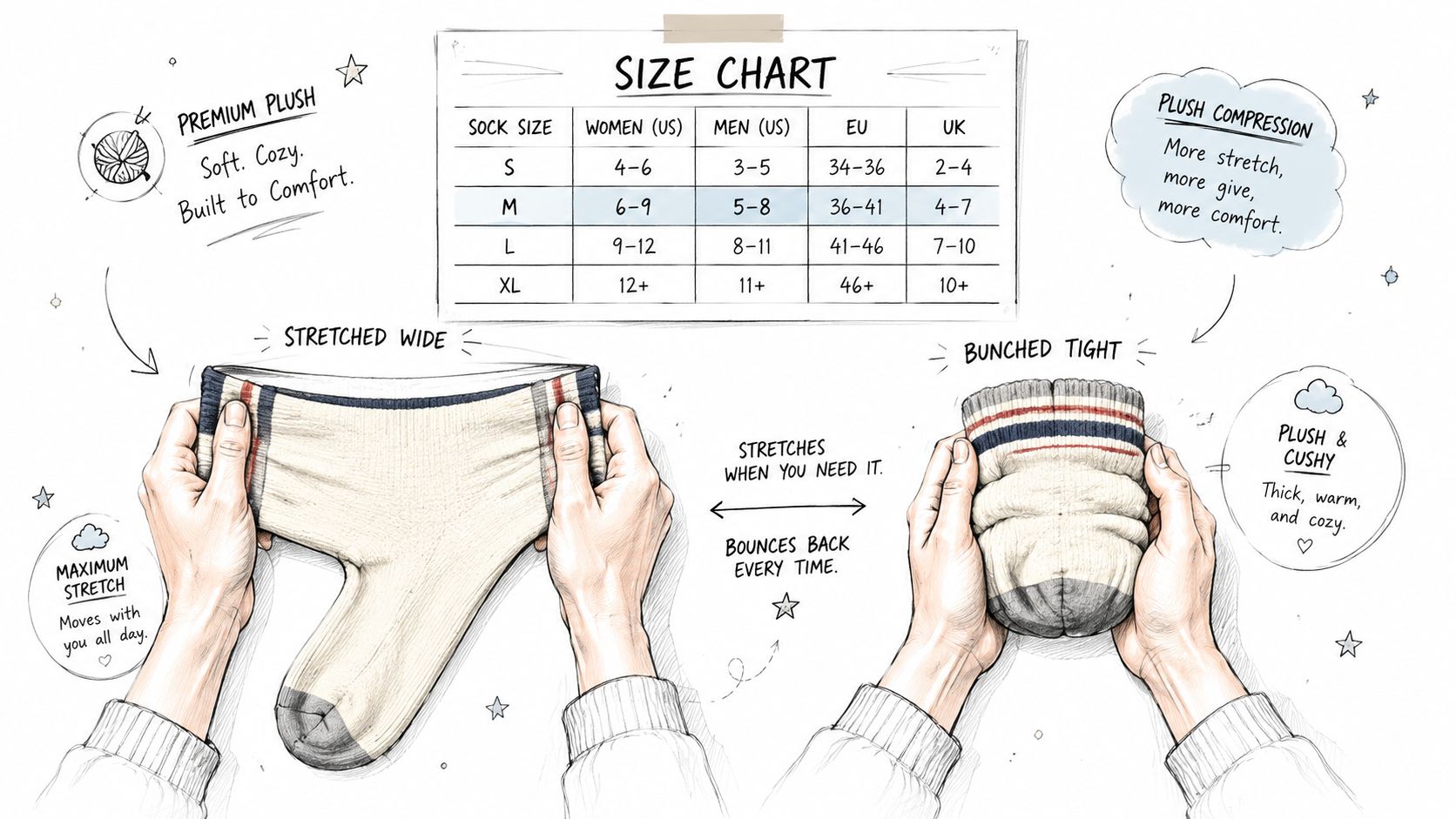
Sizing is where fuzzy socks punish lazy planning. Plush fabrics compress differently from standard socks, so a one-size-fits-most label doesn't behave like a true fit system. People will notice the difference the second they try them on, especially if the sock feels tight at the cuff or sloppy at the heel.
Treat OSFM as a convenience, not a guarantee
True graded sizing gives you more control, but many merch orders are sold as stretched OSFM because it's operationally easier. That's fine for a giveaway, not ideal for a product people are supposed to keep wearing. The better the audience cares about fit, the less you should rely on a loose catch-all size.
Global teams make this messier. EU, UK, and US size conventions don't line up neatly, and even basic consumer guidance points out that fit shifts by brand and material, not just by label. If your order goes to multiple regions, don't assume the same numeric size language will translate cleanly.
Split the order before production starts
For mixed teams, send a short size survey and set the split before approval. A default blend like 60/30/10 can work for a distributed audience when you don't have exact data, but only if you're willing to hold a few leftovers for reorders or late recipients. Don't wait until the box is packed to discover that half the team wanted the smaller run.
If you're shipping to event attendees or a community list, assume some sizes will sit longer than others. Keep the leftover units organized by size and region, then use them for future drops instead of treating them as dead stock. That's a simple inventory habit that saves money later.
Practical rule: if the order is going to real people, sizing is a planning input, not a checkbox.
MOQ, Lead Time, and Pricing
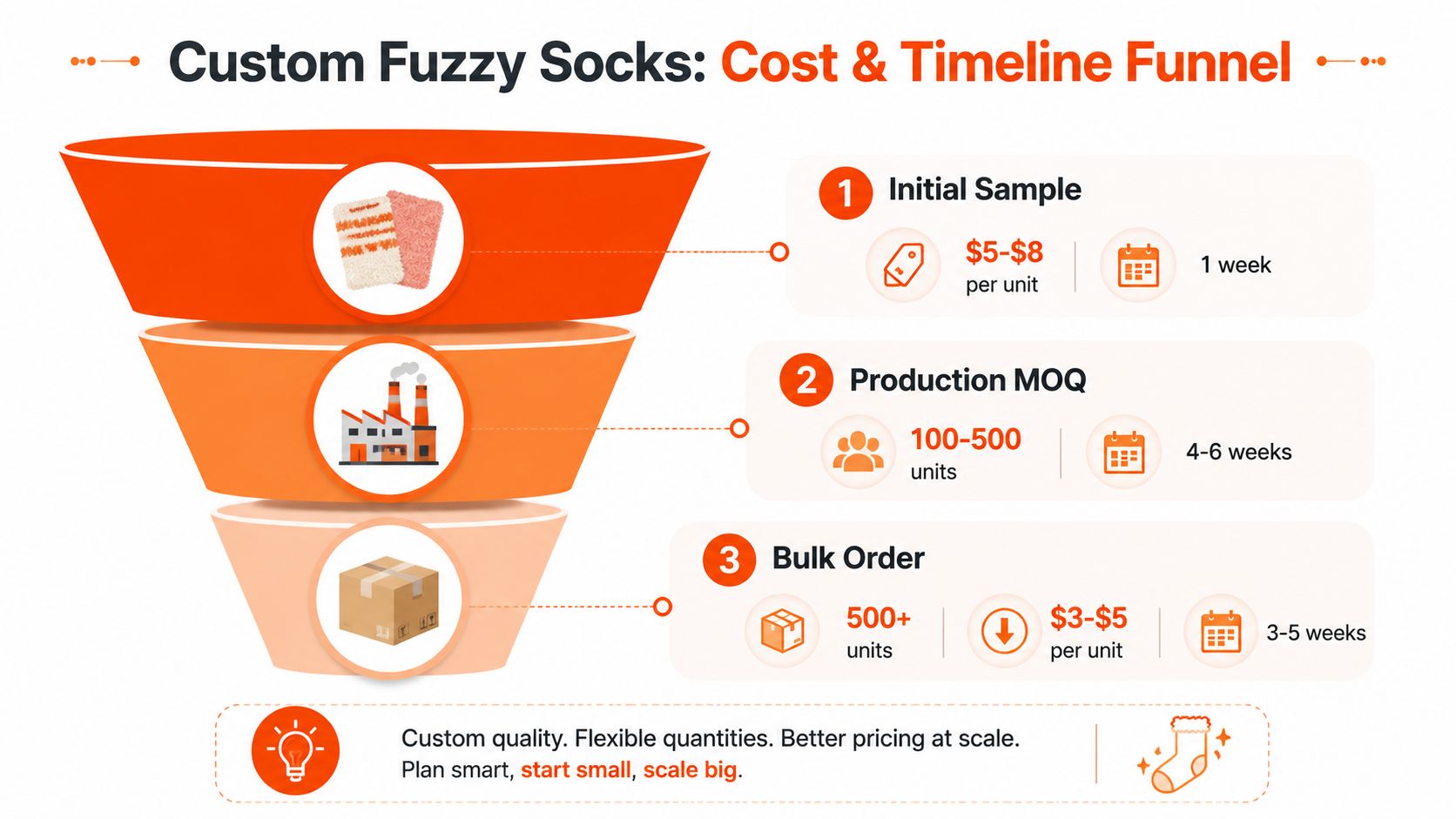
A clean pricing anchor starts with bulk math, but you should treat it as a starting point, not a promise. One manufacturer lists 200 to 499 pairs of custom fuzzy socks starting at about $1.80 per pair (manufacturer pricing). That gives you a floor for bulk economics without pretending every supplier or every spec will land there.
What actually moves the quote
Decoration method drives the first jump in cost. Jacquard usually asks for more setup work, while simpler branding methods can keep the front-end effort lighter. Once you add packaging, the quote climbs fast, especially if you want boxes, inserts, and a multi-part unboxing.
Shipping mode changes the job too. One bulk carton headed to a single address is straightforward. Split cartons for a remote team, a customer list, or a community drop require more coordination, and suppliers usually price that into the run.
The same logic shows up in other gift products. The cost of jewelry candles discussion is a good reminder that presentation, contents, and fulfillment all sit on top of the base item. Fuzzy socks work the same way, just with softer material and more risk around pile compression.
Don't cut the wrong corner
Save money by reducing complexity, not by degrading the product. Fewer decoration zones, simpler packaging, and cleaner shipping rules keep the socks wearable and worth keeping. Cheap fabric or bad packing does the opposite, because compressed pile and distorted detail show up immediately.
For a broader planning lens on how decorated apparel gets priced and prepared, the cut and sew apparel guide is worth a look even if your final product isn't built from scratch. It helps frame how materials, decoration, and production choices stack together.
Packaging, Fulfillment, and Unboxing
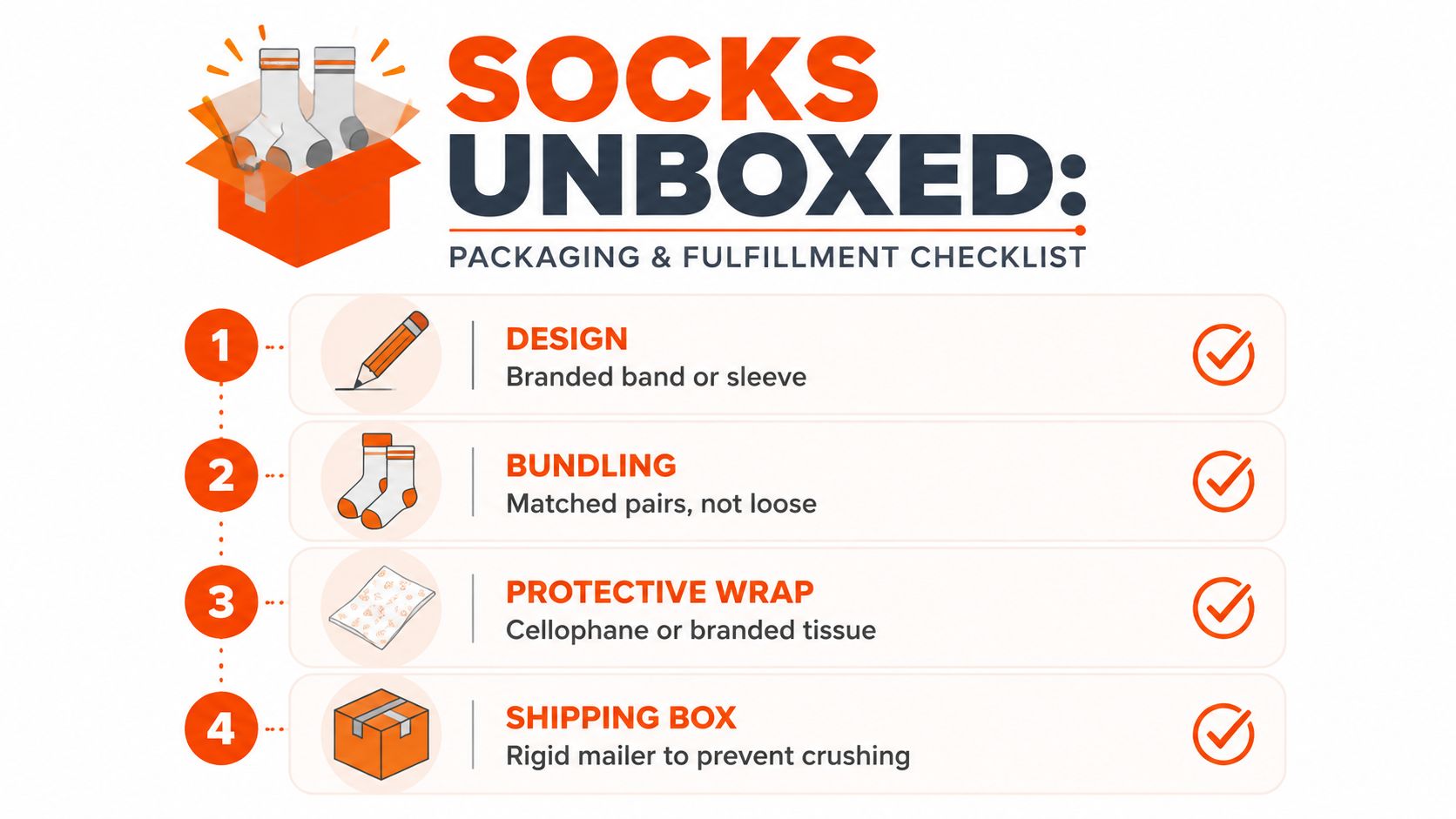
Fuzzy socks are one of the few merch products where packaging changes the perceived value. The item is soft, compressible, and visually expressive, so a plain polybag makes it feel cheaper than it is. A better box, sleeve, or wrap turns the same pair into a gift.
Build the unboxing into the product
Use custom mailer boxes, tissue, sticker seals, and care cards when the socks are meant for a team drop or client gift. Keep the socks folded or rolled, never flat-packed, so they hold shape and look deliberate when opened. That small detail matters more than most founders think.
A bulk carton to one office is the easy path. Distributed shipping is better for remote teams, but it also means more room for error, so the address list needs cleanup before fulfillment starts. If you're shipping across US, UK, and EU recipients, DDP shipping cuts a lot of customs friction and keeps the experience calmer for everyone.
Branding the package is worth it only when the recipient sees the product as a gift, not a supply item.
Use branded packaging where it actually pays off
Branded inserts make sense for winter drops, client gifting, and community rewards. They're weaker when the order is a pure utility play and nobody will notice the extra finish. Standard mailers are smarter for internal admin, test runs, and low-stakes reorders.
If you want packaging ideas that go beyond a generic shipper, this guide to custom apparel packaging is the right reference point. The principle is the same, the box should feel like part of the merch, not a tax on it.
Building a Creative Brief That Actually Gets Approved
A Series A startup planning a winter client gift drop needs a brief that leaves no room for guesswork. The best version names the audience, says why the socks exist, picks the season, locks the decoration method, states the size split, and sets the packaging level. That's the whole game.
What a good brief sounds like
“A winter client gift for 120 accounts, shipped in December, premium fuzzy socks with a restrained woven logo, mixed-size split, simple branded sleeve, and a delivery window that gives us time for proof approval.” That kind of sentence gets approved because it speaks production, not mood boards.
Proofing matters because flat mockups hide the core issues. The first atelier photos can reveal embroidery sinking into the pile, a logo sitting too close to a bend, or a label that looks fine on screen but awkward on the foot. That's where the design gets saved.
If a vendor offers design support, use it. The custom design services page shows how much of the approval process is really about translating a rough idea into something manufacturable.
The usual rejection triggers
- Logo placement is off: anything near a crease line tends to warp.
- The art is too detailed: fuzzy pile eats fine detail fast.
- Packaging is overbuilt: nice in theory, annoying in real shipping.
- Sizing is vague: teams hate guessing, especially across regions.
Keep the approval loop short. One clear brief, one proof review, one revision round if needed. More than that usually means the product was under-specified from the start.
Common Mistakes and Quick Answers
The biggest mistake is still the simplest one, ignoring how the pile behaves in real life. The second is treating care instructions like an afterthought, when heat from a dryer can shrink the sock or flatten the softness. Air-drying is the safe call.
Do I need special artwork prep? Yes. Clean vector files help, and the design should be simplified for plush fabric because tiny details disappear fast.
Can I reorder later? Yes, if the first approval was documented well. Keep the final art, size split, and packaging spec together so the reorder doesn't drift.
What should I skip? Heavy embroidery over large areas, tiny text, and overcomplicated packaging for a casual drop. Those are the pieces that look expensive on paper and weird in hand.
If you want fuzzy socks that people wear, spec them like real apparel, not filler merch. Start with the audience, keep the decoration honest to the fabric, and don't let packaging or sizing become an afterthought.
If you want a team drop that feels considered instead of disposable, Banger can help you build it with premium customization, clean packaging, and production that doesn't turn a simple idea into a mess. Explore Banger and get merch your team will keep wearing.