Sustainable Clothing Manufacturers: A Practical 2026 Guide
Most advice about sustainable clothing manufacturers starts in the wrong place. It treats organic cotton, recycled fibers, and certification logos like they're the whole story, when the damage usually gets locked in much earlier, at the order sheet, the MOQ, and the inventory plan. If you're buying campaign merch, team apparel, or branded drops, the most sustainable factory is often the one that helps you avoid dead stock, overproduction, and bad reorders, not the one with the prettiest materials page.
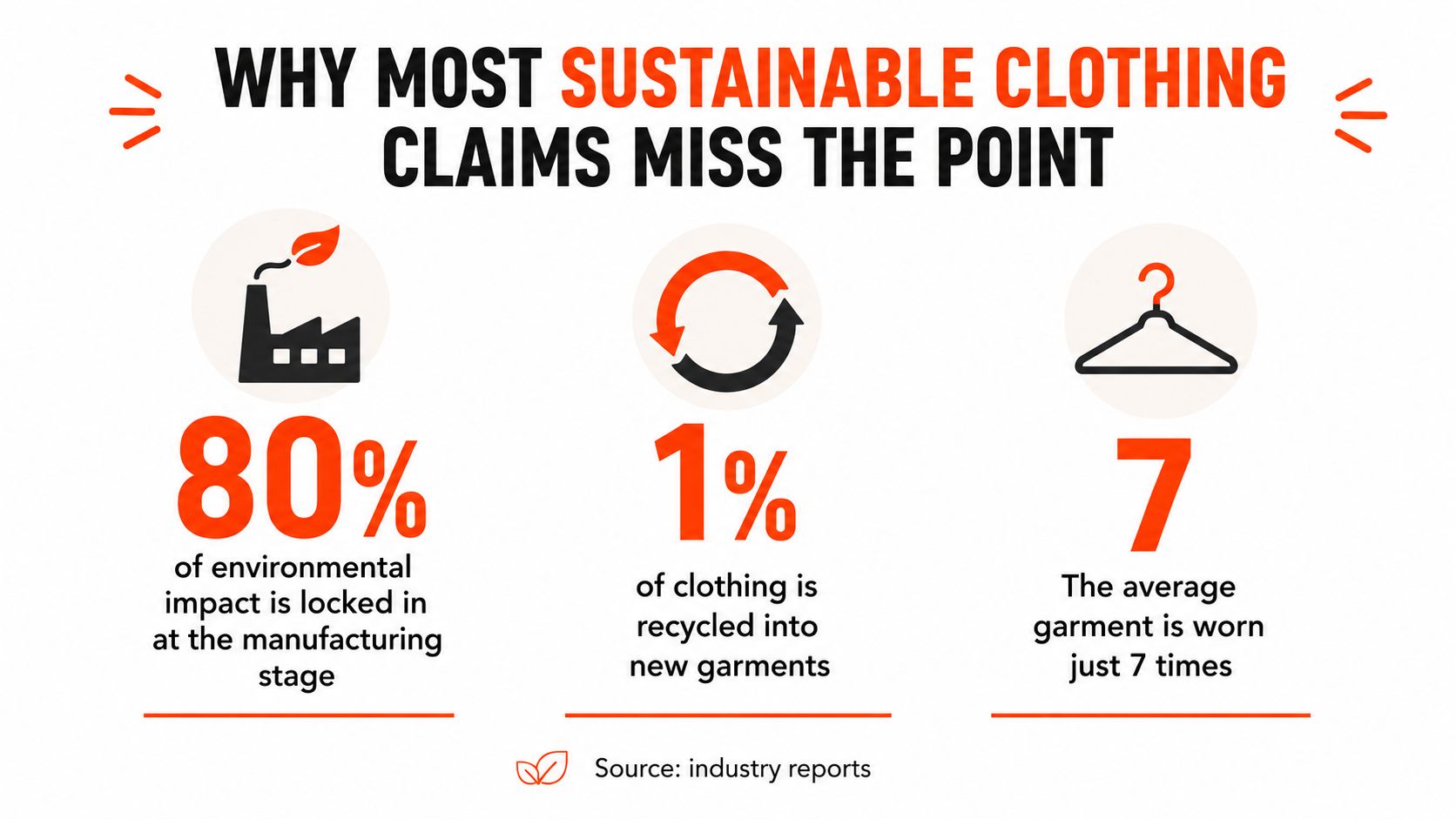
That's the part people skip because it's less glamorous than fabric talk. But the scale is ugly, the fashion industry uses about 215 trillion litres of water per year, contributes 2 to 8% of global carbon emissions, and less than 1% of material used to produce clothing is recycled into new clothing, according to the Geneva Environment Network's summary of fashion sector impacts. That's why picking a manufacturer is really about judging system discipline, not just sustainability branding.
Table of Contents
Why Most Sustainable Clothing Claims Miss the Point
The usual pitch sounds clean. Pick a better fabric, add a certification, call it sustainable. That sounds tidy, but it leaves out the part that decides whether a program is responsible or wasteful, and in merch and branded apparel, that part usually matters more.
Waste comes from production volume more than fiber choice. A perfect organic tee that sits in a warehouse is still a mistake. A small run with tighter forecasting, lower reordering friction, and clear sourcing can outperform a supposedly greener fabric choice that pushes you into overbuying. Sustainable clothing manufacturers should be judged like operations partners, not fabric resellers.
Volume control is the true bottleneck
A lot of buyer education stops at “use organic cotton.” That advice misses the brutal math of campaign merch. If you order too much, you create dead stock, storage cost, and eventual waste. If your manufacturer cannot help you size the first run tightly, support quick reorders, and keep the design stable across batches, the sustainability story falls apart fast.
Practical rule: judge a factory on whether it can reduce the chance of unsold inventory, not just whether it can source a nicer fabric.
Low MOQs, reorder loops, and traceability matter more than a shiny sustainability page. The best partners help you move from speculative buying to controlled production. If you want a useful primer on how modern merch teams think about this in practice, Banger's guide on the meaning of organic cotton fabric is a decent starting point, but it only works if you pair it with hard order planning and a clear read on sustainable cotton for slow fashion.
The market backs this up. Fortune Business Insights puts the global sustainable fashion market at USD 11.36 billion in 2025 and projects USD 27.96 billion by 2034, with a 10.25% CAGR. It also says Europe held 34.21% of global share in 2025 and North America held 28.12% in the same year, which tells you sustainability is now a mainstream sourcing category, not a side quest, according to Fortune Business Insights.
Materials and Certifications That Matter
Most buyers get lost in acronym soup and end up treating labels like proof. Stop there. A manufacturer's materials stack usually falls into three buckets, fiber-level certifications, process-level standards, and labor or sourcing frameworks.
Read the label by category
Fiber-level certifications tell you what the material is, or at least what it claims to be. Organic cotton is about how the crop was grown. Recycled fibers are about feedstock recovery. OEKO-TEX is generally about testing for harmful substances in the finished textile, not making the whole supply chain “green.” That difference matters because a clean test result does not automatically mean the fabric was sourced responsibly or produced efficiently.
Process-level standards like Bluesign and ZDHC matter when you care about chemistry, dyeing, and wet processing. Use them if the mill claims low-impact dyeing or tighter chemical control. They do not erase overproduction, and they do not fix a sloppy sourcing model.
Labor frameworks such as Fair Wear, SA8000, and BCI answer a different question, who made this, under what conditions, and with what oversight. If the factory cannot explain its labor documentation clearly, you do not have a sustainability partner, you have a marketing script.
If you want a broader view of how fabric choice fits into a brand system, The Fabric Company's piece on sustainable cotton for slow fashion is a useful companion read. For a more product-specific angle, Banger's own organic cotton fabric guide helps separate feel, durability, and sourcing claims.
Tradeoffs matter more than purity
Recycled, organic, and bio-based fabrics all come with tradeoffs. Recycled content can support circularity, but it does not automatically mean better hand-feel or stronger wear performance. Organic fibers can be cleaner upstream, but the final garment still needs to hold its shape, fit well, and survive repeat washes. Bio-based materials can be interesting, but they are not a free pass if the factory cannot prove stable production.
The right question is not “Is this sustainable?” It is “What does this label actually prove, and what does it leave out?”
That mindset keeps you from paying more for a claim that does not change the production outcome. It also helps you spot when a manufacturer is hiding behind vague language instead of showing the paper trail.
How to Audit a Manufacturer Beyond the Brochure
A good brochure can make almost any factory sound responsible. Real transparency shows up in documents, supplier lists, and boring operational answers. If a manufacturer gets defensive when you ask for proof, you already have your answer.
What credible traceability looks like
Start with the supply chain below the factory floor. Ask whether they can disclose tier-2 and tier-3 suppliers, not just the cut-and-sew site. Ask for lot-level fiber certificates when they claim organic or recycled material. Ask who audits labor conditions, and whether those audits are recent enough to matter. A factory that works cleanly should be able to name the certifiers, the facilities, and the scope without stalling.
You should also request social audit reports such as SMETA or SA8000 documentation when relevant, plus water and chemistry records if the mill claims low-impact dyeing or finishing. If they're doing the work, they'll usually have paper. If they're performing sustainability for the website, they'll redirect you to vague philosophy language.
If the answer is “we work with trusted partners” but they won't name the partners, you're not buying transparency.
For a practical view on how this plays out in smaller production environments, Pandemonium Millinery's note on inside small batch clothing production is useful context. It reinforces the same point, the scale may be smaller, but the proof standard shouldn't get weaker.
The questions that expose theater
Use the same filter every time. Ask, what materials do you use, where do they come from, and what evidence do you keep on file? If the reply is tidy but shallow, the factory is probably optimized for sales calls, not accountability. If they can show you chain-of-custody, supplier documents, and production records without drama, that's a better sign than any brand slogan.
Banger's guide to cut and sew clothing manufacturers is another solid reference point if you're trying to compare real manufacturing depth instead of glossy claims. The bigger point is this, a serious sustainable manufacturer should make verification feel normal.
Production Tech That Lowers Impact Without Hype
A lot of “innovation” in apparel is just noise. The useful stuff cuts waste, water use, and chemistry at the production stage, and it gives you a clear answer when you ask the factory to prove it.
Compare the levers, not the buzzwords
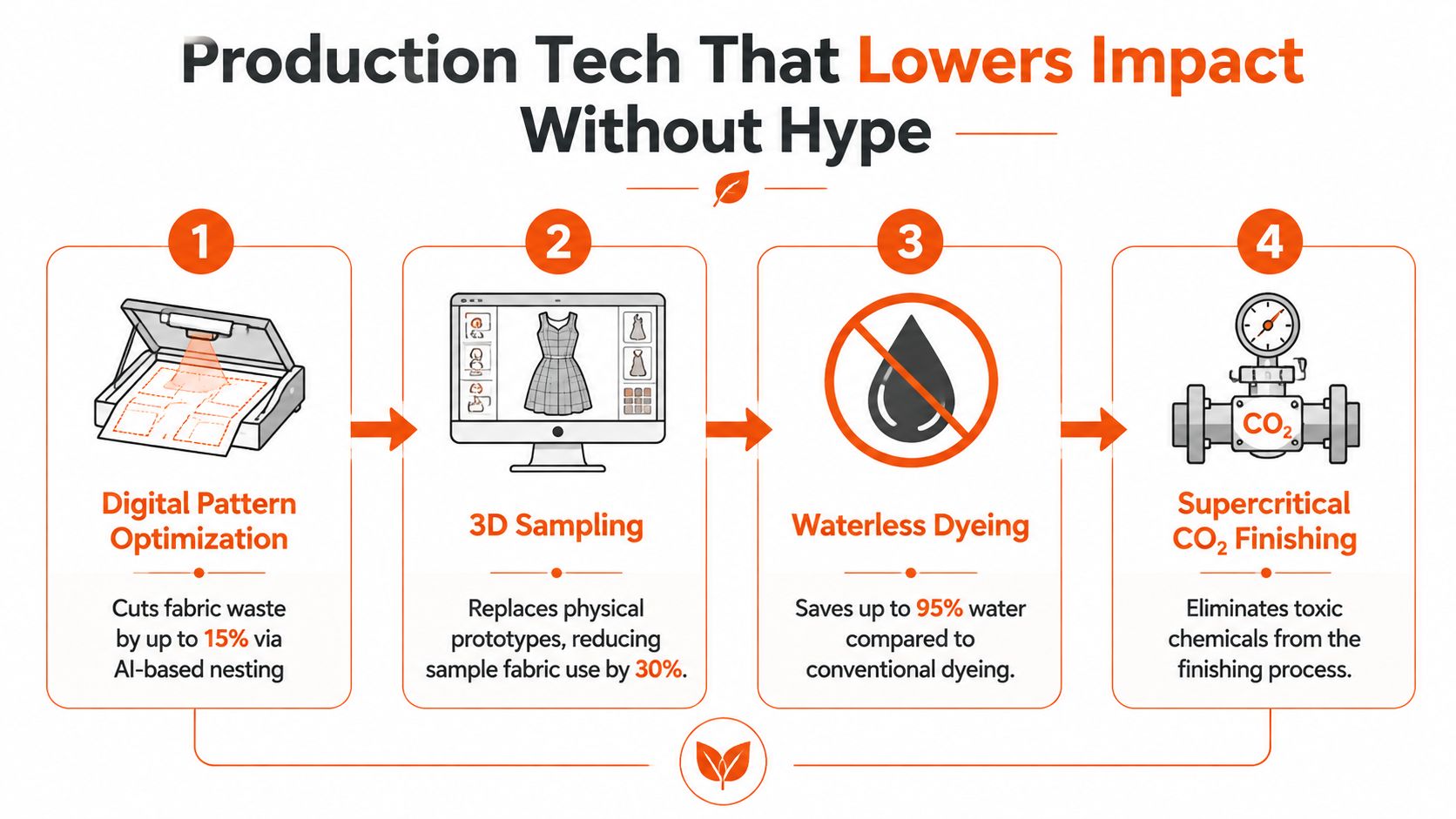
Digital pattern optimization and 3D sampling matter most for brands that want less waste. WIPO points to Synflux's use of 3D scanning, CAD, and machine-learning pattern optimization to cut fabric waste at the cutting stage, and it also highlights Unspun's 3D-weaving approach, which builds garment pieces directly instead of cutting from yardage. That means fewer prototypes, less marker waste, and tighter demand matching before the garment is even made, according to WIPO's sustainable fashion technologies overview.
Waterless dyeing and supercritical CO2 finishing are the right conversation for wet processing. Conventional dye baths are resource heavy, so the question is whether the mill can show a process class that cuts water and chemical load, not whether the sales deck says “eco dyeing.” Enzyme-based finishing is another useful lever when the goal is to reduce harsh chemistry while still hitting the feel and performance spec.
For decorated garments, process choice matters too. Banger's explainer on what DTF printing is helps if your production mix includes print work and you want to see where that method sits in the sustainability tradeoff.
Ask for proof, not adjectives
A factory should be able to explain its process class, lead time implications, and MOQ reality. Waterless systems and on-demand methods can cut impact, but they are not magic. They can cost more, require tighter technical setup, or narrow the range of fabric and finish options. That is fine if your order profile matches the factory.
The goal is not to buy the fanciest process. It is to pick the process that trims waste without making the project impossible to execute.
Cost, Lead Times, and MOQ Tradeoffs by Factory Type
There's no single “sustainable” factory type. There are tradeoffs, and good buyers read them clearly. If you're ordering a small team drop, a mid-size merch run, or a retail line, the right partner changes.
Sustainable Manufacturer Tiers at a Glance
| Tier | Typical MOQ | Lead Time | Cost Per Unit | Customization | Sustainability Depth |
|---|---|---|---|---|---|
| Large-volume traditional factories | High | Slower | Lowest | Limited | Usually shallow unless heavily managed |
| Mid-tier European ateliers | Moderate | Moderate | Higher | Strong | Better materials, better traceability |
| Small-batch cut-and-sew producers | Low | Faster on repeats, variable on first run | Highest | Deep | Strongest fit for lower-volume control |
The table is the point. High-volume factories make sense when unit economics dominate and your spec is stable. Mid-tier European ateliers are often the sweet spot for premium branded apparel because they balance quality, traceability, and a more workable MOQ. Small-batch cut-and-sew shops are the sharpest tool when the design is custom and the risk of overbuying is real.
For a deeper look at tiny runs and first-order testing, Banger's guide on custom apparel no minimum fits naturally here. It's the right framing if your team drop is closer to 50 or 150 pieces than to a warehouse run.
Match the factory to the order
A 200-piece campaign drop should not be treated like a 5,000-piece retail line. The first needs fast feedback, reorder flexibility, and low dead-stock exposure. The second needs tighter pricing, stronger throughput, and a factory that can handle scale without turning sustainability into a story slide.
Rule of thumb: if your demand is uncertain, don't let a large MOQ bully you into inventory risk you can't carry.
Ask about reorder timing, design lockups, and whether the factory can hold specs across repeat production. Also ask what happens when an order misses the mark. If they shrug at leftover stock, they're not helping you run a disciplined operation.
Questions to Ask and Red Flags to Watch For
A startup team ordered hoodies for an event, then realized half the quantities were guesswork. The vendor sounded sustainable on the call, had nice photos, and used the right language. That didn't save them from sitting on boxes of unsold stock. The lesson is simple, a sustainable clothing manufacturer should make forecasting easier, not just cleaner.
Use the same scorecard every time
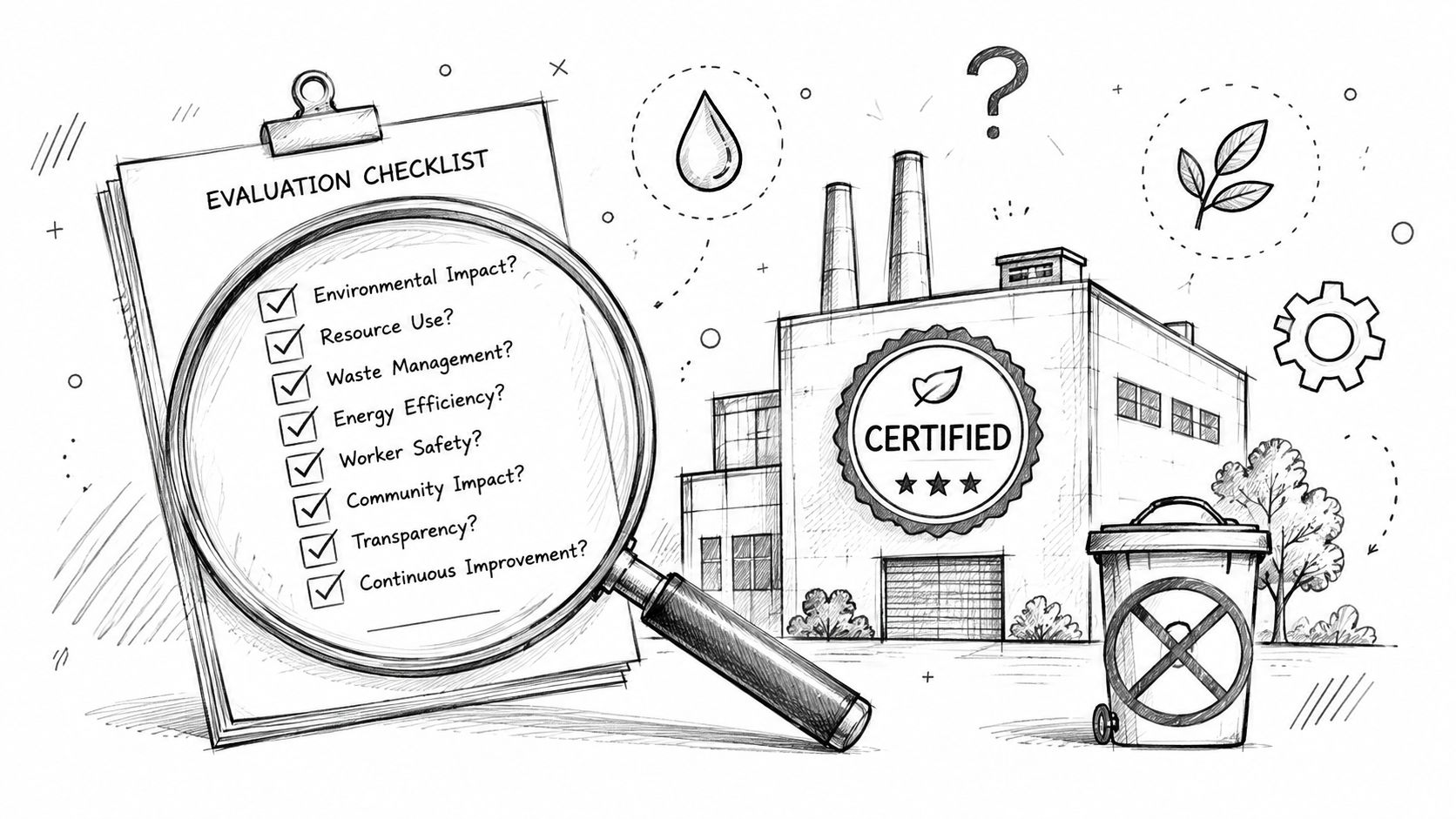
Ask these questions in order:
- Which certifications do you hold, and at what facility or material tier? If they can't separate the mill from the cut-and-sew site, that's a weak sign.
- Can you share lot-level proof for the materials in my order? A real answer includes documents, not reassurance.
- Who audits labor conditions, and can I see the latest report or summary? If they can't say who checks the work, they probably don't want you checking either.
- How do you handle waste, scrap, and chemistry? Clear answers mention process, treatment, and disposal, not “we're eco-friendly.”
- What happens if I need a reorder in two weeks? Good factories explain the loop. Weak ones talk around it.
- What do you do with dead stock or leftover inventory? If the response is vague, sustainability probably ends when the PO is signed.
A few red flags come up again and again. Vague eco language without documents. Refusal to name upstream suppliers. A story about sustainability that only mentions fabric and never mentions production planning. Any of those should slow you down.
Green flags sound operational, not poetic
A good manufacturer talks like a production team. They show you the certification trail. They explain turnaround clearly. They tell you where the materials come from and what happens if the run changes. That's what you want.
If you're comparing suppliers for a premium merch program, Banger's workflow combines product sourcing, customization, and fulfillment under one system, which is useful when you need the operational loop tight. The principle matters more than the brand, though, because a good sustainable partner should reduce friction at every step, not add more mystery.
Working With a Sustainable Manufacturer From Quote to Drop
A clean engagement starts with a narrow brief. The team knows the use case, the quantity is realistic, and the first run isn't pretending to solve next year's demand. That's how you keep sustainability tied to actual inventory behavior instead of aspirational language.
The best workflow is boring in the right way. You send the design, the factory returns a quote and sample path, you approve the proof, and the production schedule stays tight. If you need global delivery or storage, Banger's merch fulfillment services sit naturally in that loop, because fulfillment is part of the sustainability outcome too.
A few checks keep the whole thing honest. Keep the first run small enough to learn from. Plan the reorder window before the launch ships. Decide in advance what happens to leftovers, whether that means a second drop, internal distribution, or a controlled liquidation plan. If the manufacturer can't work inside that logic, it's not a real fit.
The right sustainable clothing manufacturer helps you ship fewer mistakes. That's the job.
If you're ready to build custom merch that looks premium, ships cleanly, and doesn't leave you with dead stock, talk to Banger. We handle premium European blanks, cut and sew, customization, and global fulfillment for teams that want merch people wear.