Wash Care Instructions: A Complete 2026 Guide
The hoodie looked perfect when it came out of the box. After one wash, it came out of the dryer with a cracked chest print, a slightly twisted hem, and the kind of finish that makes a team ask whether the garment was ever premium in the first place. Nobody planned to ruin it. The machine followed the wrong routine.
That's the problem with most wash care instructions. They explain symbols, but not decisions. A customized garment has fabric, thread, ink, adhesive, trim, and construction to protect, so the right routine has to account for all of them.
Table of Contents
- Why Custom Merch Fails Faster Than It Should
- How to Read a Care Label Without Misreading It
- What changes by technique
Why Custom Merch Fails Faster Than It Should
A startup ops manager usually blames the printer first. Sometimes that's fair. An under-cured print can fail early, and poor construction will show up quickly. But many damaged pieces leave production in good condition and lose their edge in the laundry room.
The first culprit is drying heat. A hot dryer can stress screen-print ink, distort embroidery, tighten fabric around an appliqué, and affect adhesive-backed decoration. The second is mechanical force. A high-agitation cycle makes garments rub against each other, while a fast spin puts unnecessary tension on dense stitching and decorated panels.
Detergent chemistry adds another variable. Strong formulas, optical brighteners, bleach, and fabric softener can change the feel of the fabric or interfere with the surface of a print. A printed hoodie isn't only fabric after production. The finish, thread, and print continue to respond to heat, moisture, friction, and chemicals every time the garment is cleaned.
Practical rule: The care label sets the outer limit. Your routine should usually be gentler than that limit when the garment carries decoration.
Generic laundry advice misses this because plain apparel has fewer failure points. A heavyweight blank may tolerate a normal wash, but embroidery introduces thread tension and backing. A screen print introduces a cured ink film. DTF adds an adhesive transfer layer. Leather trim needs an entirely different cleaning strategy.
That's why the construction of the blank matters before decoration even begins. Banger's guide to premium blank T-shirts is useful context because fabric weight, structure, and surface quality influence how a printed or embroidered garment behaves in rotation.
The rest of the routine answers the exact moment when a fresh custom hoodie loses its edge. Read the label correctly, match the process to the decoration, and remove unnecessary heat and friction before they become permanent damage.
How to Read a Care Label Without Misreading It
A care label is a sequence of permissions and limits, not a promise that every allowed method will produce the same result. On a decorated piece, read the most restrictive instruction first, then build your routine around it.
The washtub covers washing. A number inside it indicates the maximum washing temperature in degrees Celsius, not a target temperature, and ISO 3758 recognizes 30, 40, 50, 60, 70, and 95 as valid values under the ISO 3758 care-symbol system. A hand inside the tub means hand washing, with a maximum temperature of 40°C under the GINETEX system for international care symbols.
The triangle addresses bleaching. An iron with dots indicates the permitted heat level, so a single dot isn't the same as a two-dot setting. The square covers drying, while the circle identifies professional cleaning. The symbol tells you what process is permitted, but it doesn't guarantee that a large graphic, metallic ink, dense embroidery, or leather detail will look unchanged afterward.
For a broader visual reference, laundry care symbols decoded can help when a label contains unfamiliar combinations.
| Symbol | Standard Meaning | What It Permits | What It Doesn't Promise |
|---|---|---|---|
| Washtub | Washing instruction | The listed maximum temperature and cycle severity | That hotter washing is beneficial |
| Triangle | Bleaching instruction | Only the bleaching method shown | That bleach is safe for decoration not covered by the symbol |
| Iron | Ironing instruction | The heat level represented by the dots | That direct ironing is safe on a print |
| Square | Drying instruction | The drying method and heat level shown | That high heat won't stress decoration |
| Circle | Professional cleaning | The professional cleaning process identified | That the process suits every print, trim, or adhesive |
National rules reinforce the importance of reading these signals. The international system developed into a five-symbol framework for washing, bleaching, drying, ironing, and professional cleaning, and ISO 3758 made care symbols a cross-border language rather than a brand-specific text format as outlined by GINETEX's history of care labeling. The U.S. FTC rule requires washing method and, in relevant cases, water-temperature information, while its definition of hot water runs from 112°F to 145°F (45°C to 63°C) in the FTC Care Labeling Rule.
Your practical read is simple. Find the strictest washing, drying, and ironing limits, then treat the decoration as an additional constraint. Banger's notes on custom neck labels are relevant here because a clear label is part of the garment system, not an afterthought.
Washing and Drying by Customization Technique
Different decoration methods fail in different ways. Embroidery can tolerate water well but dislike heat and tension. Screen print depends heavily on cure quality. DTG and DTF need careful handling of their ink or transfer surfaces. Leather trim shouldn't be treated like cotton at all.
| Technique | Water Temp | Wash Cycle | Detergent | Dryer Setting | Primary Risk |
|---|---|---|---|---|---|
| Embroidery | Cold or cool | Gentle | Mild, no bleach | Low or air dry | Thread distortion and backing movement |
| Screen print | Cold | Gentle or low agitation | Mild, no softener | Low or air dry | Cracking from heat, friction, or weak curing |
| DTG | Cold | Gentle | Mild, low-chemical formula | Low or air dry | Graphic wear and binder sensitivity |
| DTF | Cold | Gentle, low spin | Mild, no softener | Low or air dry | Film lifting, edge stress, or wrinkling |
| Leather trim | Follow garment label, avoid soaking trim | Gentle surface care | Leather-specific cleaner | Air dry only | Drying, staining, and trim deformation |
What changes by technique
Embroidery needs stability. Thread tension can pull against the fabric, and backing can shift when the garment is aggressively spun. Bobbin distortion becomes more likely when a dense design goes through a hot dryer, especially on a heavyweight sweatshirt that holds heat.
Screen print is more forgiving when plastisol has been properly cured, but the garment still benefits from low agitation and no fabric softener. Under-cured ink has less margin for abuse, so laundering can't compensate for a production problem.
DTG uses a water-based print system whose binders and cure quality matter. Keep the cycle cool and gentle, and don't assume that turning the shirt inside out solves every issue. DTF relies on a transfer film and adhesive layer. It needs a controlled wash and restrained drying routine to reduce lifting and surface distortion. Cobra DTF's DTF washing guide offers a useful technique-specific reference for transfer care.
Leather trim is the outlier. Keep it out of soaking cycles unless the maker explicitly allows them, use a suitable leather cleaner, and rely on professional cleaning when the label calls for it. Conditioning should follow the trim supplier's guidance rather than an arbitrary calendar.
For a quick decision, use the lowest practical water temperature, the gentlest cycle that still cleans the garment, and the lowest practical spin speed. Banger's explanation of what DTF printing is helps clarify why the transfer surface deserves separate treatment from the textile underneath.
A Realistic Wash, Dry, Iron, and Store Routine
Premium merch shouldn't need museum treatment. It needs a repeatable routine that a busy team can follow without thinking about it every time.
Start by turning the garment inside out. Close zippers and other closures so they don't catch embroidery, appliqués, or neighboring garments. Use a mesh laundry bag for pieces with leather trims, dense stitching, or small attached components.
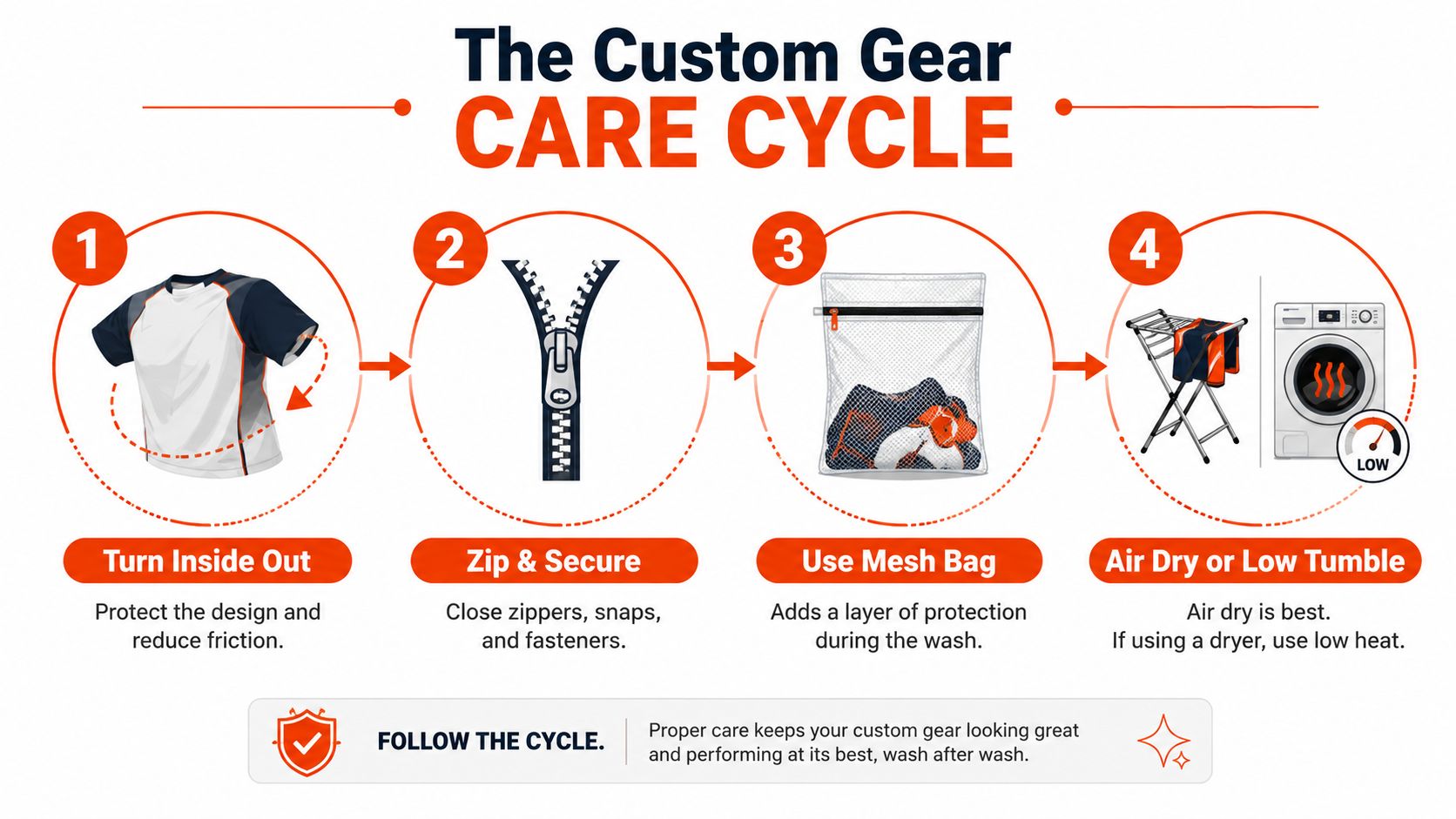
Wash with cold water and a mild, pH-neutral detergent. Skip fabric softener on printed and DTF surfaces because it can leave a coating that changes the hand feel and adds chemistry the decoration doesn't need. Choose a gentle cycle with low spin when the machine offers that option. Don't pack the drum tightly. Overcrowding increases rubbing, and rubbing is often more damaging than the water itself.
Dry on low if the label permits tumble drying. Air drying is the safer default for decorated garments, especially when the piece carries a large print, a dense embroidered logo, or a transfer with exposed edges. Lay knits and heavyweight pieces flat when their structure could stretch under their own weight.
Iron from the inside, using a cotton pressing cloth between the iron and the garment. Never place the iron directly on a print. Don't steam directly over embroidery without a barrier, because heat and moisture can flatten texture or disturb the backing.
Storage matters after the laundry is finished. Fold knits and heavyweight sweatshirts instead of hanging them for long periods. Keep leather-trimmed items in breathable cotton bags, away from direct light and damp storage areas. A garment that dries correctly can still lose shape when it's stored under constant shoulder tension or trapped in plastic.
Stain Response That Saves the Print
Stain treatment is a race between the spill and the textile surface. Act quickly, but use a light hand. Blot instead of rubbing, because friction can fracture a cured screen print or move wet pigment deeper into the fabric.
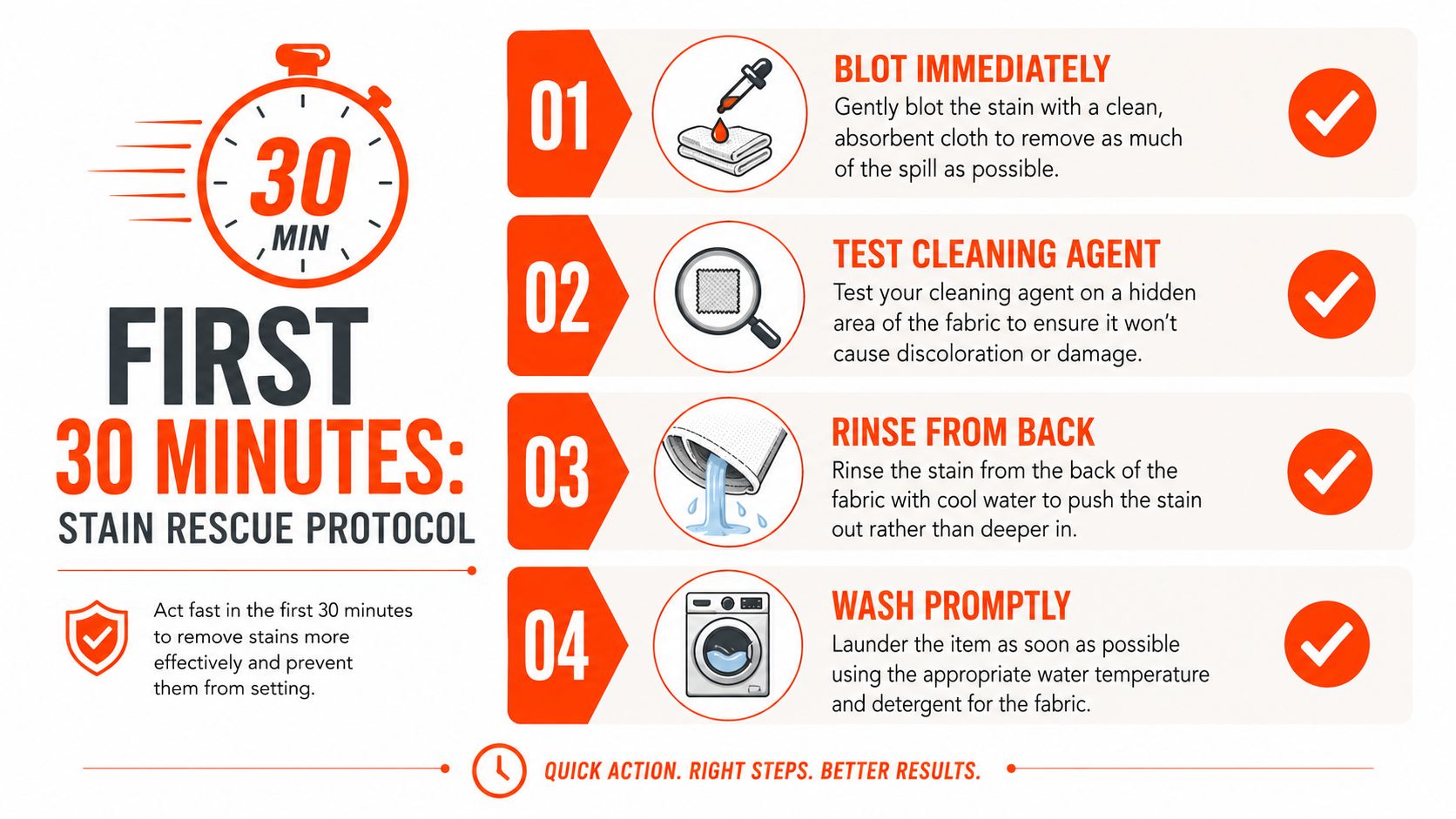
For an organic spill, start with cool water and mild soap. Work from the outside of the stain toward the center, and test any cleaning agent on a concealed area first. On polyester, isopropyl alcohol can help with some ink marks, but don't apply it blindly to a print, coating, or trim. Test first, use a small amount, and stop if the color or surface changes.
Embroidery requires a different touch. Keep treatment in the unstitched fabric where possible. Agitating directly over thread can distort the design, pucker the backing, or spread the stain along the stitch path.
DTF transfers should be treated from the back of the garment. That direction encourages the stain to move away from the adhesive film rather than deeper into its edges. Leather trim should never be soaked. Use a dedicated leather cleaner on the trim and keep the surrounding textile treatment controlled.
Rinse from the back, press out excess water without wringing, and air dry flat before judging the result. A dryer can set a remaining stain and make it harder to remove. For more context on custom shirt printing, focus on how the print method changes what the surface can tolerate.
The short version is:
- Blot immediately: Lift the spill instead of spreading it with friction.
- Test first: Check a hidden area before applying alcohol or stain treatment.
- Rinse from behind: Push residue away from the decorated face.
- Inspect before heat: Don't tumble dry until the stain and print both look stable.
Here's a visual demonstration of careful stain handling:
Microfiber, Sustainability, and the Wash Less Argument
“Wash less, wash cold” is useful advice, but it needs a stronger reason than color retention. Synthetic garments can release microfibers during laundering, and mechanical action adds wear to both the textile and its decoration. The same friction that works a fiber loose can fatigue a print surface or disturb an embroidered edge.
The practical sustainability argument is straightforward. Wash when the garment is dirty or smells, not automatically after every wear. Between full cycles, air the piece out, spot clean small marks, or use a light steam refresh where the fabric and decoration permit it.
Independent guidance from the National Park Service recommends colder, shorter, fuller washes, fewer washes, front-loading machines when possible, and air drying as ways to reduce microfiber release in its laundry microplastics guidance. Those choices also reduce exposure to the heat and abrasion that shorten the useful life of premium merch.
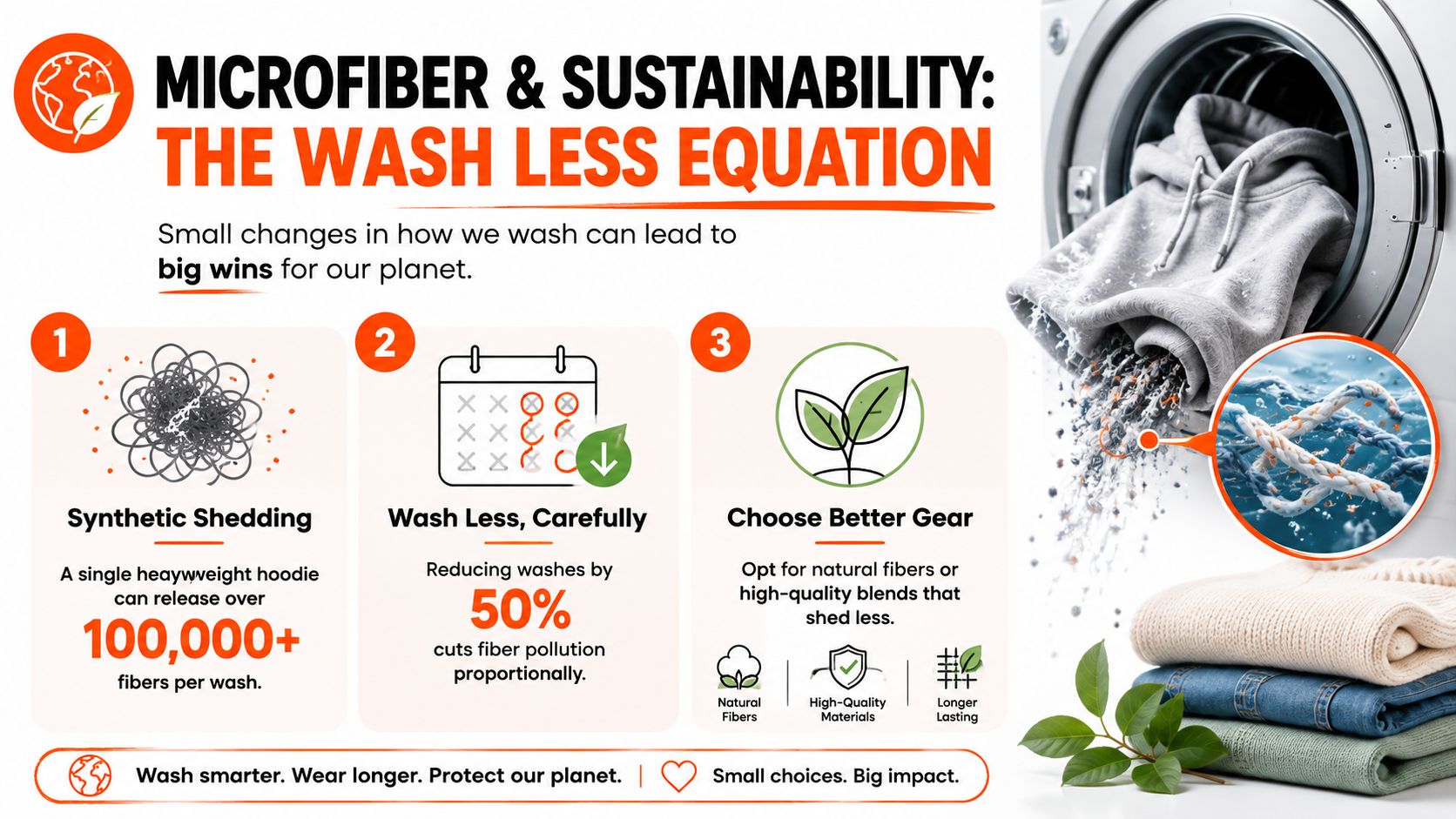
A microfiber-capture filter can add another layer of protection when compatible with the machine. It won't replace sensible washing, and it shouldn't become an excuse to run half-empty loads. Use full, cooler cycles, avoid excessive spin where the garment doesn't need it, and air dry whenever practical.
A care routine that serves both goals
The sustainability question is often framed as a material choice only. Material matters, but maintenance determines how long the garment remains useful. An organic cotton piece still consumes resources if it becomes unwearable after careless drying, while a well-maintained blend can stay in rotation longer. Banger's overview of organic cotton fabric gives useful material context without changing the basic care principle.
Be skeptical of unrelated search results that attach alarming biological terminology to microfiber cleaning discussions. A page about vancomycin-resistant enterococcus faecium isn't a substitute for textile-care guidance or machine-specific instructions. For apparel, the useful rule is calmer: wash less often, wash with less aggression, and choose air drying when the garment allows it.
The Care Habits Premium Merch Actually Rewards
Cold water helps, but it isn't a force field. A screen print can still crack if the dryer runs hot, and turning a garment inside out won't protect a DTG graphic from every detergent formula. Care works when it targets the actual stressor, not when it repeats a laundry slogan.
The load-bearing variables are water temperature, agitation, detergent chemistry, dry heat, and storage posture. Inside-out washing reduces direct contact between decoration and the drum. Cold water limits thermal stress. A gentle cycle reduces rubbing. Mild detergent avoids unnecessary chemical exposure. Low or no heat protects the finish after the wash is over.
Cold water is one decision. The complete care routine is several decisions working together.
What deserves attention
For embroidery, prioritize low agitation and low heat. The thread and backing need stability more than they need a complicated cleaning ritual. For screen print, cure quality matters, but the wearer still controls the main sources of fatigue through drying temperature, friction, and softener use.
DTG benefits from a gentle cycle and a mild detergent without aggressive additives. DTF needs the same restraint, with particular attention to transfer edges and drying heat. Leather trim needs separation from the textile routine, because soaking and heat can damage the trim even when the fabric itself is fine.
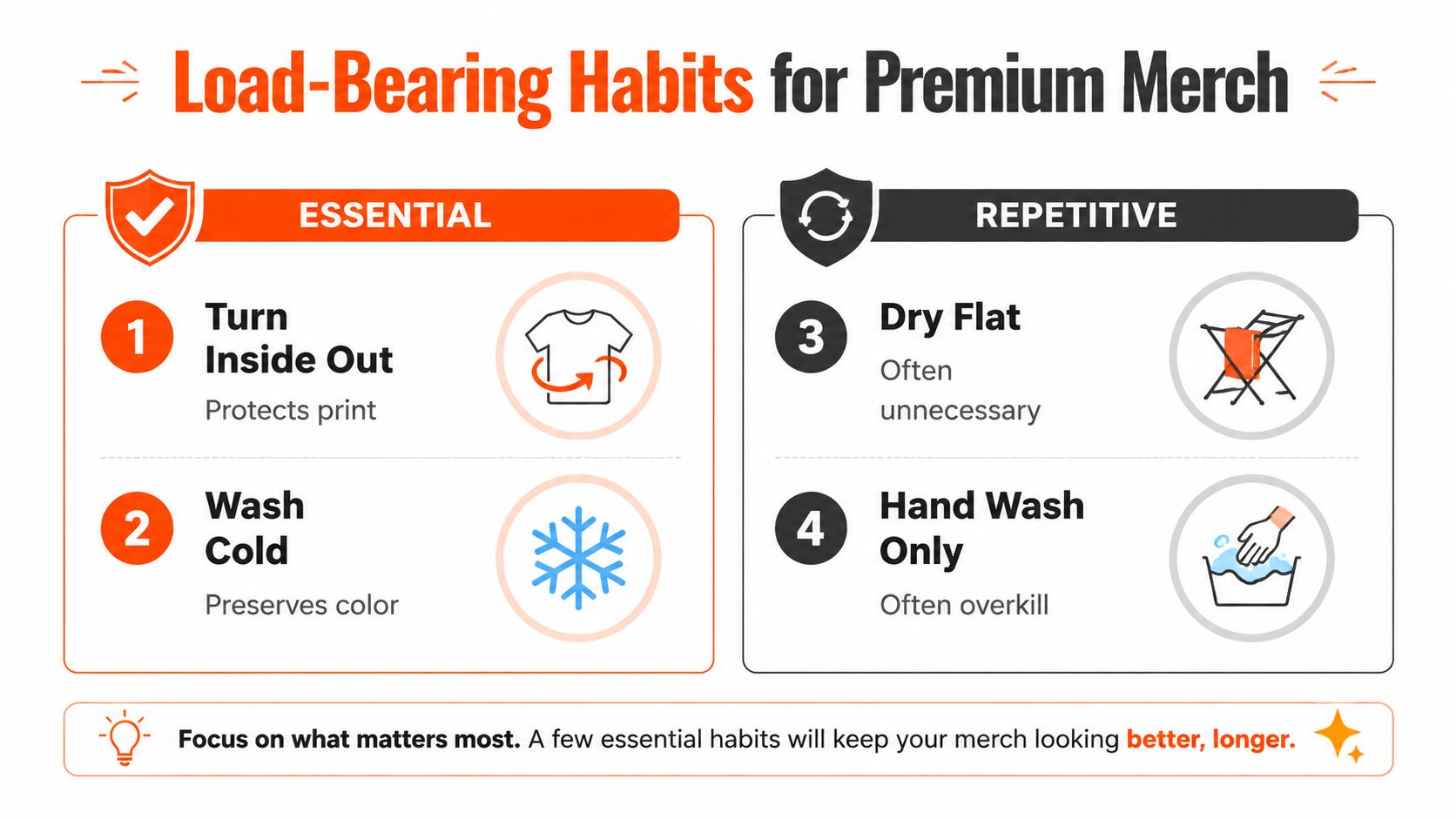
Some habits are often treated as mandatory when they're really situational. Drying flat makes sense for garments that can stretch, but it's not necessary for every stable woven piece. Hand washing can be gentle, but it may be overkill when the label allows a careful machine cycle. The correct goal isn't maximum delicacy. It's minimum stress that still delivers a clean garment.
That mindset changes how teams issue branded apparel. A care label should be readable, the decoration should suit the blank, and the wearer should get guidance that reflects real use. Banger produces custom apparel and accessories through French production ateliers, with techniques including embroidery, screen printing, DTG, and DTF, so the care conversation can begin at product selection rather than after a damaged team drop arrives.
Merch lasts when the routine is easy enough to repeat. Turn it inside out, keep the wash cool and gentle, control the detergent, avoid direct heat on decoration, and store structured pieces with enough support. Those choices don't restrict the garment. They keep it wearable.
Banger helps internet-native teams build custom merch with premium European blanks, French atelier production, low minimums, and worldwide fulfillment. Visit Banger to explore decorated apparel and launch a team drop designed to survive real wear, not just the first unboxing.