Understanding GSM Fabric Weight: Your 2026 Guide
Most advice about GSM fabric weight misses the point. It treats GSM like a dry spec on a supplier sheet, when it's actually the clearest signal of whether your merch will feel disposable or become part of someone's daily rotation.
For startups, creator brands, fintech teams, and community-led companies, that difference matters more than most people assume. The blank sets the tone before the logo, before the print, before the packaging. If the fabric feels flimsy, the brand feels cheap. If it feels substantial, holds its shape, and wears well, people read that as intention.
That's why GSM deserves more attention than it gets. Not because bigger numbers are automatically better, but because fabric weight shapes how apparel hangs, how it ages, how customization sits on the surface, and whether the piece feels like swag or real clothing.
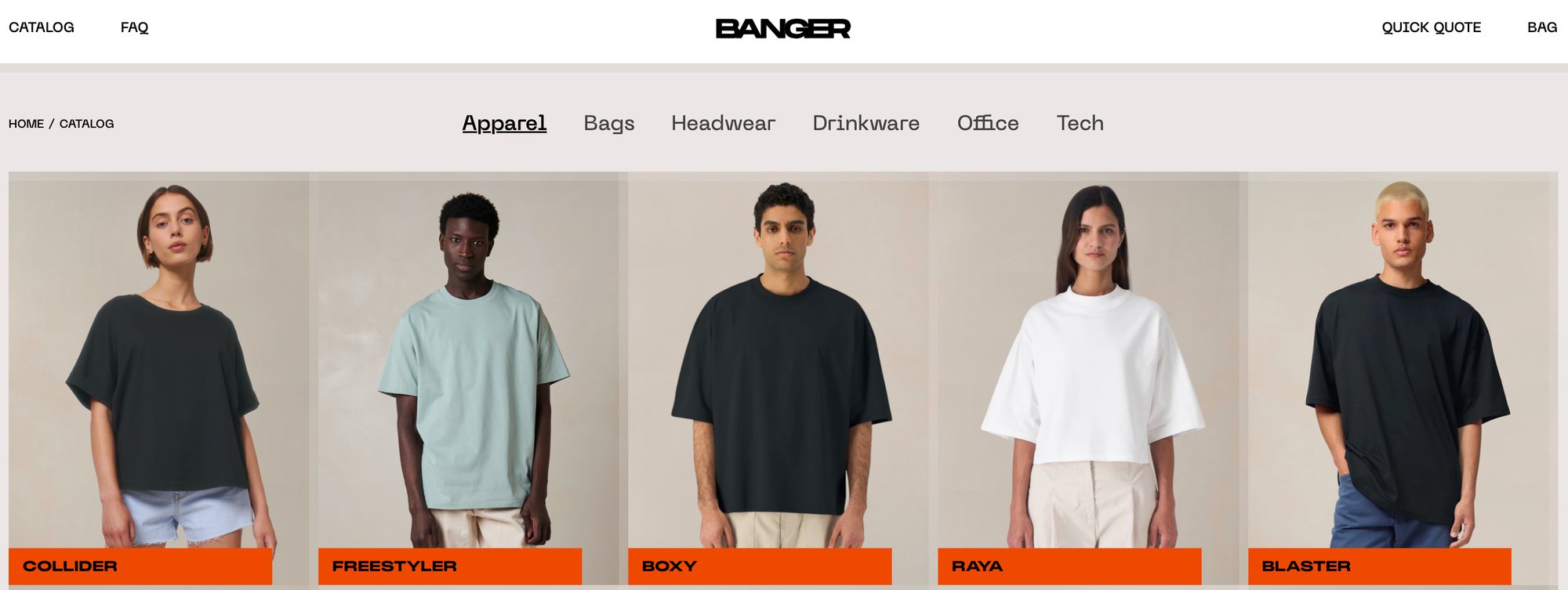
Here's part of our t-shirt catalog. Collider in heavyweight black, Freestyler in mid-weight light blue, Boxy in heavyweight oversized black, Raya as a mid-weight cropped white, Blaster in heavyweight relaxed black. Most of our apparel sits between mid-weight (180-220 GSM) and heavyweight (220-300 GSM) - that's the range where a t-shirt stops feeling like swag and starts feeling like a piece you'd actually buy. The same logic applies to our hoodies (400-500 GSM heavyweight fleece), sweatshirts, polos, and the rest of the apparel catalog.
Table of Contents
Why Most Merch Is Forgettable (And How to Fix It)
Many in tech have a graveyard tee. It came from a conference booth, a recruiting event, or a launch week box. The cut was off, the fabric felt thin, and after a few washes it either twisted, clung, or turned into sleepwear.
That's not a branding problem first. It's a product problem.

Teams usually spend most of their energy on the visible layer. The logo placement, the palette, the slogan, the campaign tie-in. Then they pick the garment late, often from a generic catalog, and hope design can save it. It usually can't.
A weak blank tells on itself fast. The collar collapses. The body loses shape. Print sits on top of the shirt instead of feeling integrated with it. The piece doesn't become part of someone's wardrobe, so it never really becomes part of the brand either.
Cheap merch usually fails before the branding gets a chance to work.
The fix is less glamorous than one might expect. Start with the fabric weight. GSM is one of the fastest ways to separate a one-time giveaway from apparel people will willingly wear again.
The real split is swag versus apparel
There's nothing wrong with lightweight event merch if that's the job. A simple tee for a single-day conference has different requirements than a founder gift, an onboarding kit, or a community drop.
The mistake is treating all merch like it serves the same purpose.
Event-only pieces can prioritize breathability, packability, and cost control.
Team staples need structure, comfort, and better wash behavior.
Brand-building drops need enough substance to feel intentional before anyone notices the decoration.
That's where most merch programs go off track. They use the same logic for every item.
If you're planning a collection people want to wear, the product decision has to come earlier. A useful starting point is understanding how to create merchandise that people keep, not just merchandise that gets handed out.
Decoding GSM Fabric Weight
GSM is shorthand for grams per square meter. It measures how much one square meter of fabric weighs, and that single number does more work than many founders expect.
In apparel, GSM is often the first real signal of intent. A low-GSM tee usually feels lighter, drapes more easily, and carries less visual presence. A higher-GSM fabric usually feels denser, holds shape better, and reads as more considered the moment someone picks it up. That difference is what separates a shirt people toss in a drawer from one they wear on repeat.
Why suppliers use GSM instead of ounces
GSM is the clearest way to compare blanks across regions and mills. US suppliers still talk in ounces, but international sourcing runs on metric standards. Fabric UK's explanation of fabric weight is a good reference if you need the ounces-to-GSM conversion.
For a buying team, the practical benefit is speed. GSM lets you compare two tees, two hoodies, or two fleece programs without getting lost in regional labeling. If you are reviewing the best hoodie blanks for premium merch, GSM gives you a quick read on whether the piece will feel trim and easy or substantial and premium before you even request samples.
GSM tells you weight. It does not tell you everything.
Confusion often arises for buyers because a 220 GSM fabric can feel clean and dense, or soft and fluid, depending on the fiber, knit, and finish.
A cotton jersey and a cotton-poly jersey may share the same GSM and still wear completely differently. Surface texture changes the impression. Knit structure changes stretch and recovery. Finishing changes softness, stability, and how the garment ages after repeated washing. For jersey tees and base layers, this popular stretchy fabric explained guide gives useful context on how knit fabrics behave.
Use GSM to narrow the shortlist fast. Use fiber content, knit type, and real samples to choose the piece your brand can stand behind six months later.
The GSM Spectrum for Premium Blanks
GSM is where merch starts to split into two categories. One gets worn once, then disappears into a drawer. The other becomes part of someone's weekly rotation because it feels considered the second they put it on.
That difference usually shows up before anyone notices the logo.
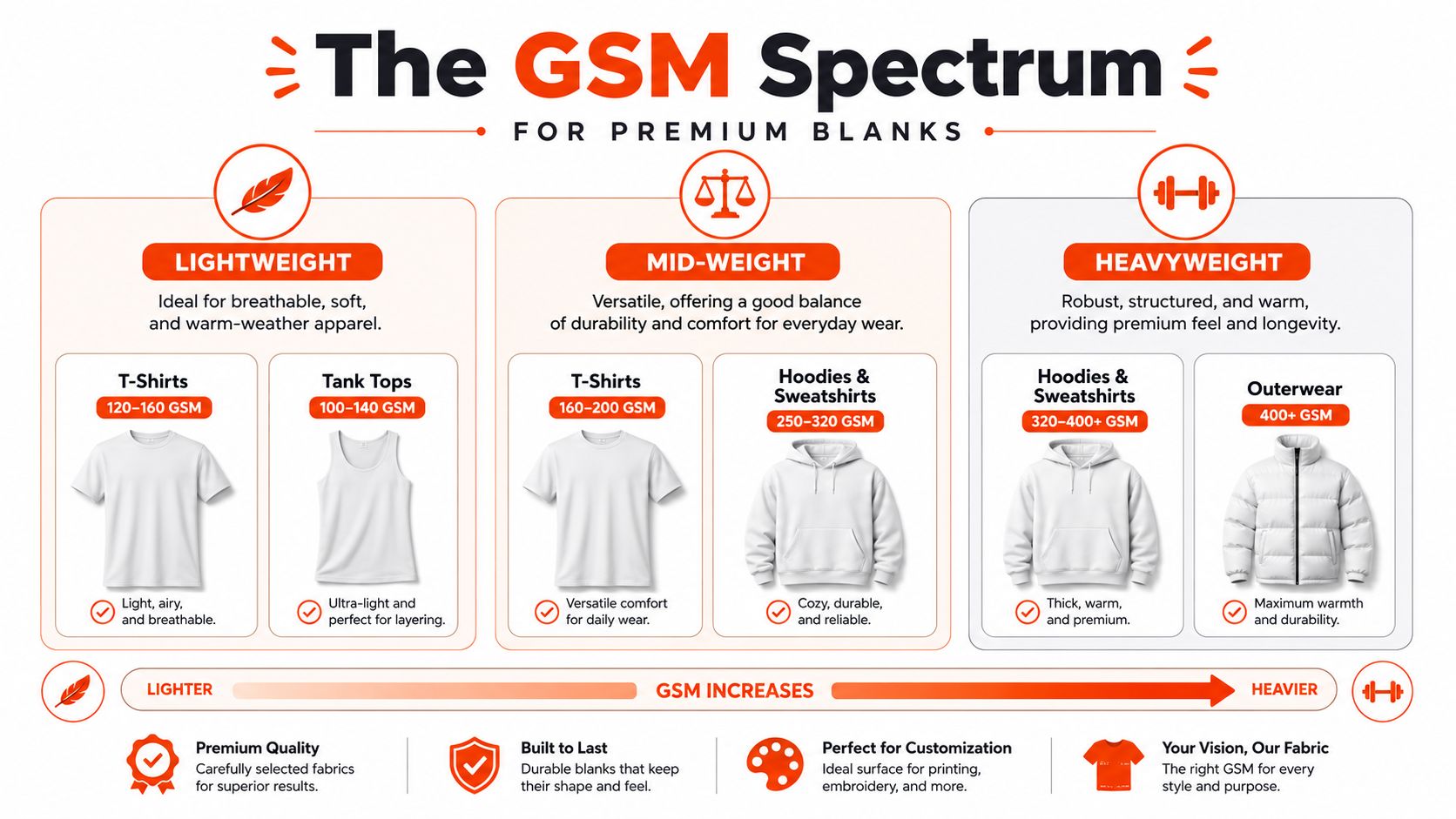
The broad sourcing ranges are still useful as a starting point. Lightweight fabrics generally sit around 100 to 170 GSM, midweight fabrics run from 170 to 340 GSM, and heavyweight fabrics start at 340 GSM and up (Core Fabrics fabric weight classifications). Those buckets are technical shorthand. The better question is what they communicate on body.
Weight classes that actually matter
Lightweight blanks feel easy, breathable, and low pressure. They make sense for hot weather, fitness use, and high-volume event distribution. They also carry the highest risk of reading like default promo apparel if the cut and finishing are average.
Midweight blanks are where many brands should start. They give a tee or polo enough body to feel intentional without adding bulk, and they usually work across more climates, fits, and decoration methods.
Heavyweight blanks create authority. They hold shape, frame graphics better, and make a garment feel closer to retail than giveaway. The trade-off is obvious. More weight means more structure, more warmth, and less universal comfort in every setting.
Where premium blanks usually sit
For branded apparel, these are the ranges that tend to matter in practice.
A light tee often lives around the lower end of the spectrum and works best when softness and airflow are the priority. Premium everyday tees usually move into midweight territory, where the fabric has enough density to feel substantial in hand and cleaner on body. Hoodies and sweatshirts push further up, especially when the goal is a piece people keep for years instead of treating like conference swag.
That is why GSM should be chosen by product role, not by habit. A community run shirt, a founder uniform tee, and a heavyweight hoodie for a product launch should not all start from the same fabric target.
| Garment | Common feel direction | Practical read |
|---|---|---|
| T-shirt | Lightweight to midweight | Lighter weights feel casual and easy. Higher weights feel sharper and more intentional |
| Polo | Midweight | Better shape retention and a cleaner front view |
| Sweatshirt | Midweight to heavyweight | More weight adds presence and improves the overall silhouette |
| Hoodie | Heavyweight for premium use | Feels substantial, holds structure, and reads closer to fashion product |
| Tote bag | Heavier fabric or canvas direction | Better body, better durability, and more repeat use |
For print-first projects, this discover best tees for custom designs guide is a useful companion. If hoodies are doing the heavy lifting in your collection, compare best hoodie blanks for premium merch before you lock fit, decoration, and price.
How Fabric Weight Shapes Your Apparel
GSM fabric weight matters because people don't wear specifications. They wear silhouette, comfort, warmth, and surface finish. The number only matters because it changes the lived experience of the garment.
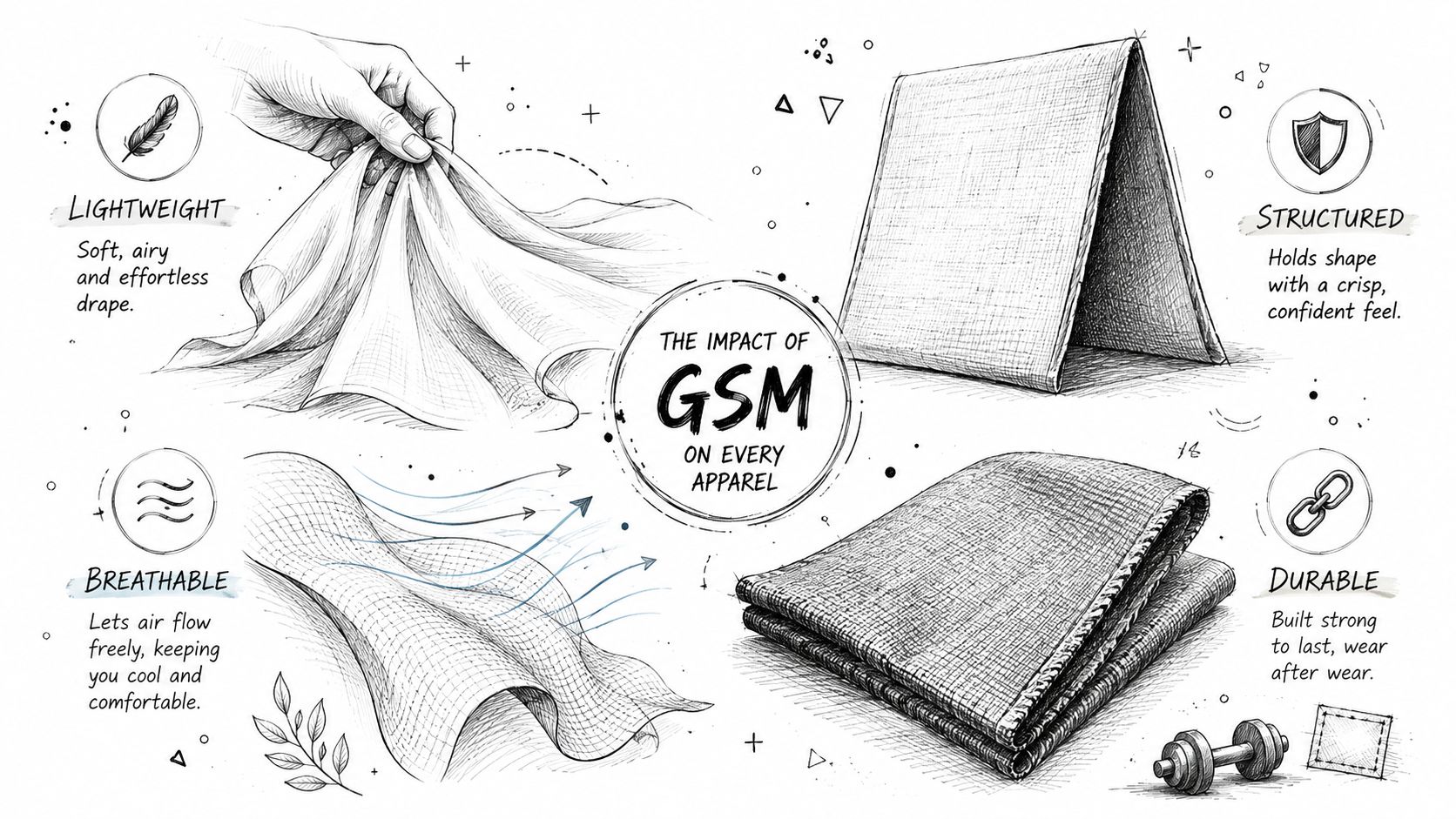
A light tee can feel effortless and sharp when the use case is right. The same shirt can also feel forgettable if the brand wanted something with presence. A heavier hoodie can feel substantial and premium. It can also feel too rigid if the goal was a relaxed lounge piece. The trick is understanding what fabric weight changes visually and physically.
Drape changes the whole read
Drape is one of the most underrated parts of merch. It's the difference between a shirt that skims the body cleanly and one that hangs with more structure.
Lower GSM fabrics usually move more. They feel easier, looser, and often more breathable. That can be perfect for summer drops, startup offsites, or community tees meant to feel casual. If you want examples of how breathable cotton fabrics suit warm-weather garments, this guide to summer garment sewing from The Fabric Company is helpful context.
Heavier fabrics resist collapse. They create a stronger shoulder line, a cleaner sleeve shape, and a more architectural silhouette. That's why a heavyweight tee or hoodie often reads as more expensive before anyone touches it.
Customization has a floor
Fabric weight doesn't just affect feel. It affects what the garment can physically handle.
High-density 3D embroidery or chenille patches need a minimum of 350-400 GSM to prevent distortion. Lighter fabrics such as 180-220 GSM lack the structural density to support that tension and can wrinkle or pull (embroidery GSM requirement reference).
That's the difference between decoration that looks integrated and decoration that looks forced.
Flat screen printing can work beautifully on lighter shirts when the base fabric is appropriate for the print style.
Raised embroidery and chenille need substance underneath.
Heavy patch applications look cleaner on garments with enough body to carry them.
If the project is print-first, it also helps to understand the tradeoffs in custom shirt printing methods and garment selection.
A quick visual reference helps here:
Warmth and wear are part of the brand experience
Weight also changes how a piece lives over time. Heavier sweat fabrics generally create more insulation and a fuller handfeel. They also tend to hold shape better when the knit and finishing are good.
That doesn't mean every brand should chase the heaviest option available.
A great blank feels aligned with the moment. Not just impressive on a spec sheet.
For outer-layer merch, structure often matters as much as warmth. A hoodie that keeps its shape after repeat wear feels intentional. One that bags out, twists, or starts pilling fast signals the opposite.
Matching GSM to Your Brand's Moment
The right GSM depends on what the garment is supposed to do. Not every drop needs to feel like a collectible, and not every onboarding kit should be built like a conference freebie.
The easiest way to make good decisions is to match fabric weight to the moment.
For short-life moments
A conference giveaway, event registration gift, or campaign tee has a simple job. It needs to be wearable, easy to pack, and broad in appeal.
For that kind of use, lighter tees can make sense. The tradeoff is obvious. They're easier to hand out at scale, but they rarely become someone's favorite shirt.
That's fine if the goal is reach.
For team pieces people keep
The standard changes when the item is tied to belonging. New hire kits, internal offsites, founder retreats, and team anniversary drops should feel closer to apparel than promotion.
The advantages of a heavier weight become apparent. The shirt feels more intentional. The sweatshirt keeps more shape. The whole thing lands as a real object, not a branded extra.
A lot of teams get this wrong by underbuilding the garments people will wear most often.
Better merch doesn't need to be louder. It needs to feel worth keeping.
If you're sourcing fleece or heavyweight layers for this kind of project, comparing custom hoodie manufacturers for premium teamwear is usually more useful than looking at generic promo suppliers.
For culture-building drops
Limited releases for communities, top customers, creators, or internal leaders should feel distinct the second someone puts them on.
That's where heavyweight hoodies and sweatshirts earn their place. The useful benchmark here is clear. “Attire-quality” GSM for hoodies sits around 400-500 GSM and retains structural integrity after 50+ washes, while “swag-quality” hoodies often sit around 150-180 GSM and are more prone to thinning and pilling (Sportek on fabric weight in apparel).
That doesn't mean every hoodie should be built this way. It means high-importance drops deserve a garment that reads like a wardrobe piece.
A simple decision filter helps:
Choose lighter when distribution matters more than permanence.
Choose midweight when versatility is the priority.
Choose heavyweight when the garment is part of the brand story itself.
The best merch programs don't pick one standard and force every use case into it. They build a system.
The Banger GSM Cheat Sheet
Some decisions don't need a long workshop. You just need a clean recommendation you can use when building a brief, comparing blanks, or reviewing options with a supplier.
GSM Quick Selection Guide
| Use Case | Garment Type | Ideal GSM Range | Key Outcome |
|---|---|---|---|
| Event giveaway | T-shirt | 120-160 GSM | Breathable, easy to wear, lower-commitment feel |
| Community summer drop | T-shirt or tank | 100-170 GSM | Soft, lighter drape for warm weather |
| Team onboarding | T-shirt | 170-240 GSM | Better structure and more premium handfeel |
| Everyday branded polo | Polo | 170-340 GSM | Cleaner shape and more durable day-to-day wear |
| Standard sweatshirt | Sweatshirt | 250-340 GSM | Balanced comfort, warmth, and versatility |
| Premium sweatshirt | Sweatshirt | 340+ GSM | Stronger silhouette and more elevated finish |
| Premium hoodie | Hoodie | 400-500 GSM | Fashion-grade weight, stronger structure, longer wear |
| Heavy outer layer | Coat or outerwear | 400+ GSM | Substantial feel and better cold-weather use |
Two things people forget
The table gets you close. It doesn't replace sampling.
First, fiber changes perception. The same GSM can feel different across cotton, recycled blends, or stretch-heavy constructions. Fabric weight measures mass per area. It doesn't fully describe softness, surface, recovery, or finish.
Second, heavier garments affect logistics. They usually cost more to produce and more to ship. That doesn't make them a bad choice. It just means the decision should be intentional.
A good spec balances four things:
Brand signal matters if the item represents culture, not just visibility.
Climate changes what people will wear.
Customization method sets a floor for how much structure you need.
Distribution model matters if you're shipping worldwide to individual recipients.
GSM Fabric Weight FAQ
A few questions come up on almost every merch project, especially when teams are choosing between a cheaper blank and one that feels more substantial.
Is higher GSM always better
No. Higher GSM is better when you want more structure, more warmth, or a stronger base for premium customization.
It's worse when you want a fluid drape, a lighter summer feel, or easier all-day wear in hot climates. A shirt can be too heavy for the concept. A hoodie can be too stiff for the fit.
The right choice is the one that fits the job.
How does GSM affect merch cost
Higher GSM generally means more material per square meter, so the garment usually costs more. It can also increase shipping cost because the finished piece weighs more.
That said, buyers often focus too much on unit price and not enough on retention. A piece people keep wearing carries more value than one that gets worn once and forgotten.
What is the best GSM for a premium t-shirt
For a premium t-shirt, the sweet spot is usually a midweight to upper-midweight feel. That gives you enough structure to feel premium without turning the shirt into a stiff slab.
In practice, many teams like premium tees in the low-to-mid 200 GSM range because they feel more intentional on body. The exact call should still follow the fit, fabric composition, and climate.
What GSM should I choose for hoodies and sweatshirts
For high-end hoodies and sweatshirts, 400-500 GSM is the premium benchmark. That range offers stronger abrasion resistance, more structural integrity, and better thermal regulation than the standard 300-340 GSM midweight range, which is why it tends to support a longer product lifecycle and a higher perceived value (reference on 400-500 GSM hoodie benefits).
If your project is print-led rather than embroidery-led, it's also worth comparing blank weight with the print result you want. This guide to screen printed t-shirts for branded apparel helps frame that decision.
The best GSM fabric weight is the one that makes the garment feel right for the person wearing it, not just impressive in a quote sheet.
If you want merch that feels like real apparel, not flimsy swag, Banger is built for that. Premium European blanks (180-300 GSM apparel, 400-500 GSM heavyweight hoodies), custom apparel made in France's best production ateliers, low minimums, worldwide fulfillment, and direct factory pricing. Get a free, no-commitment quote with product previews in 24 hours, and build merch your team will actually want to wear.