Event Swag Ideas That People Actually Want
You're probably planning an event right now and staring at the usual options: cheap totes, generic pens, a T-shirt nobody asked for, maybe a stress ball that somehow still exists in 2026. The problem isn't that swag is dead. The problem is that most event swag gets treated like a procurement task instead of a brand decision.
That's why so much of it misses. Bad fit, bad fabric, bad timing, bad audience match. A booth giveaway for walk-by traffic should not be the same thing as a speaker gift, a founder dinner takeaway, or a team offsite piece. If the item has nothing to say, no utility, and no sense of what it's for, it becomes landfill with a logo on it.
The best event swag ideas work like product design. They solve a problem, carry a vibe, and make the brand feel more real. People keep pieces that fit their life. They remember pieces that feel considered. They wear pieces that don't scream "free conference shirt."
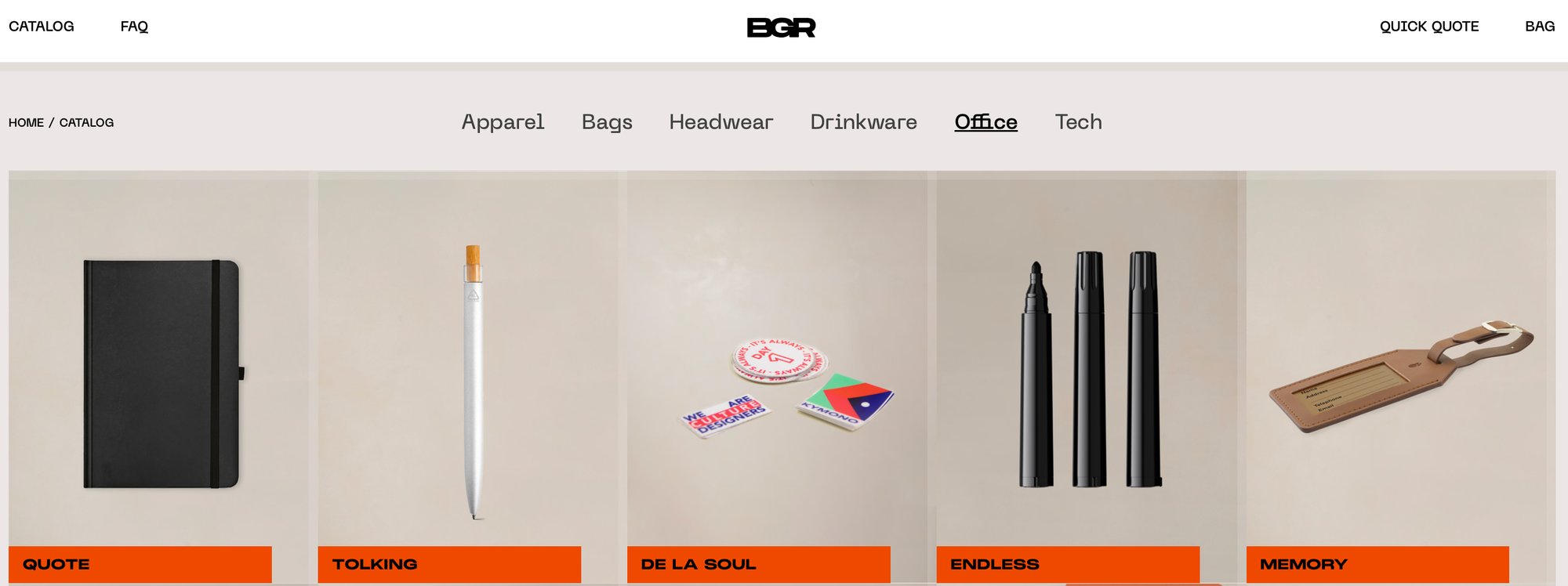
This is where Banger comes in. People think merch and go straight to T-shirts, and yes, we make apparel your team will actually wear. But the pieces that win an event are often the small considered ones nobody expects. Different moments, different items, all built to match the audience instead of the same shirt for everyone.
Everything is customizable with screen printing, embroidery, DTF, woven labels, and custom packaging, made in France's best production ateliers. No middlemen, no compromise. So you can spec a full event kit that mixes apparel, bags, drinkware, office, and tech, all in one order.
Table of Contents
Stop Making Merch That Ends Up in the Trash
Most bad event swag comes from the same lazy assumption: more units means more impact. It doesn't. A thousand forgettable giveaways don't build affection for your brand. They just prove you had a budget and no filter.
The flimsy tote, the scratchy shirt, the random gadget with no relevance to the event. None of that fails because swag itself is a bad channel. It fails because the item was chosen before anyone answered the only questions that matter. Who is this for? What do we want them to do next? What should this piece say about us when the event is over?
Most swag fails before production starts
Swag should be treated like a brand asset with a job to do. Sometimes that job is broad visibility. Sometimes it's qualification. Sometimes it's relationship building. Those are different jobs, which means they need different objects, different spend, and different moments of distribution.
Bad merch says, “We needed something for the booth.” Good merch says, “We knew exactly who this was for.”
That's why the best event swag ideas usually start with intent, not product category. If you begin with “let's order something cheap and easy,” you'll get exactly what that process deserves. If you begin with “what friction can we remove, what feeling can we create, what memory should stick,” the item gets sharper fast.
There's also a sustainability angle here, but not the fake one where a brand picks a recycled material and keeps the same bad strategy. The cleaner move is to order less junk in the first place. If you care about reducing waste, it helps to think beyond disposable promo and look at guides on environmentally friendly promotional items that prioritize durability and repeat use.
Use budget like a strategist, not a shopper
One framework worth stealing comes from PerkUp's event swag budgeting approach, which breaks spend into audience tiers: under $5 for walk-by traffic, $5–$20 for attendees who take an action like booking a demo or joining a session, and $20+ for speakers or qualified leads. That's useful because it treats swag like a conversion tool instead of a blanket giveaway.
Here's the logic in plain terms:
Broad audience items: Give these to people who barely know you. Keep them easy, portable, and inexpensive.
Engaged audience items: Save better pieces for people who gave you time, attention, or intent.
VIP items: Use premium merch where relationship depth justifies it.
A lot of teams get this backward. They blow budget on premium items, then hand them to anyone with a pulse. Or they go ultra-cheap everywhere and wonder why nobody cares.
If you want another perspective on this mindset, especially for higher-consideration gifting, this guide to selecting unique corporate gifts is useful because it pushes the same core idea: context matters more than volume.
The Vibe Check Matching Swag to Event and Audience
Not every event deserves the same merch. A noisy expo floor, a developer summit, a leadership retreat, and a small founder dinner each create different expectations. Good swag meets the room.
Utility beats novelty
The strongest proof is retention. According to BlinkSwag's conference swag analysis, tech accessories have an 85% retention rate, followed by drinkware at 63% and quality apparel at 62%. The same source says a power bank or premium water bottle can generate over 5,700 brand impressions in eight months. That's why utility-first products keep outperforming novelty giveaways.
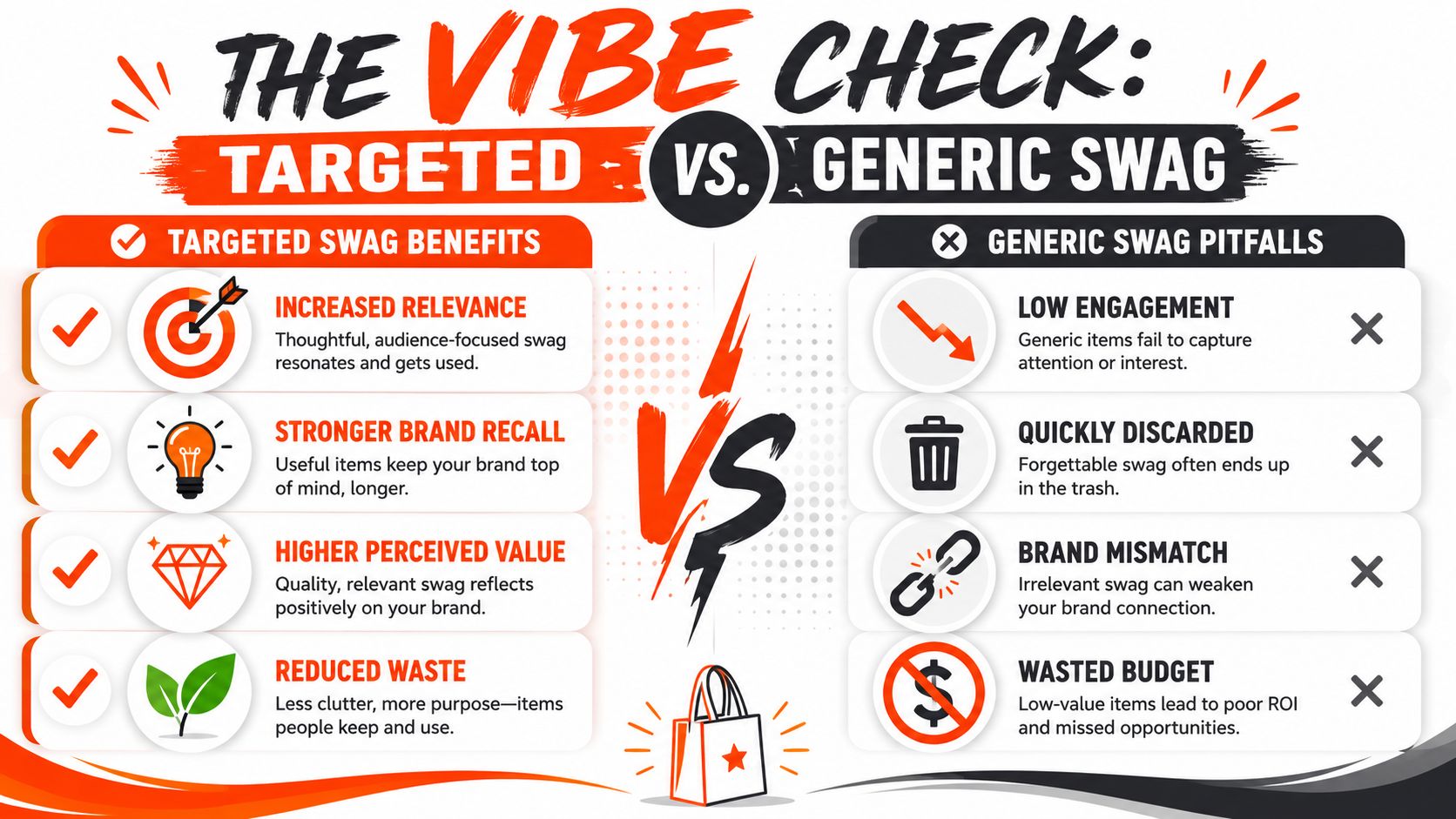
That doesn't mean every useful item is automatically good. Utility without taste still feels generic. A charger can feel premium or forgettable. A bottle can look clean enough for a desk setup or look like trade-show clutter. Function gets the item kept. Aesthetic gets it used in public.
Practical rule: If the item solves a real need and looks like something the attendee would choose for themselves, you're close.
For branded apparel, this is where design discipline matters. A strong fit, restrained placement, and good fabric will beat a louder graphic on a bad blank every time. Teams that need wearables should think less like promo buyers and more like people commissioning a capsule. Even a simple custom shirt printing setup lands better when the garment and decoration method are doing real work.
Different rooms need different merch
A high-energy tech conference usually rewards fast-read utility. People are moving, charging devices, juggling coffee, collecting cards, and deciding which booth is worth a second look. For such an environment, power banks, premium bottles, cable organizers, and clean totes make sense.
A developer event is different. The audience usually spots fake cool instantly. They'll respect practical gear, subtle graphics, and products that don't feel overbranded. Think understated notebook systems, laptop accessories, or a heavyweight tee with design restraint.
A VIP dinner or founder salon is a different planet. Nobody wants a giveaway bag there. The piece should feel closer to a gift or a limited release. Smaller run, better material, better finishing. It should say, “We thought about this,” not “We had leftovers from the booth.”
A quick audience-to-item matrix
| Audience | What they usually value | Better item direction | What to avoid |
|---|---|---|---|
| Walk-by attendee | Immediate usefulness, portability | Sticker pack, tote, pen that writes well | Bulky items, confusing novelty |
| Demo-booker or session attendee | Practical upgrade | Bottle, notebook, charger, cap | Cheap filler with oversized logo |
| Speaker or partner | Thoughtfulness, quality, finish | Premium apparel, boxed set, travel piece | Same item given to everyone else |
| Internal team | Identity, wearability, pride | Hoodie, tee, cap, offsite kit | Generic HR-looking merch |
The takeaway is simple. Don't ask, “What swag item is trending?” Ask, “What does this person need in this exact context, and what version of our brand should they leave with?”
The Edit Curated Event Swag Ideas
A good swag list should feel edited. Not bloated. Not desperate. Just a tight selection of pieces people can fold into their life.
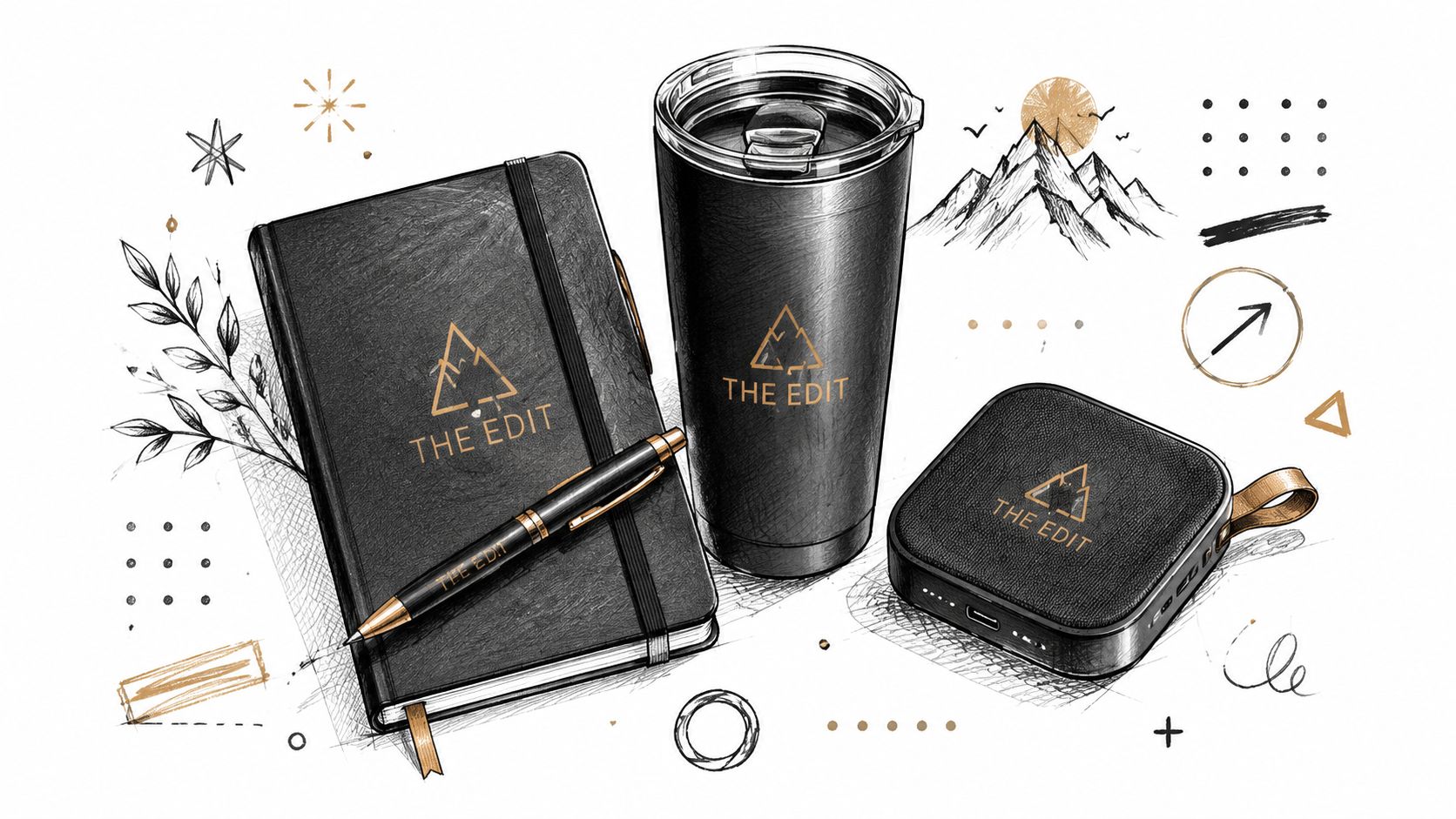
Apparel people actually wear
The best apparel swag doesn't look like swag. It looks like a brand knew when to stop.
A heavyweight tee with a small chest embroidery or a subtle back graphic works because it respects the wearer. Same with a washed dad hat, a clean beanie, or a hoodie that has actual shape instead of that thin, shiny fleece feel people clock instantly. If your logo needs to dominate the entire garment to be noticed, the garment probably isn't good enough.
Three apparel picks that keep winning:
Heavyweight T-shirt: Works when the cut is modern and the graphic treatment is restrained.
Dad hat: Low-risk, highly wearable, easy to size for broad distribution.
Midweight or heavyweight hoodie: Better for speakers, internal teams, or qualified leads than general booth traffic.
The move is to design these like branded apparel, not event souvenirs. Small placements. Good thread. Good blank. Real color choices. Anyone building a broader merch range can also browse a full custom merch catalog to compare apparel, accessories, and hard goods in one place instead of defaulting to the same two conference staples.
A better desk setup
This category works because it extends the event into a daily routine. People return to their desk, unpack, and the item stays in orbit.
A notebook is still strong if it feels tactile and looks refined. A metal tumbler works if it doesn't look like a default procurement pick. A portable power bank is one of the cleanest examples of swag doing a real job. It's especially strong for events where people are draining battery all day.
A few desk-friendly ideas worth considering:
Minimal notebook with good paper stock
Metal water bottle or tumbler
Portable power bank
Tech pouch for cables and adapters
Mechanical pencil or pen with some weight to it
The best desk swag doesn't beg for attention. It earns desk space.
The daily carry
Event swag ideas gain greater appeal with daily-carry items. These travel. They show up on commutes, airport runs, coworking days, and coffee stops.
A structured tote beats a floppy one. A compact pouch beats a gimmick. A keychain can work, but only if the material and shape feel intentional. This is also where travel-friendly items start to shine for conference-heavy audiences. People don't need another object to manage. They need better versions of the objects they already carry.
A few strong choices:
Structured tote bag with thicker handles and clean branding.
Zip tech pouch for chargers, cables, and adapters.
Luggage tag for travel-heavy audiences.
Pocket notebook for quick notes without the corporate look.
Bottle sling or utility pouch for outdoor and festival-style events.
The common thread across all of them is simple. They don't feel random. They feel chosen.
Beyond the Logo Premium Customization and Unboxing
Most branded merch dies at the decoration layer. A decent item gets slapped with a loud logo, default placement, and zero thought for texture or finish. That's how you turn something promising into something cheap.
Good customization changes the whole object
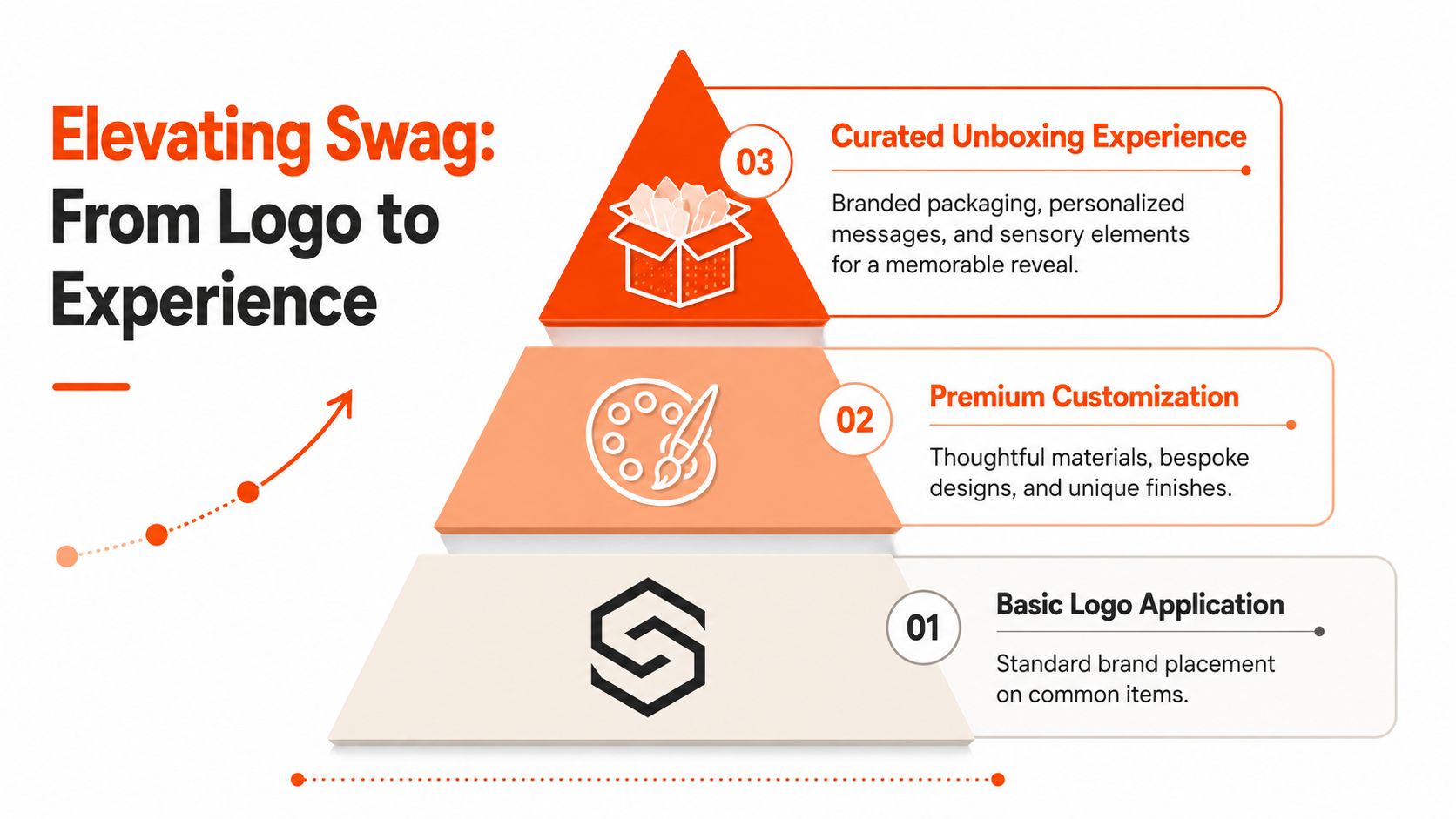
Premium customization starts with one question: what method fits this object? Not every logo belongs in screen print. Not every cap should be flat embroidery. Not every bottle should carry a giant mark.
Better options usually come from mixing texture, material, and restraint:
3D embroidery: Strong on caps when the logo shape can handle lift.
Chenille patches: Better for varsity energy, community drops, or statement outerwear.
Woven neck labels: A small detail that makes apparel feel finished instead of promotional.
Laser engraving: Clean on bottles, metal pens, power banks, and hard goods.
Embossing or debossing: Especially good for notebooks, leather goods, and packaging.
For travel-heavy or multi-day events, customization should support function, not fight it. As Printful's conference swag guide notes, swag works best when it solves friction created by the event itself. Items like power banks, luggage tags, or premium water bottles make sense because the context already made them relevant.
If you're building event visuals beyond the merch itself, details matter there too. Even adjacent brand assets like signage, packaging seals, or personalized auto graphics for campaign vehicles work better when they follow the same design discipline: less clutter, better material choices, cleaner execution.
A quick visual reference helps here:
Packaging is part of the product
People remember how something arrives. Handing over a great hoodie in a wrinkled polybag kills the mood immediately. A simple branded mailer, tissue wrap, and one smart insert can change the whole read.
This matters even more for remote attendees, speakers, PR mailers, and hybrid events. If someone receives an item at home, the package is the event touchpoint. Treat it like one.
Useful packaging upgrades include:
Custom mailer boxes with clean exterior branding
Tissue paper in a brand color or pattern
Product cards that explain the item without sounding promotional
Small inserts with event-specific context
Stickers or seals that make the package feel complete
If you're shipping curated kits, it helps to plan around custom branded gift boxes from the start rather than treating packaging as an afterthought at the end of production.
Match the finish to the moment
Booth giveaway merch should be simpler. VIP merch can carry more detail. Internal team gear can support deeper custom work because people will live with it longer.
That's the main rule. Don't overbuild low-intent swag. Don't underbuild high-context swag. The wrong level of finish is just another form of waste.
The logo is not the idea. The object is the idea, and the logo is one of the details.
The Go-Live Plan Logistics and Execution Checklist
Creative direction is the fun part. Execution is where projects either look sharp or fall apart in a loading dock.
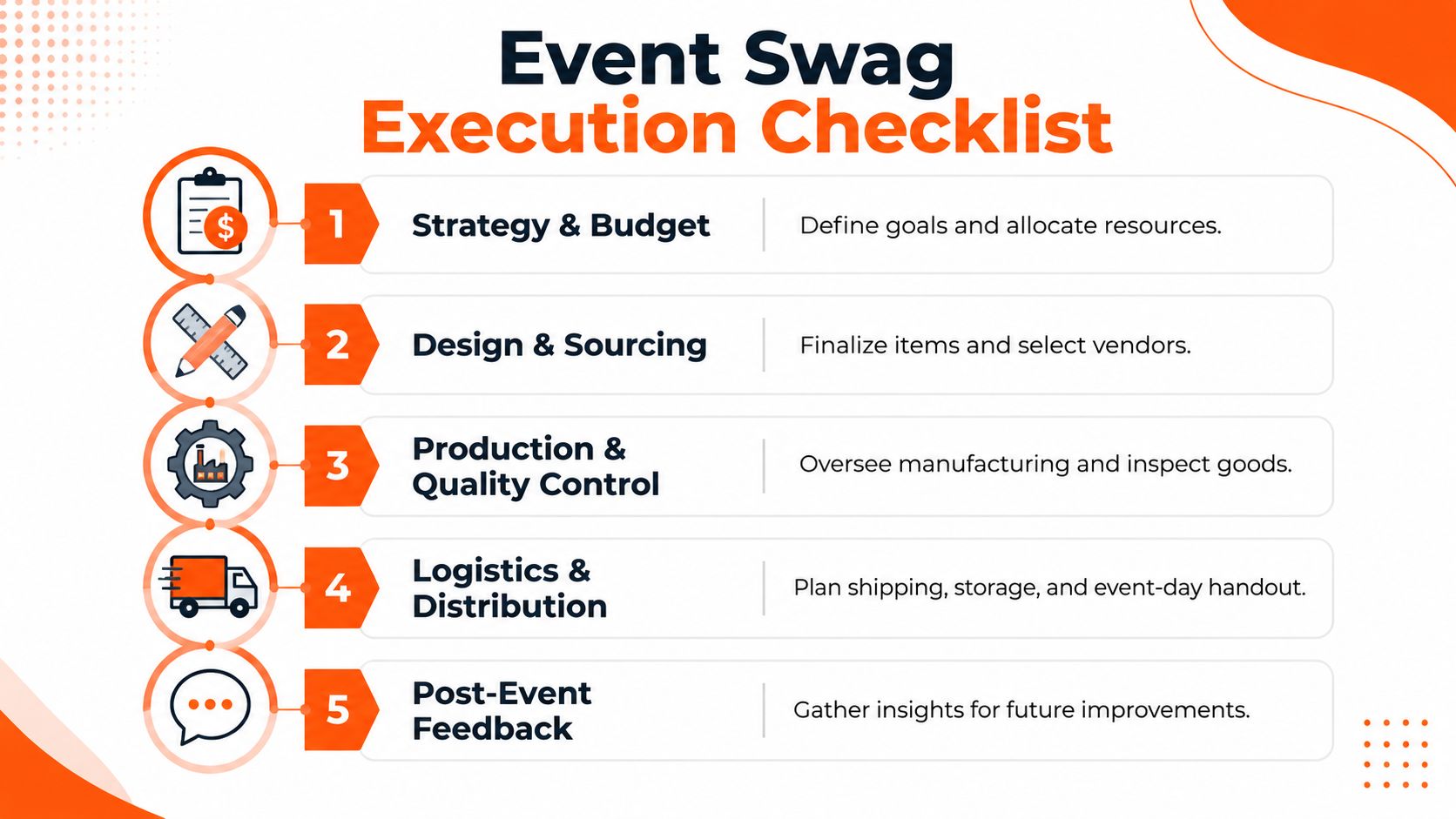
Build the timeline backwards
Start with the handout date, then work in reverse. Not the event date. The handout date. If gifts need to be in hotel rooms before check-in, that's your deadline. If booth inventory has to clear venue receiving two days early, that's your deadline. If remote attendees need boxes delivered before a livestream kickoff, that's your deadline.
From there, lock the milestones in order:
Audience and quantity sign-off
Product selection
Artwork approval
Sampling or proofing
Production
Freight and delivery
Venue receiving or multi-address distribution
On-site handoff plan
This is also where teams should decide whether they're shipping to one event location, to multiple offices, or directly to individuals. Global events and distributed teams create extra complexity fast. If you need storage, pick-pack-ship workflows, or multi-address delivery, it helps to understand how merch fulfillment services work before your order is already in production.
The checklist that saves the project
Use this as a working list, not inspiration.
Lock the audience first: Separate walk-by traffic, engaged attendees, VIPs, speakers, and staff.
Match item to context: Travel item for travel-heavy event, weather gear for outdoor event, desk item for workshop-heavy format.
Approve decoration at actual size: A logo can look balanced on screen and oversized in real life.
Confirm garment specs: Color, fabric weight, fit, and size curve all matter before production starts.
Check packaging requirements: Mailers, inserts, labeling, kitting, and any event-specific notes.
Verify delivery details: Venue address, receiving window, dock instructions, contact person, and room number if needed.
Plan distribution logic: Who gets what, when, and under what condition.
Keep a buffer: You need extras for damaged units, speaker additions, and last-minute staff requests.
Assign one owner: Not a group chat. One person responsible for approvals and final calls.
Where teams usually mess this up
They approve art too late. They treat all attendees the same. They forget that apparel sizing requires actual planning. They send everything to a venue without confirming receiving rules. They order a premium object, then ruin it with weak packaging or clumsy decoration.
A few trade-offs to think through early:
| Decision | Better for | Risk if ignored |
|---|---|---|
| Apparel vs hard goods | Identity and wearability | Sizing issues or bad fit |
| Bulk shipping vs direct-to-recipient | Single-location events vs distributed audiences | Lost time, missing boxes, venue chaos |
| Broad giveaway vs gated reward | Awareness vs qualification | Premium budget wasted on low-intent traffic |
| Loud branding vs subtle branding | Fast recognition vs long-term use | Item feels promotional and gets abandoned |
The teams that execute well usually stay boring in the right places. Clear approvals. One owner. Good spreadsheets. Real deadlines. Less last-minute improvisation.
Smooth logistics are part of the brand experience too. Nobody remembers the back-end work, but they always feel the result.
When the planning is solid, swag stops feeling like “stuff” and starts acting like a real extension of the event. It supports the room, reinforces the brand, and keeps showing up after everyone flies home.
Event merch that feels like a considered drop instead of a generic giveaway is exactly what Banger is built for. We produce premium custom merch for internet-native teams, with premium blanks, sharp customization, a MOQ of 1 unit per item, 10 to 15 business days end to end, DDP shipping worldwide, and payment in USDC, USDT, or fiat. Browse the catalog and get a free, no-commitment quote with a product preview in 24 hours. Build event swag people actually keep.