Best Welcome Gifts for New Employees in 2026
Most advice on welcome gifts for new employees is stuck in 2018. It's still pushing mugs, stress balls, random notebooks, and logo spam - as if the job is to fill a box instead of shape a first impression.
That misses the point. A good welcome kit isn't merch inventory. It's part of how onboarding actually feels. It tells a new hire whether your team is organized, whether your brand has taste, and whether anyone thought about their first week. For internet-native teams, that matters more than ever. People can tell the difference between a curated drop and a panic order from Amazon the night before.
The best welcome gifts for new employees do three things at once: reduce friction, create belonging, and make the company feel real. If the kit doesn't do at least one of those, it doesn't belong in the box.
Table of Contents
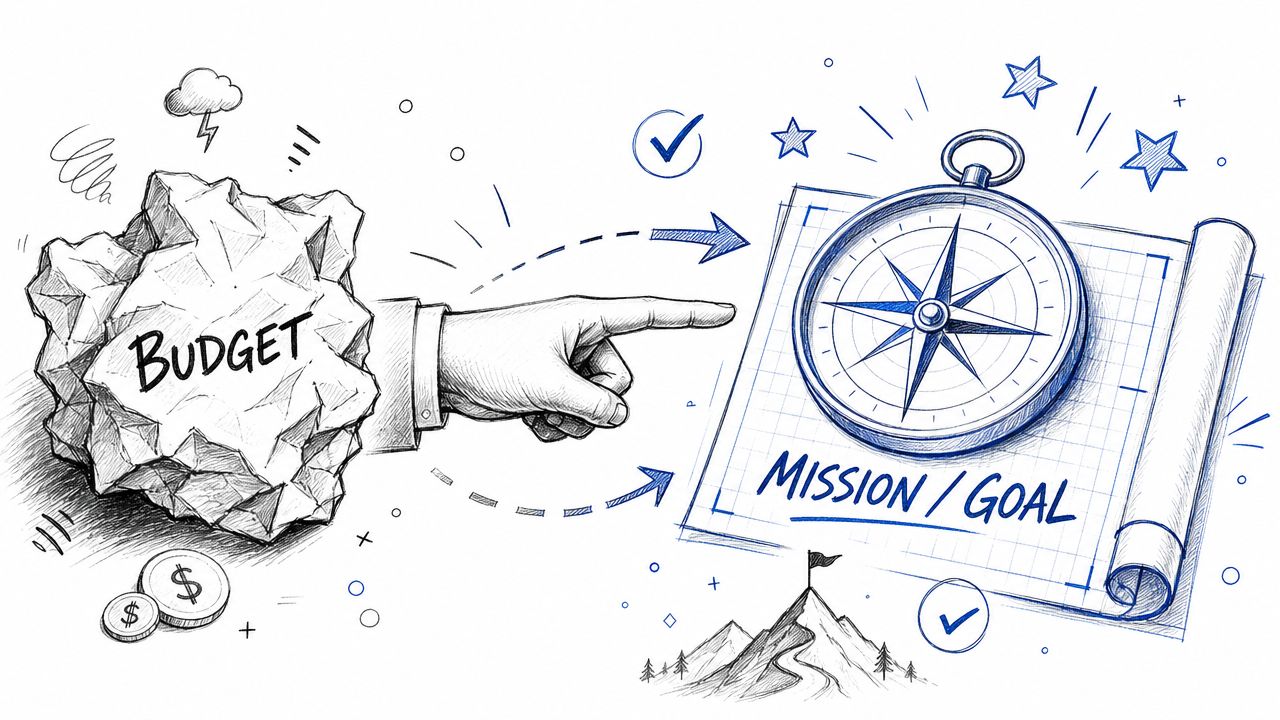
Define the Mission Not Just the Budget
Budget-first thinking is why so many welcome kits land flat. Someone asks what they can afford, then works backward into a pile of cheap objects. That's how you end up with a box full of branded filler and no real intent.
The smarter question is simpler: what is this kit supposed to do for the employee in their first week?
Start with the onboarding problem
The first stretch of employment is high stakes. As much as 20% of staff turnover happens within the first 45 days of employment, and employees who go through a structured onboarding program are 58% more likely to still be with the organization after three years, according to Oak's summary of employee onboarding statistics.
This is the underlying framework. Welcome gifts for new employees aren't just nice. They sit inside a retention-critical window where every signal counts. A late, generic, low-effort package says more than people think. So does a sharp one.
Practical rule: If a welcome kit doesn't make Day 1 feel more confident, more personal, or more considered, it isn't doing onboarding work. It's just shipping merchandise.
For some teams, the mission is belonging. For others, it's confidence. Sometimes it's brand expression, especially when the company wants the first physical touchpoint to reflect a high standard. Those are all valid. What doesn't work is trying to solve everything at once with no hierarchy.
Pick one primary job for the kit
Strong programs usually choose one dominant goal, then support it with a few secondary signals.
A few common missions:
Belonging first: Include a personal note, team context, and one item that makes the employee feel part of the group instead of outside it.
Productivity first: Prioritize practical pieces that help immediately, especially for remote and hybrid hires.
Brand standard first: Use fewer items, but make every object feel deliberate and well designed.
Culture first: Build the box around how the company behaves, not what the careers page says.
This is also where values show up in a concrete way. If your team talks constantly about craft, quality, and intention, the kit should reflect that. A useful reference is how teams actually translate company values into onboarding and culture programs. When the gift experience contradicts the stated culture, people notice.
A bad mission sounds like this: "Send something nice." A good mission sounds like this: "Make every new hire feel expected, equipped, and proud to be here before their first week ends."
That kind of clarity changes the buying decisions - and keeps you from overspending on junk.
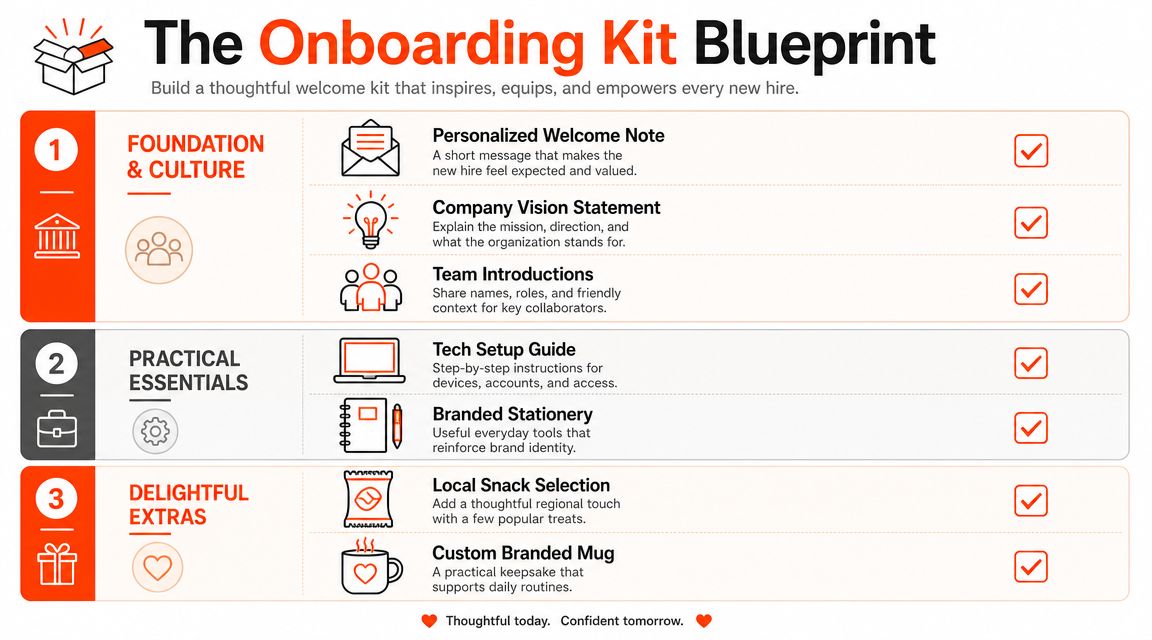
The Onboarding Kit Blueprint
The best onboarding kits don't fill a box. They make a point. Fewer things, chosen with more intent.
Most companies still over-index on visible swag and under-index on usefulness. That's backwards. The strongest welcome gifts for new employees are the ones that help right away and still feel good to keep.
Build around day one utility
There's one filter that instantly improves curation. Ask whether the item is useful on Day 1, not just vaguely nice to own. Independent guidance on onboarding gifts puts it cleanly: the best welcome gifts are “immediately useful” and “delivered on or before Day 1”, with practical or choice-based items often beating novelty swag because they fit different needs better. That guidance appears in Giftogram's piece on welcome gifts for remote, hybrid, and in-office employees.
That standard rules out a lot of filler.
A mug might be fine. A good hoodie might be better. A notebook can work. Three low-grade trinkets usually won't. If you're building custom branded gift boxes for onboarding and team programs, usefulness should drive the structure, not be an afterthought.
What belongs in the box
A clean blueprint usually has three layers.
Layer one is orientation
This is the human part. Add the items that make the company feel intentional.
A short welcome note: Specific beats generic every time.
Team context: Names, roles, or a simple org snapshot helps people feel less lost.
A culture artifact: This could be a brand book, a manifesto card, or a concise operating principle.
Layer two is practical support
The kit earns its keep in the first week.
| Category | Good choice | Weak choice |
|---|---|---|
| Apparel | One premium hoodie or crewneck | Multiple thin tees |
| Desk | A solid notebook and pen | Novelty desk toys |
| Tech | A useful cable, sleeve, or adapter | Random branded electronics |
| Food or flexibility | Choice-based meal support or snacks | Perishable items with no context |
Layer three is delight
This part should be small, not chaotic.
The best kits don't feel packed. They feel edited.
A local snack, a clean tumbler, a well-made cap, or subtle branded stationery can work. The mistake is treating “delight” as permission to dump in extras. The box should still feel composed.
If you want a fast gut check, remove anything the employee is likely to leave in a drawer after one week. What remains is usually the actual kit.
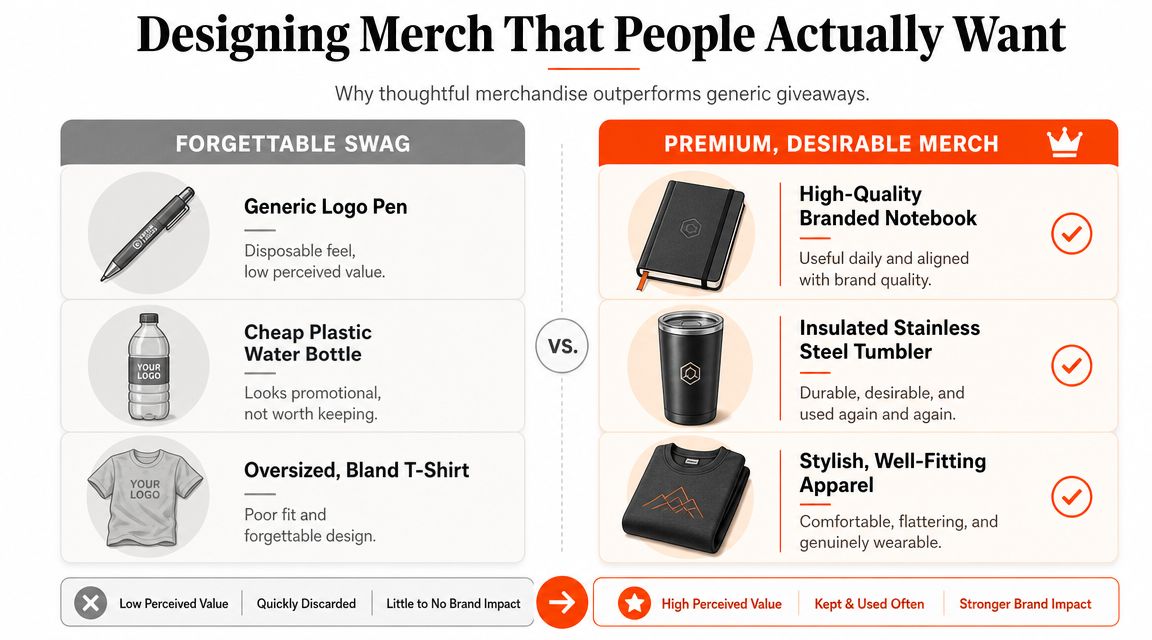
Designing Merch That People Actually Want
A lot of employee merch fails before production even starts. The product might be decent, but the design choices scream internal giveaway instead of wearable brand piece.
That's why good welcome gifts for new employees need art direction, not just logo placement. People keep things that fit into their life and wardrobe. They discard things that feel like advertising with sleeves.
Stop treating the logo as the design
The logo is one ingredient. It isn't the entire concept.
The logo is one ingredient. It isn't the whole design.
When the logo is huge, loud, and slapped onto the cheapest blank available, the result feels transactional. A better move is balancing visibility with wearability. Embroidery works when you want subtle permanence. Screen print works when the graphic itself has something to say. Tone-on-tone applications can make branded apparel feel much more considered.
For hoodies in particular, blank quality matters as much as artwork. Shape, weight, hand feel, and cuff construction decide whether someone wears it twice or keeps it in rotation. If your team is comparing bases, this guide to the best hoodie blanks for custom merch is a useful starting point.
A simple comparison helps:
Big front logo on a thin tee: Feels like conference leftovers.
Small chest embroidery on a well-cut heavyweight hoodie: Feels intentional.
Generic slogan with no design system: Feels forgettable.
Graphic tied to the company's identity or product world: Feels collectible.
The details people notice
People read quality through finishing. They notice things even if they don't have the vocabulary for them.
Custom woven neck labels feel different from a stock tag. Branded hang tags make the piece feel considered. Clean packaging changes the unboxing moment. None of this matters if the product itself is weak, but when the base is strong, these details complete the story.
Here's a useful design reference before you lock anything in:
A few rules hold up across brands:
Keep the palette disciplined: Too many brand colors can cheapen the result fast.
Match decoration to garment: Embroidery on structured pieces. Print where graphic impact matters.
Avoid fake hype language: If the piece needs a gimmick to seem cool, the design isn't there yet.
Think wardrobe, not giveaway table: Neutral tones and clean silhouettes usually win.
If you wouldn't wear it outside a company offsite, don't make employees pretend they want it.
Fashion logic comes into play. The best branded apparel doesn't ask for mercy from the wearer. It earns the spot.
Nailing Logistics for Distributed Teams
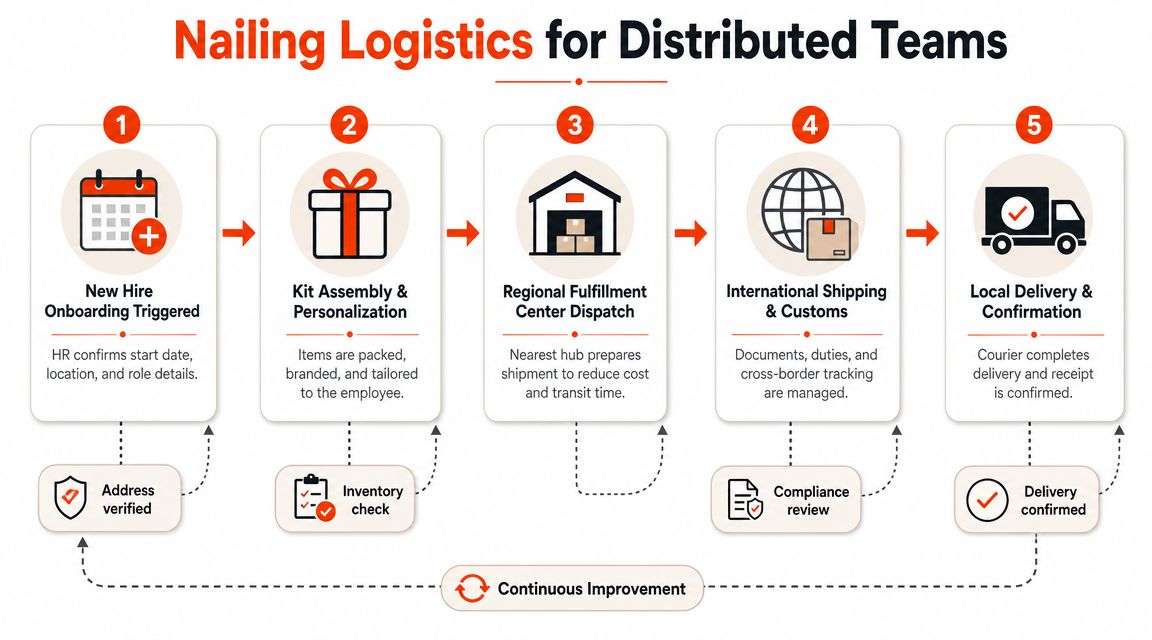
A beautiful welcome kit that arrives late is still a bad welcome kit. Timing carries its own message. If the package misses the moment, the experience loses a lot of its force.
This gets harder when the team is spread across countries, time zones, and work setups. Global onboarding isn't just a design problem. It's an operations problem with branding consequences.
What to standardize
Distributed teams usually need a core kit that stays consistent. Guidance on new employee welcome gifts notes a key tension here: global teams have to balance standardized kits for fairness with personalized options for impact, and the most effective programs often use a hybrid approach with a standard set of quality items plus flexibility by location or role.
That means some elements should be universal:
Brand expression: The packaging, tone, and visual identity should look the same everywhere.
Core apparel or accessory: One anchor item creates consistency across the company.
Printed inserts: Welcome note, team context, and onboarding cues should stay aligned.
Service level: Everyone should get a polished experience, not a strong version in one region and a weaker one in another.
For teams managing shipping at scale, a partner that supports merch fulfillment services for multi-address and global delivery saves a lot of operational pain.
Where to add flexibility
Not everything should be fixed. Standardization without flexibility turns into friction fast.
Use choice where the stakes are personal or location-dependent:
| Area | Better as standard | Better as flexible |
|---|---|---|
| Packaging | Yes | No |
| Welcome note structure | Yes | Light personalization |
| Apparel sizing | No | Yes |
| Snacks or food | No | Yes |
| Power adapters or tech accessories | Sometimes | Often yes |
| Climate-specific items | No | Yes |
A remote hire in a warm climate doesn't need the same extras as someone starting in winter. An employee near HQ may enjoy a local product that wouldn't make sense internationally. A digital meal credit can beat a physical snack pack when shipping is messy.
Standardize the signal. Personalize the usefulness.
The operational discipline matters. Collect sizes early. Confirm addresses before production closes. Avoid building a program around items that trigger customs headaches if there's a cleaner alternative. If the process is fragile, the employee feels that fragility.
The goal isn't identical boxes. It's a consistent level of thought.
Measuring the Impact of Your Welcome Program
If the program only gets measured by whether people said “nice box” in Slack, it'll always look optional. That's the trap. Teams treat welcome gifts as soft culture spend because they never define what success looks like in behavior.
A better model is simple. Track whether the program improved the new hire experience in ways that can be observed, compared, and refined.
Track behavior not vibes alone
There's a clear reason to care. Employees who felt welcome were 50% more likely to stay with the company, according to BenefitHub's summary of welcome gift and employee sentiment research. That doesn't mean the box alone drives retention. It does mean the feeling of being welcomed is tied to a real outcome.
So measure the program in layers.
Start with operational metrics your team controls:
Delivery timing: Did the kit land before Day 1 or during the intended window?
Completion rate: Did every eligible hire receive the experience?
Accuracy: Were sizes, addresses, and contents correct?
Then track onboarding indicators:
Early sentiment: Ask whether the employee felt expected and prepared.
Manager feedback: Did the new hire seem set up and confident in the first week?
Qualitative mentions: Save recurring comments from onboarding surveys and internal chat.
Then look at broader patterns over time:
Early retention trends: Watch whether first-month and first-quarter exits move in the right direction.
Employee advocacy: Notice when people voluntarily share or wear the items.
Program durability: Which items keep showing up months later?
Use a simple review loop
This doesn't need a giant analytics stack. It needs consistency.
A lightweight review system can look like this:
Log every send with start date, ship date, delivery date, and kit type.
Survey new hires early with a few focused questions on usefulness, timing, and first impression.
Review item performance quarterly. Keep the pieces people mention. Cut the filler.
Compare cost against program quality using your actual custom merch pricing considerations, not gut feeling.
A welcome program earns budget when it's run like a system, not a one-off gesture.
The best signal is repeatability. If the process works across different teams, locations, and hiring waves, that's what turns a nice idea into part of the company's operating model.
Example Welcome Kits and Your Launch Timeline
Many organizations don't need more inspiration boards. They need a few kit concepts that are easy to picture and even easier to execute.
The right setup depends on your culture, your hiring patterns, and how polished you want the first physical touchpoint to feel. Here are three useful directions.
Three kit concepts that actually make sense
| Kit Type | Core Items | Design Vibe |
|---|---|---|
| Startup Essentials Kit | Premium hoodie, notebook, pen, welcome card, simple snack or coffee touch | Clean, brand-forward, slightly playful |
| Remote Engineer Kit | Heavyweight crew or hoodie, cable organizer, laptop sleeve or adapter, notebook, choice-based meal support | Functional, understated, comfort-first |
| Executive Onboarding Kit | Fine-gauge apparel or refined outer layer, premium notebook, elevated pen, concise founder note, subtle desk accessory | Minimal, quiet confidence, low-logo |
The Startup Essentials Kit works when the company wants a strong culture signal without overbuilding the package. One great apparel piece does most of the work. Add a notebook that doesn't feel like office supply stock and a welcome note that sounds like a human wrote it.
The Remote Engineer Kit should solve real setup friction. This isn't the place for gimmicks. Think comfort, utility, and one or two pieces that make the home setup feel supported. If physical logistics are messy, replace a low-value object with a flexible digital option.
The Executive Onboarding Kit should feel restrained. No giant logos. No clutter. Fewer items, better materials, tighter packaging. Senior hires don't need to be impressed by volume. They notice discretion and quality.
A practical launch timeline
You don't need a bloated procurement cycle to get this moving. You do need decisions.
A practical sequence looks like this:
Week one
Lock the mission, audience, and kit architecture. Decide what's universal, what's optional, and what absolutely needs sizing or regional flexibility.
Week two
Approve products, colors, and customization techniques (embroidery, screen print, DTG, DTF, custom labels). This is also when you finalize packaging, inserts, and the tone of the written materials.
Week three
Collect employee details. Sizes, addresses, start dates, and any role-specific variations need to be clean - or everything downstream falls apart.
Week four
Assemble, ship, and confirm delivery. Build a fallback path for exceptions so one customs delay or one wrong address doesn't break the whole experience.
The mistake isn't starting too small. It's stalling because you think bigger is better. The first welcome kit doesn't need to be impressive. It needs to feel like someone cared.
If you want welcome gifts for new employees that feel like a curated team drop, not generic corporate swag, Banger is built for that. Premium custom merch, branded packaging, and onboarding kits people actually wear and keep - shipped worldwide. Request a free, no-commitment quote and get product previews in 24 hours.