How to Create Merchandise People Actually Wear
The most repeated advice about merch is also the weakest: start with the graphic.
That's backwards. If you want to know how to create merchandise people wear, start with what the item is doing, how long it should last, and how it's getting into people's hands. Design matters. But design alone doesn't save a flimsy hoodie, a bad print, or a chaotic global shipment.
Most merch fails because teams treat it like a quick marketing output instead of a product. Good merch sits closer to apparel, operations, and brand building than is often assumed. It needs taste, yes. It also needs real decisions around garment quality, decoration method, samples, landed cost, packaging, and fulfillment.
Table of Contents
- Start with the use case
- Build the brief before the artwork
- Choose the right launch model
- Plan the launch and the handoff
- The blank matters more than most teams think
- Pick the decoration method on purpose
- Don't approve from a mockup alone
- Three sourcing models and their tradeoffs
- What to check before production starts
- The details that make merch feel real
- How much should you budget for a premium merch drop
- Do you need both an e-proof and a physical sample
- How do you handle sizing for a distributed team
- What hidden costs catch teams off guard
- What's the biggest mistake teams make when learning how to create merchandise
Most Merch Sucks Here Is Why
Most branded merch gets treated like filler. A logo gets dropped onto the cheapest available blank, someone approves a mockup too fast, boxes show up, and half the pieces never get worn again.
That doesn't happen because people hate merch. It happens because they hate bad merch.
The core mistake is simple. Teams buy promotional inventory when they should be developing a product. If the tee feels thin, the fit is off, the print cracks, or the tote looks like conference leftovers, the brand signal is obvious. You cut corners. People notice.
Cheap usually looks cheap
The usual failure pattern looks like this:
- The garment was picked for price only. Nobody asked if the fabric would hold shape, survive washing, or feel good enough to wear outside the office.
- The design was approved in isolation. It looked fine on screen, but nobody checked how ink color would sit on the actual fabric.
- The merch had no role. It wasn't built for onboarding, community drops, gifting, retail, or events. It just existed because “we should have merch.”
- Logistics were ignored. Delivery timing, address collection, customs friction, and packaging got pushed to the end.
Most teams don't have a merch problem. They have a product judgment problem.
There's also a waste problem baked into all of this. If the item gets worn once or never, it's not just forgettable. It's wasteful. That's one reason more teams are rethinking throwaway promo and leaning toward better-made pieces and more intentional formats, including alternatives like environmentally friendly promotional items.
Good merch works like identity
The best merch behaves differently. It gives the team a uniform without feeling uniform. It helps a community signal taste. It turns a brand into something physical people want to keep.
That requires a different standard. The question isn't “what can we print fast?” It's “what would someone choose from their closet on purpose?”
Once you think about merch that way, the playbook changes fast.
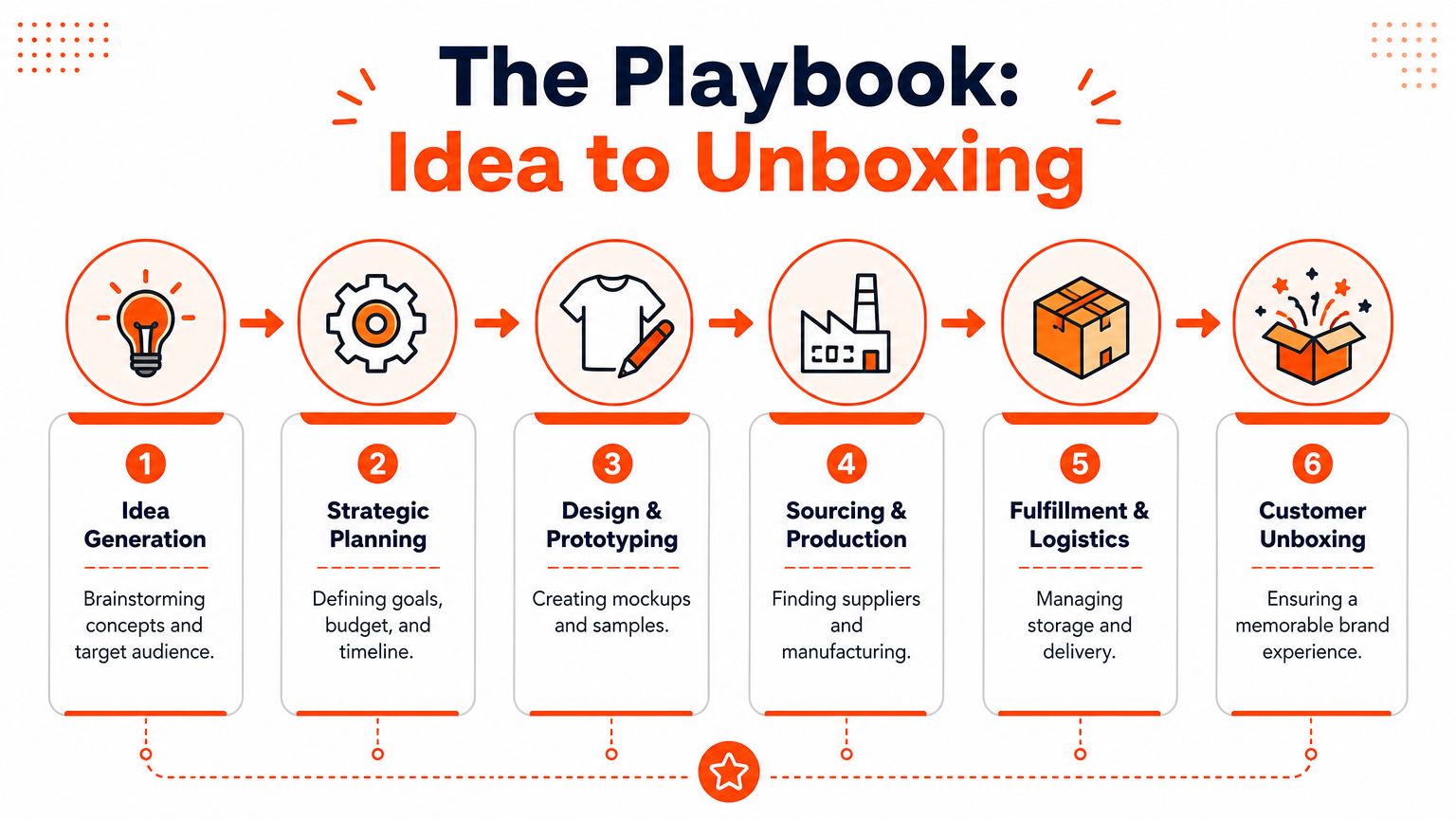
The Playbook From Idea to Unboxing
Great merch projects are usually decided before anyone opens Illustrator. The outcome gets set in the brief, in the budget, and in the shipping plan. If those three pieces are weak, the product almost always feels generic at the end.
Start with the use case
A merch program needs a job.
An onboarding kit, a conference handout, a paid community drop, and a founder gift all sit under the word merch, but they should not be built the same way. The budget tolerance changes. The expected quality level changes. The timeline changes. Even the packaging standard changes, because a mailer for remote hires is judged differently than a tee handed out at a booth.
That is the first filter. Decide what success looks like before you decide what to make.
A clean brief should answer five things:
- Who is this for
- Why are we making it
- What should the recipient feel when they open it
- What matters most: margin, speed, perceived value, or durability
- Where is it shipping
The last point gets ignored too often. Domestic fulfillment, multi-country shipping, and one-off sends to remote teams create very different cost and timing realities.
Build the brief before the artwork
A strong concept still fails if the economics are sloppy. Audience input and full cost mapping belong in the brief, not in a late-stage spreadsheet after the design is approved. Printful's merch planning guide covers the practical basics well: validate product demand early, then calculate the full stack of costs, including the item, decoration, packaging, and fulfillment, before you commit to volume.
That discipline saves a lot of avoidable pain. I have seen teams approve a hoodie because it looked right in a mockup, then realize too late that freight, size splits, and packaging killed the margin.
If apparel is part of the plan, choose the product category early enough to source properly. Comparing hoodie blanks for brand merch before artwork is finalized gives you a better read on weight, fit, and cost bands, which keeps the creative direction grounded in something you can produce.
If you're planning a community-led launch, it can help to borrow structure from crowdfunding. A lot of the same logic applies around audience priming, offer clarity, and launch pacing. This Kickstarter campaign planning guide is useful because it forces you to define the story and execution before you start selling.
Choose the right launch model
The production model sets your risk.
| Model | Best for | Tradeoff |
|---|---|---|
| Bulk production | Events, internal kits, planned inventory | Higher upfront spend and storage needs |
| Pre-order | Testing demand on a new concept | Longer wait times and tighter communication requirements |
| Print-on-demand | Early-stage programs and creator-led launches | Less control over blanks, decoration methods, and finishing details |
Bulk production gives the most control if quality is the priority. You can approve samples, dial in packaging, and hold inventory for staged sends. The downside is obvious. You are committing cash before you have proof of demand.
Pre-order works well when the concept is strong but demand is still uncertain. It reduces inventory risk, but customers will wait longer, and that means the communication has to be sharp. Set the window, explain the timeline, and leave room for production delays.
Print-on-demand is useful for testing, especially when a team wants speed and low inventory exposure. The trade-off is product consistency. You usually give up some control over garment selection, trims, packaging, and the final brand feel.
Plan the launch and the handoff
Selling the merch is only half the job. The other half is getting the item to someone in good condition, on time, with packaging that matches the promise.
A practical launch plan usually includes channel rollout, store setup, inventory logic, address collection, packaging decisions, and customer updates. Guidance from Gelato's merch launch playbook reinforces the front-end side of that process: build interest before launch, promote across multiple channels, and give the first release a clear reason to act now.
The missed step is usually operational, not creative. Teams focus on the drop and forget the unboxing. Then the item arrives late, folded badly, shipped in the wrong mailer, or stuck in customs with no tracking update. That single moment can undo weeks of brand work.
Treat unboxing as part of the product. That means deciding in advance how the item is packed, what insert is included, who handles support, and what happens when an address is wrong or a package gets held at the border. Good merch holds its value because the system around it is tight, not because the graphic looked strong on launch day.
Designing Merch That Lasts
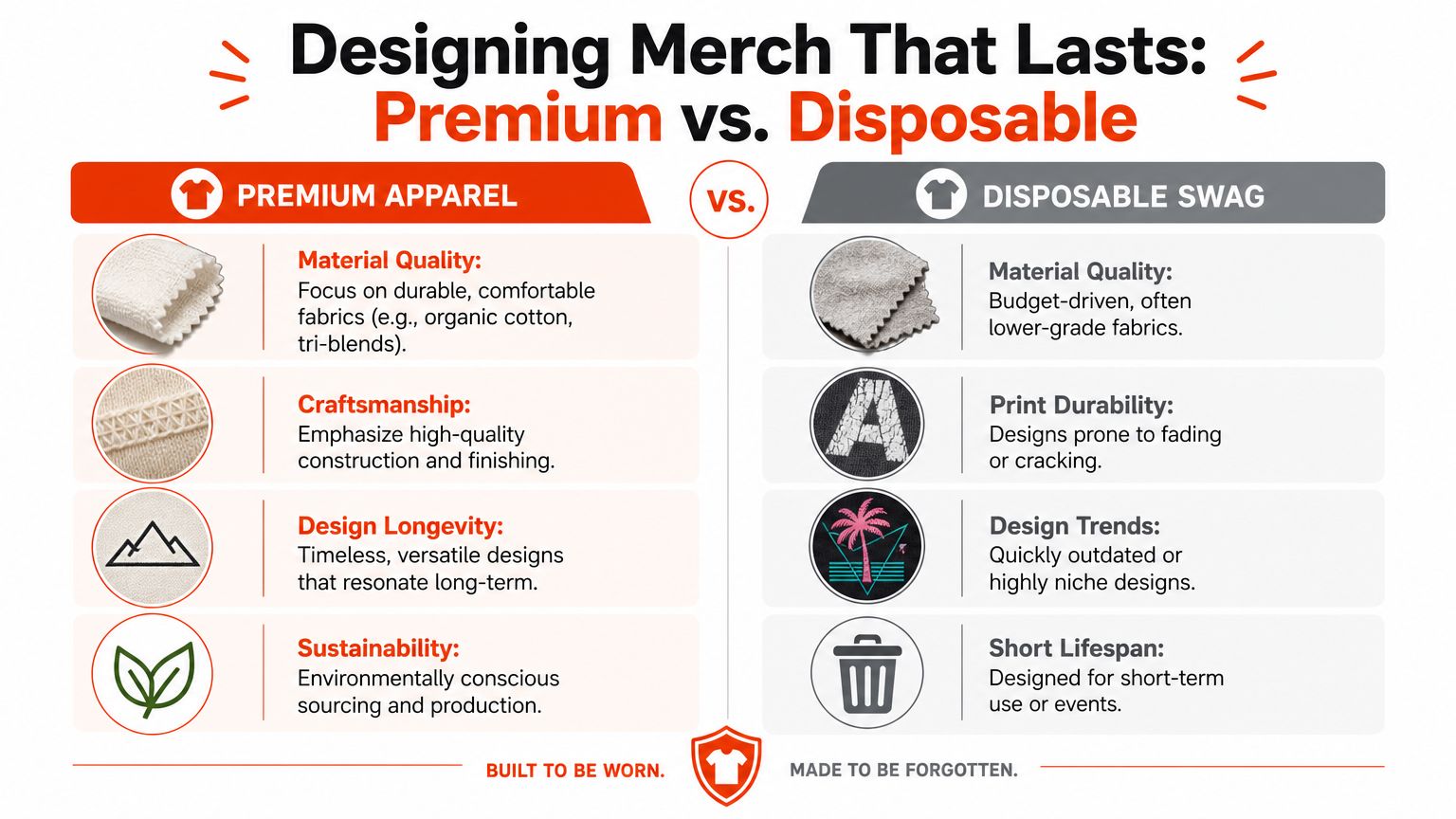
Cheap merch usually fails long before shipping. It fails at the design stage, when a team treats the graphic as the whole product and ignores the garment, the trim, the print method, and how the piece will look after ten washes.
Durable merch starts with a harder standard. The item has to wear well, age well, and still feel on-brand once the launch hype is gone.
The blank matters more than most teams think
A polished mockup can hide a weak base. The problems show up later. Twisted side seams, collars that bacon after washing, fleece that pills fast, cuffs that lose recovery.
Wix's guide to creating merch points to the basics that affect durability: fabric weight, construction, and seam quality in the underlying product choice, not just the artwork on top of it, as highlighted in Wix's guide to creating merch.
That is why premium merch decisions start with the blank.
A few useful filters:
- For tees, check hand feel and structure together. Softness helps, but too-soft jersey can collapse after repeat wear if the knit is loose.
- For hoodies, weight changes the perceived value immediately. Heavier fleece usually drapes better, feels more intentional, and survives repeat use more gracefully.
- For any item meant to stay in rotation, inspect the small parts. Ribbing, drawcords, label quality, and stitch consistency are often the difference between branded apparel and disposable promo stock.
If you're comparing options, this breakdown of best hoodie blanks is a useful starting point because it focuses on construction, not just colors and price.
Pick the decoration method on purpose
Decoration changes both look and lifespan. A clean graphic on the wrong method can crack, sit too heavy on the fabric, or fight the garment's texture.
Standard options include screen printing, vinyl, direct-to-garment, and embroidery. The right choice depends on design complexity, color count, garment type, and run size. Vistaprint's t-shirt design guide also stresses a second point that gets skipped too often. Validate with a sample before release, because production issues usually show up in placement, color, and fabric-to-print contrast, not in the mockup stage, according to Vistaprint's t-shirt design guide.
Use this decision logic:
| Method | Good fit | Watch out for |
|---|---|---|
| Screen printing | Bold graphics, solid fills, repeat runs | Setup costs hit small quantities hard |
| DTG | Detailed art, smaller runs, softer result on the right garment | Output varies with file prep and fabric surface |
| Vinyl | Names, numbers, simple elements | The finish can feel stiff or too athletic for some brands |
| Embroidery | Logos, hats, minimal marks, texture-driven branding | Dense stitching can pull lightweight fabric |
Flat embroidery suits understated branding. Puff embroidery needs a logo with enough shape to hold volume. Patches work well for tactical or heritage references. Neck labels and woven trims are small details, but they do serious work. They make the product feel specified instead of generic.
If you're still developing concepts, these apps for designing garments can help you test placement, silhouette, and composition before you lock production files.
Don't approve from a mockup alone
Mockups sell the idea. Samples expose the problems.
Instead of asking “how do I print a shirt?” ask “how do I create an item people keep?” That question changes the standard. It forces design to account for shrinkage, print hand, contrast on the actual fabric, and how the piece fits a body instead of a flat file.
A production sequence that holds up in practice looks like this:
- Choose the product first
- Build artwork to the actual print area
- Match the file setup to the decoration method
- Order a sample
- Check size set, colors, and placement before launch
That order lines up with common production guidance, including file setup, transparent backgrounds, and pre-launch checks in Tote Bag Factory's workflow overview.
Design that lasts is never just visual. It comes from choosing a garment that can carry the idea, a decoration method that suits the material, and finishing details that still look good after real use.
Sourcing and Production Checkpoints
Bad merch usually gets blamed on shipping or print quality. The actual failure happens earlier, at the point where a team approves a product without defining tolerances, materials, or finish standards.
That is why production checkpoints matter. They protect quality, but they also protect margin. Catching a fabric mismatch or bad placement in sampling is cheap. Catching it after a full run is not.
Three sourcing models and their tradeoffs
The sourcing model sets the ceiling for quality, speed, and control.
Marketplace suppliers work for simple runs and tight timelines. They are easy to access, but consistency varies between factories, blanks, and decorators. That shows up in uneven communication, substitute products, and details that look acceptable in photos but weak in hand.
Full-stack partners keep sourcing, decoration, packaging, and fulfillment under one system. That usually reduces handoff mistakes and shortens the approval chain. Banger's custom product sourcing options are one example of that model for teams that need products outside a basic catalog.
Cut-and-sew projects give the brand the most control over silhouette, fit, trims, and fabric. They also add development time, higher MOQs, and more room for expensive errors if tech packs or approvals are loose. Use this route when the garment itself is part of the brand story, not just the print.
What to check before production starts
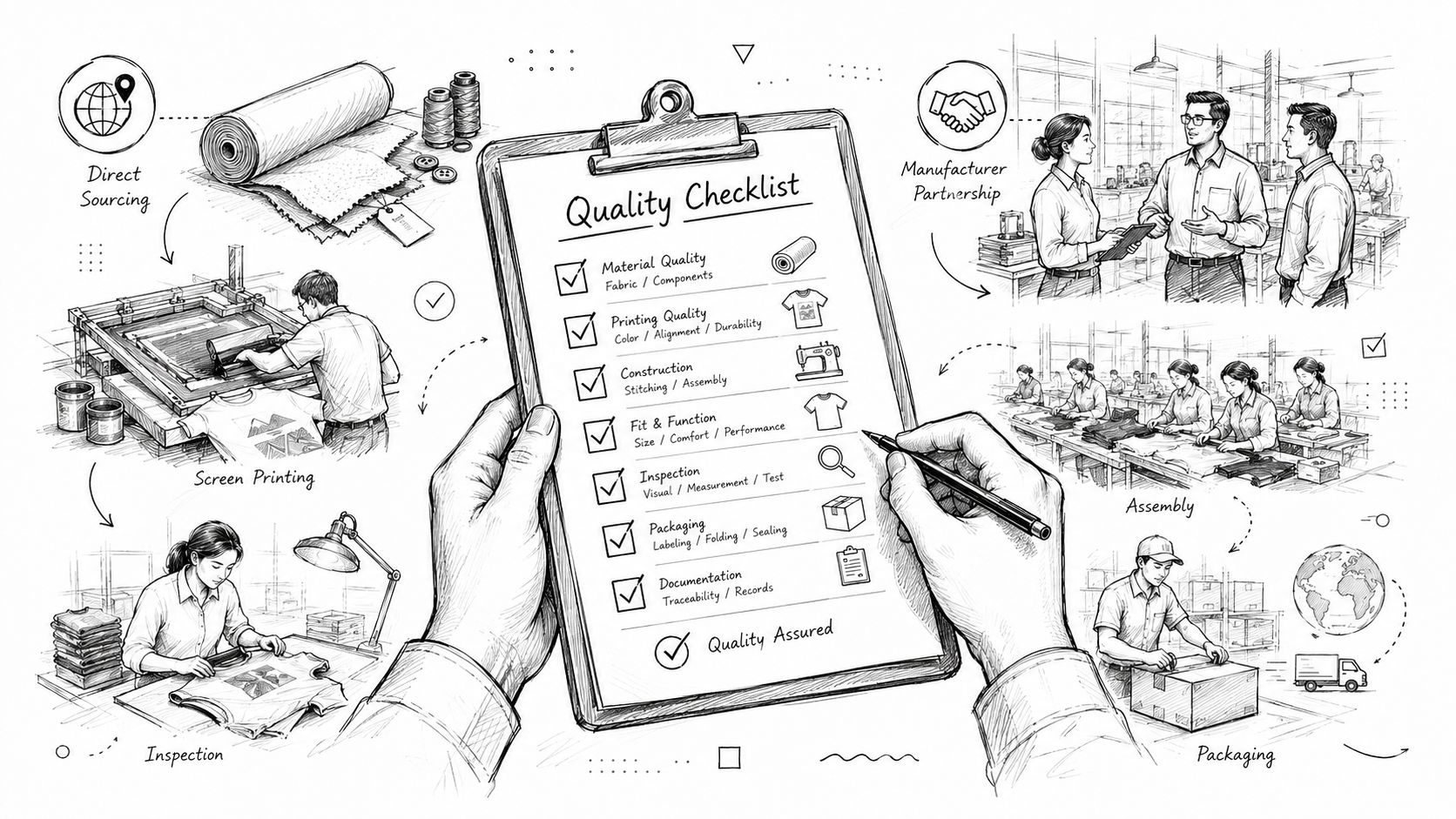
Pre-production needs a fixed review order. Product spec first. Then decoration method. Then sample approval against actual use, not against a mockup on a screen.
A strong checklist includes:
- Artwork setup: Confirm file type, scale, line weight, and print area against the exact garment and size range.
- Placement approval: Measure chest, sleeve, back, and label positions from a physical sample, not from a digital template alone.
- Color review: Compare ink, thread, or dye against the actual fabric under normal light.
- Sample testing: Wash, wear, and inspect the sample if it is apparel. Check shrinkage, print hand, puckering, and edge finish.
- Size review: Confirm the intended fit across the size set. A silhouette that works in medium can fall apart in 2XL.
- Packaging spec: Approve fold, bagging, inserts, and label format before the run starts, especially if units will ship individually.
One missed checkpoint can ripple through the whole project. A print that sits 1 inch too high, a rib that loses recovery after one wash, or a poly bag with the wrong barcode all create different kinds of failure, and all of them are avoidable.
If approval only means “the mockup looks good,” quality control has already been pushed too far downstream.
The details that make merch feel real
The gap between disposable swag and product people keep usually comes down to build quality. Fabric weight matters. Rib quality matters. So do labels, seam finishing, embroidery cleanup, and how the item is packed.
Look closely at:
- Neck labels instead of generic tear-away tags
- Hang tags when the item is part of a retail-style drop
- Rib and cuff recovery on sweatshirts and hoodies
- Inside finishing on seams and tape details
- Embroidery backing and edge cleanup
- Pack presentation so the item lands like a product, not surplus stock
These are not cosmetic extras. They affect durability, returns, and whether the piece stays in rotation after the first week. Good merch earns repeat wear because the sourcing was disciplined, the approvals were specific, and the production standard held from sample to final pack-out.
Fulfillment for Global and Remote Teams
A lot of merch projects die at the last mile. The designs are approved. Production is done. Then the order hits customs friction, address chaos, or a warehouse workflow that was never built for distributed teams.
That's not a small issue. It changes whether the program works at all.
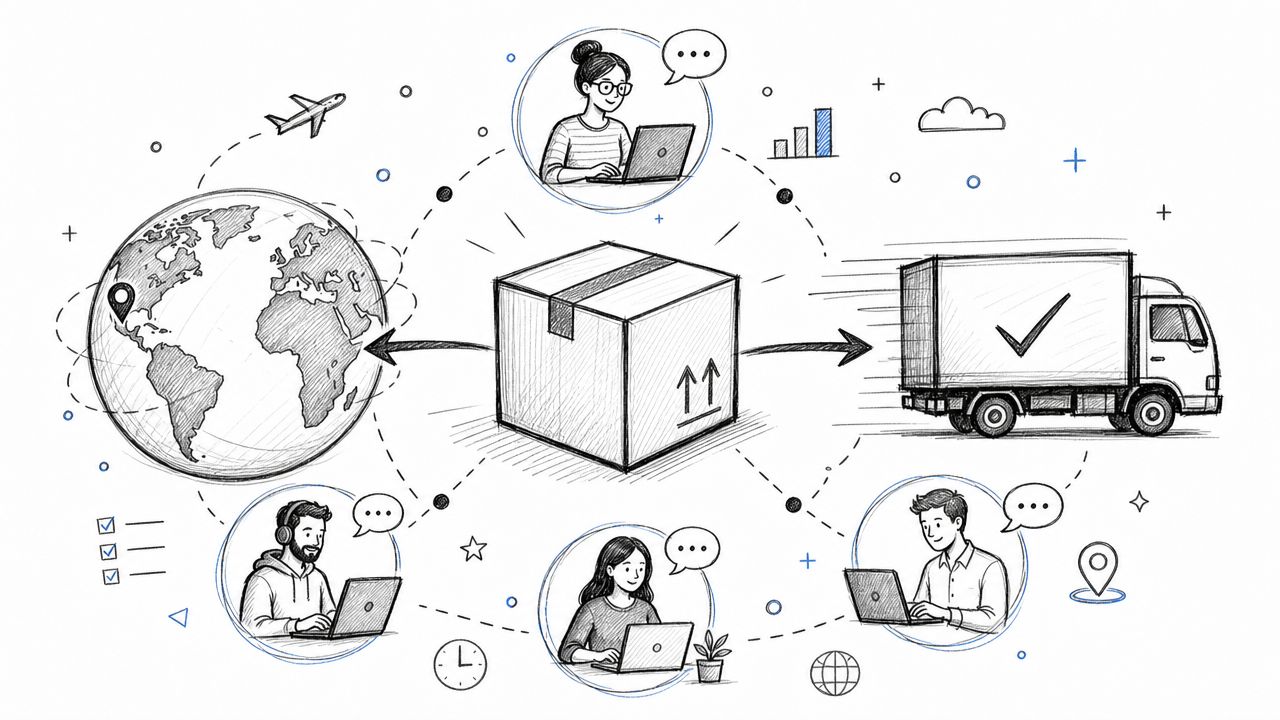
Most launch guides explain how to make merch. Fewer explain how to manage landed cost, duties, or multi-address shipping for distributed teams. That gap matters because the main failure mode is often operational, not creative, especially for onboarding kits, event gifting, and remote team drops, as noted in SS Designs' custom merchandise guide.
Shipping is part of the product
For remote teams, there's no single “ship to HQ” shortcut anymore. One launch might need boxes sent to employees across multiple countries, a speaker kit to an event city, and a few influencer mailers on top.
That changes the planning model. You need to know:
- Who receives individual shipments
- Which countries need duties planning
- Whether inventory will sit for reorders or onboarding
- How fast replacements can go out
- What packaging experience the recipient gets
If you're evaluating options, this page on worldwide custom merch shipping is useful because it frames shipping as a system problem, not an afterthought.
What good fulfillment looks like
The practical setup depends on the use case.
| Use case | Best fulfillment setup | Main risk |
|---|---|---|
| Employee onboarding | Stored inventory plus recurring single-recipient shipments | Running out of core sizes |
| Conference drops | Bulk venue shipment with extra contingency units | Venue timing and receiving issues |
| Creator store | Storefront integration plus pick-pack-ship flow | Inconsistent packaging and slower support |
| Community gifting | Multi-address batch shipping | Missing data and customs surprises |
Modern merch workflows often combine an online store, social promotion, and fulfillment integration so products can be launched and shipped without traditional retail. That direct-to-customer setup is a big reason merch now behaves more like commerce than promo.
This walkthrough gives a good feel for how fulfillment shapes the final experience:
The recipient doesn't separate product quality from delivery quality. They experience it as one thing.
Unboxing still matters
Packaging shouldn't be overdesigned for the sake of it. But it should feel intentional.
A good unboxing setup might include a branded shipper, clean folding, tissue, a size sticker that's easy to remove, and an insert that tells the recipient what the drop is and why it exists. That matters more for community kits, onboarding, and gifting than for high-volume event handouts.
The point isn't theatrics. It's coherence. If the product feels premium and the shipping experience feels generic, the whole impression drops.
Internationally, the cleanest programs are the ones that decide duties handling early, gather recipient data carefully, and design fulfillment around the actual distribution model. Teams usually don't get burned by one dramatic mistake. They get burned by ten tiny operational misses stacked together.
Common Questions About Creating Merch
How much should you budget for a premium merch drop
Start with the full system, not the unit price. Budget for garment cost, customization, packaging, sampling, shipping, and the internal time needed to manage approvals. If the merch is customer-facing or community-facing, include launch creative and support too.
The mistake is comparing blanks without comparing outcomes. A cheaper unit that gets ignored, fits badly, or arrives late isn't cheaper.
Do you need both an e-proof and a physical sample
Usually, yes.
An e-proof helps confirm artwork, placement, scale, and basic production intent. A physical sample tells you what the fabric feels like, how the print sits on the garment, whether the embroidery pulls, and how the whole thing reads in person. If the order matters, don't rely on one without the other.
For a more technical breakdown, this guide to merch printing techniques helps clarify what each method can and can't do.
How do you handle sizing for a distributed team
Use a size chart tied to the exact garment, not a generic S to XL assumption. If the fit is oversized or fashion-forward, say that clearly. If your recipients span different regions, note any fit differences that might matter culturally or practically.
The cleanest approach is to let recipients select size through a form tied to the exact product. That cuts down on bad assumptions and replacement requests.
What hidden costs catch teams off guard
A few show up constantly:
- Sampling rounds when the first version isn't right
- Packaging upgrades that get added late
- Address errors on multi-recipient shipments
- Customs and duties that weren't planned up front
- Storage and re-shipping for rolling programs
- Reworks caused by weak approvals
What's the biggest mistake teams make when learning how to create merchandise
They optimize for speed before they define quality.
If you rush product choice, decoration method, or fulfillment setup, you usually end up paying for the decision later. The fastest path to good merch is a tighter brief, a stronger sample process, and fewer assumptions.
Most merch gets made to be distributed. The better version gets made to be kept. If you want help building custom merch with stronger garments, better finishing, and worldwide fulfillment built for internet-native teams, explore Banger or request a quote.