Choose Company Tote Bags People Love: 2026 Guide
Most advice on company tote bags starts in the wrong place. It starts with unit cost, bulk discounts, and whatever bag is cheap enough to hand out without anyone asking questions.
That's how you end up with the usual landfill-core tote. Thin fabric. Bad handles. A logo slapped on too large. No one wants to carry it, so no one does. The bag leaves the event, then disappears into a closet, a car trunk, or the trash.
A better way to think about company tote bags is as a brand object. Not a throwaway. Not filler for an onboarding box. A tote sits in public. It gets photographed. It gets reused. It becomes part of how people read your brand in the wild. That matters more now because tote bags are part of a growing category, with one market report valuing the global market at USD 2.75 billion in 2024 and projecting USD 3.94 billion by 2032 at a 4.6% CAGR according to Data Bridge's tote bags market report.
If you run a startup, creator brand, fintech, or community-led company, this is the useful frame: the tote isn't the cheap extra. It's often the most visible physical thing your brand makes.
Table of Contents
- Are company tote bags still worth it for startups?
- What material is safest if I want a premium look?
- Should the logo be big?
- Are recycled or organic totes automatically the most sustainable choice?
- What should I ask for before approving production?
- Are print-on-demand totes a good idea?
Most Company Totes Are Forgettable
Most company totes fail for one reason. They're treated like surplus packaging with a logo on top.
The usual logic sounds responsible. Keep the spend low, print the logo big, order enough for everyone, move on. But cheap merch has a hidden cost. If the bag feels disposable, your brand feels disposable with it.
The tote bag has never been just a random promo format. The modern version is widely traced back to L.L.Bean's 1944 Bean's Ice Carrier, later renamed the Boat and Tote, and by the 1980s businesses had adopted tote bags as a low-cost marketing tool because logo printing was “cheap and easy,” as outlined in this history of the tote bag. That origin story still shapes the category, but it also traps a lot of teams in an outdated mindset.
Cheap is visible in all the wrong ways
A bad tote tells on itself fast:
- Weak fabric: It collapses when empty and wrinkles like packaging.
- Flimsy handles: The stress points give up first.
- Oversized branding: It reads like ad inventory, not product design.
- No point of view: It could belong to any company at any conference.
A tote only works as merch if the recipient would've considered carrying it even without the event attached to it.
That's the test often skipped.
If you're building welcome kits, conference merch, or founder gifts, treat the tote like any other customer-facing asset. The same brands that obsess over pitch decks and landing pages shouldn't ship dead-feeling physical product. If you're thinking about employee kits specifically, this also connects closely to how teams build better welcome gifts for new employees.
The tote as culture object
Good company tote bags do three things at once. They carry stuff, they carry brand, and they carry taste.
That last one is where most supplier content falls apart. They talk about print area and minimums, but not taste. A strong tote feels closer to a bookstore bag, museum shop piece, niche fashion giveaway, or well-made team drop. It belongs in someone's weekly rotation.
That's the shift. Stop buying a bag to distribute. Start designing a bag worth keeping.
Choosing Your Material and Build Quality
Material is the whole game. Before color, logo size, or print method, the base bag decides whether your tote reads as premium, utilitarian, eco-coded, or painfully cheap.
A lot of teams choose with their eyes only. That's a mistake. For production planning, the key variable is durability-to-reuse ratio, and the common failure mode is picking a tote that looks good in a mockup but breaks down early in real use. Guidance in Market Data Forecast's tote bags market coverage points toward higher-density canvas and reinforced seams as the specs most likely to preserve perceived quality over repeated carry cycles.
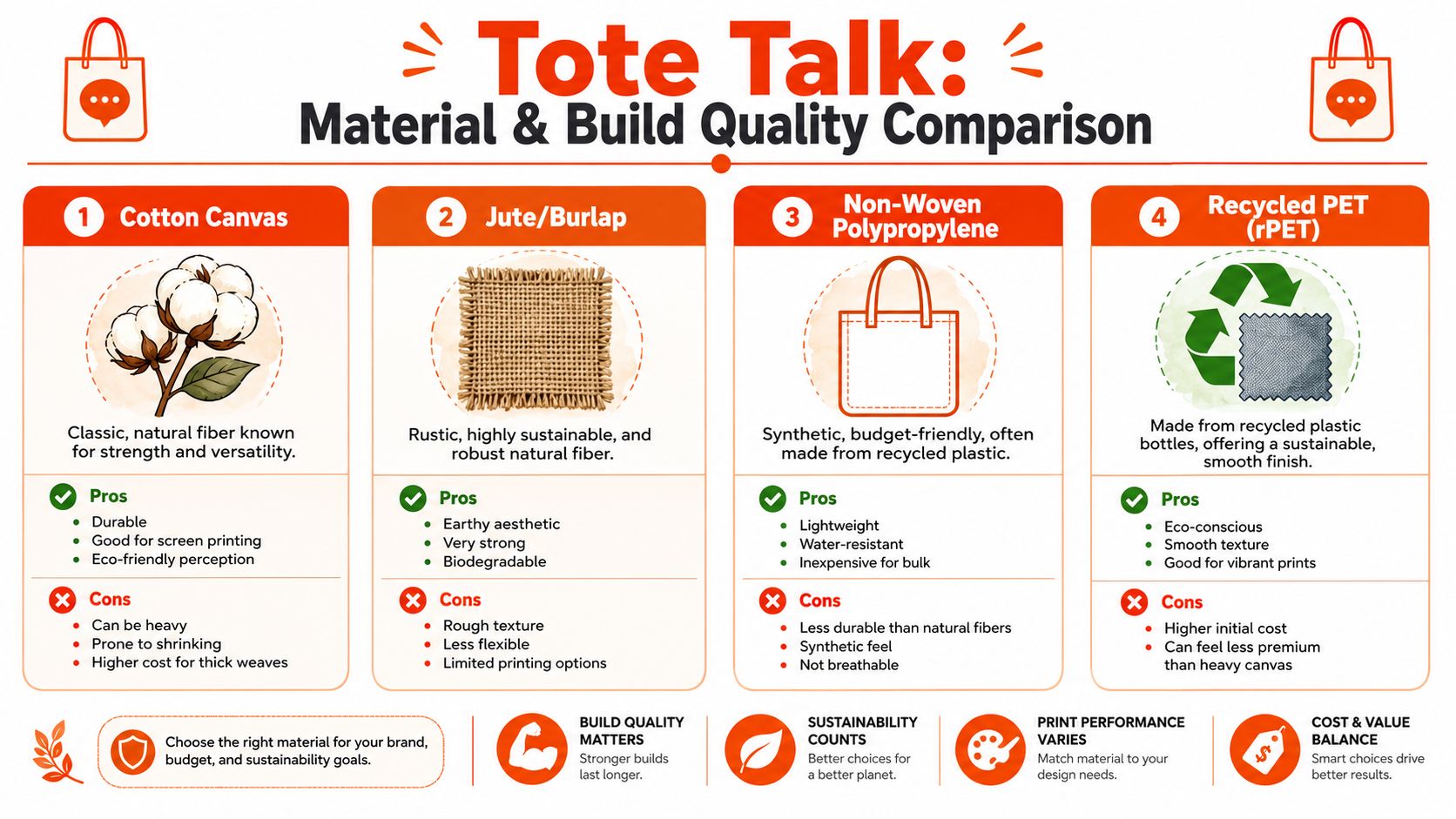
Material choice changes the signal
The material doesn't just affect performance. It changes what your brand says.
| Material | Brand Vibe | Best For | Durability |
|---|---|---|---|
| Cotton canvas | Classic, elevated, design-aware | Team drops, gifting, premium events | High when built well |
| Organic cotton | Clean, values-led, softer brand signal | Sustainability-focused teams, onboarding | Moderate to high depending on weave |
| Recycled PET | Tech-forward, modern, utility-driven | Conferences, global shipping, smoother print-heavy designs | Moderate to high |
| Jute | Rustic, earthy, market-style | Retail activations, food and lifestyle brands | Strong structure, rougher feel |
| Non-woven polypropylene | Budget-conscious, practical | High-volume giveaways where broad reach matters | Moderate |
Canvas is the safe premium choice. It has structure, takes print well, and ages in a way people read as quality. If your brand sits anywhere near design, fashion, SaaS with taste, or creator culture, canvas usually gives you the strongest floor.
Organic cotton can work, but it's easy to under-spec. If the weave is too light, the bag feels limp. The sustainability story doesn't save the product if it performs badly. If your team is evaluating broader eco merch options, this guide to environmentally friendly promotional items is a useful companion read.
What to inspect before you approve
The important details are boring until they fail. Then they're all you can see.
Check these before production approval:
- Handle attachment: Cross-stitching or boxed reinforcement usually feels more trustworthy than a minimal single-stitch finish.
- Seam consistency: Uneven seams make even a good fabric look low-end.
- Fabric density: The bag should hold shape without feeling like cardboard.
- Edge finish: Loose threads kill perceived quality instantly.
- Print surface: Some textures enhance the object. Others fight your artwork.
Practical rule: If the bag only looks good laid flat on a product page, it's not a good tote.
There's also a brand trade-off here. Heavy canvas feels great, but it's not automatically the smartest choice for every use case. If you're shipping internationally, building a broad event giveaway, or trying to hit a cleaner utility look, recycled PET or lighter constructions can make more sense.
Good buyers don't ask only “What's the nicest fabric?” They ask, “What construction makes sense for how this bag will function in practice?”
Nailing the Branding and Customization
A strong blank tote can still die in customization. Most of the damage happens when teams confuse visibility with taste.
Big logo. Front and center. Max print area. One loud brand color. That approach is easy to approve because everyone can see it in the mockup. It's also how you get a tote that feels like conference collateral instead of product.
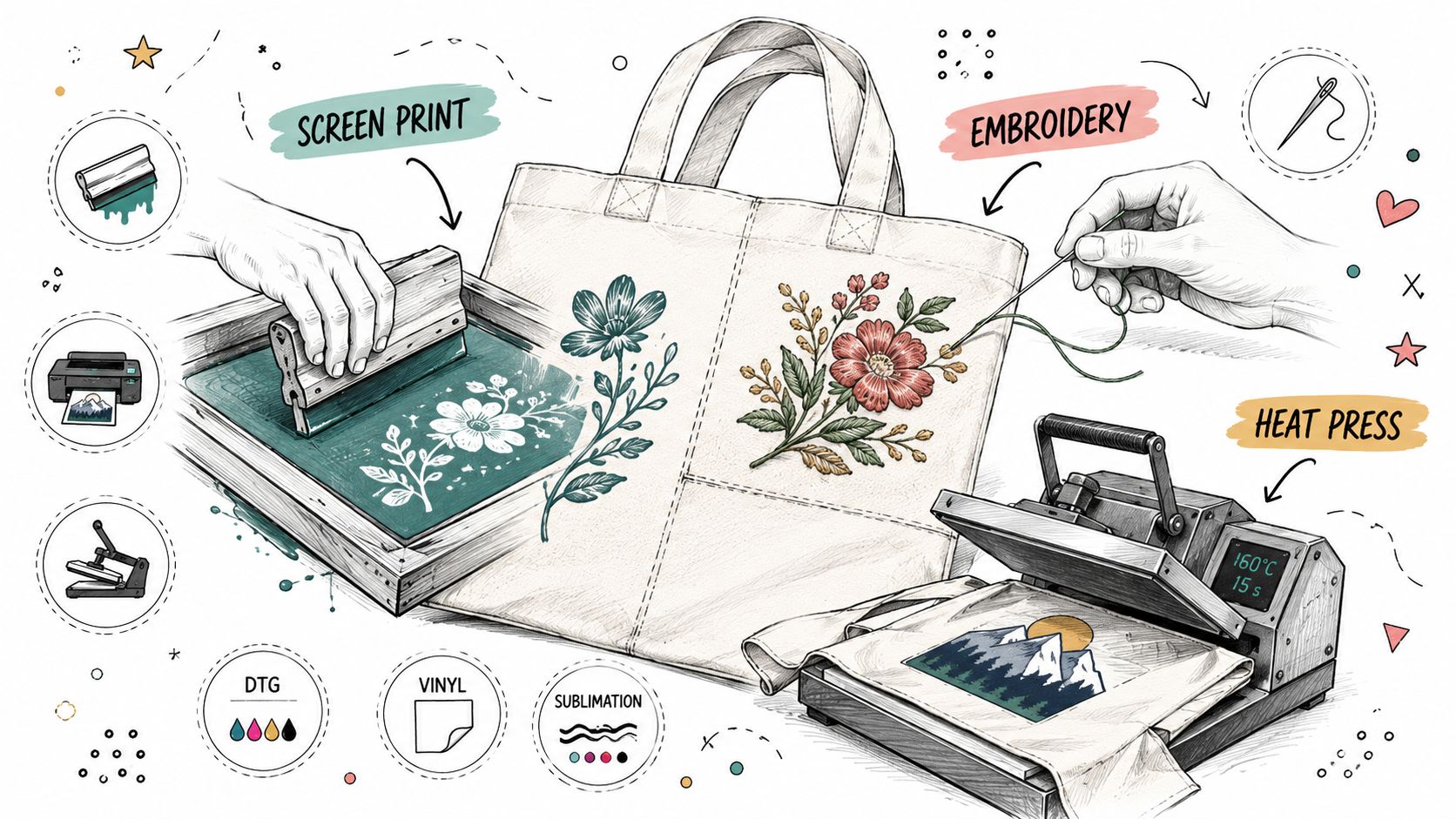
Choose the decoration method for the feeling
Different decoration methods create different emotional signals. This isn't only about artwork compatibility. It's about what kind of object you're trying to make.
Screen printing works when you want clarity and confidence. It's ideal for bold graphics, wordmarks, and artwork that should feel intentional from a distance. On canvas, a well-placed one-color or two-color print can feel very editorial.
Embroidery changes the tone immediately. It feels quieter, more tactile, more considered. For a lot of company tote bags, a small embroidered mark beats a giant chest-beating front print every time.
DTG or transfer-based methods fit more detailed or color-heavy artwork, especially when the art matters more than the logo. This can work for creator merch, illustration-led drops, or event art where the bag should feel collectible.
A useful way to decide is to start with logo architecture, not decoration. If you're choosing between a symbol and a wordmark, DesignGuru's logo design insights are worth reading before you lock placement.
Smaller branding usually signals more confidence. If your tote needs a giant logo to feel “branded enough,” the design probably isn't doing enough work.
Small details make the tote feel finished
The best branded totes don't stop at the front panel.
Use finishing details to make the bag feel authored:
- Inside label or woven tag: Great for brands that want subtle identity.
- Contrast thread or handle color: Low-key way to carry brand codes.
- Interior print: Strong move for campaigns, launches, and art-led merch.
- Hang tags or inserts: Useful when the tote is part of a gift set or retail-style drop.
A lot of teams also overestimate how much they can judge from a flat digital mockup. Ask for realistic proofs, material swatches, and placement guidance. If you need support on that part, this page on custom merch design is a practical reference.
Here's a quick visual breakdown of common print approaches and where they fit in the process:
The cleanest company tote bags usually follow one of two directions. Minimal logo, premium execution. Or a strong graphic concept that happens to include the brand. The dead zone is the middle. Too branded to feel stylish, too bland to feel designed.
Planning Your Drop Quantity Budget and Timeline
A tote order falls apart fast when the brief treats every bag like a commodity. Event handouts, employee welcome kits, investor gifts, and limited merch drops all ask for different quantity logic. The bag may be the same format, but the role is not.
That distinction matters because quantity sets the tone of the whole project. If you overbuy, the tote turns into dead stock in a storage room. If you underbuy, a strong design disappears before it has a chance to circulate. Good planning protects budget, but it also protects brand perception.
Match quantity to the job the tote has to do
Start with distribution reality.
For event totes, estimate based on who is likely to keep carrying it after the event, not total attendance. For onboarding, build around monthly hiring volume so fabric, print, and packaging stay consistent over time. For community or retail-style drops, a tighter run can make the piece feel deliberate, provided the design is strong enough to deserve that scarcity.
A practical framework:
- Wide distribution: Keep the build clean, useful, and cost-aware.
- Selective gifting: Spend more on fabric weight, print finish, and details people notice in hand.
- Retail-style drop: Cost it like a product, including packaging, storage, and sell-through risk.
Budget follows the same logic. Material, print method, size, inserts, freight, and fulfillment all shape unit cost. Isolating one variable usually creates a worse bag. Premium embroidery on a weak base fabric still reads cheap. Strong canvas with sloppy registration still feels off.
If your team needs a clearer view of how those decisions change cost, this breakdown of custom merch pricing factors is useful early in the process.
Build the calendar from the delivery date backward
Delays usually start in approvals, not at the sewing line. Unclear artwork, shifting quantities, and late sign-off burn more time than production teams do.
The sequence is straightforward. Spec the bag. Approve the artwork. Confirm samples or proofs. Then move into cutting, sewing, printing, finishing, packing, and shipping. Once fabric is cut or decoration is underway, revisions stop being creative decisions and start becoming write-offs.
Use this order:
- Lock the use case: giveaway, onboarding, gifting, or resale
- Approve the spec: fabric, dimensions, gusset, handle drop, print method, and packaging
- Review proofs against the actual material: color and scale change on actual canvas
- Add buffer for freight and fulfillment: shipping problems are common, especially when you also need to protect products with packaging
One missed approval can throw off the whole run.
The sharpest merch teams treat timeline planning as part of design direction. They know a tote only feels premium if the process has enough room for corrections, QC, and packing that matches the object. Rush the schedule and the bag stops feeling like a brand asset. It starts feeling like inventory.
Designing the Unboxing Experience
A tote can be well-made and still arrive feeling flat. That usually happens when the packaging says “bulk shipment” while the product tries to say “considered brand object.”
The unboxing matters because it controls first touch. Before someone judges the handle, fabric, or print quality, they judge the context you wrapped around it. For distributed teams, creator sends, and event gifting, that context does real work.
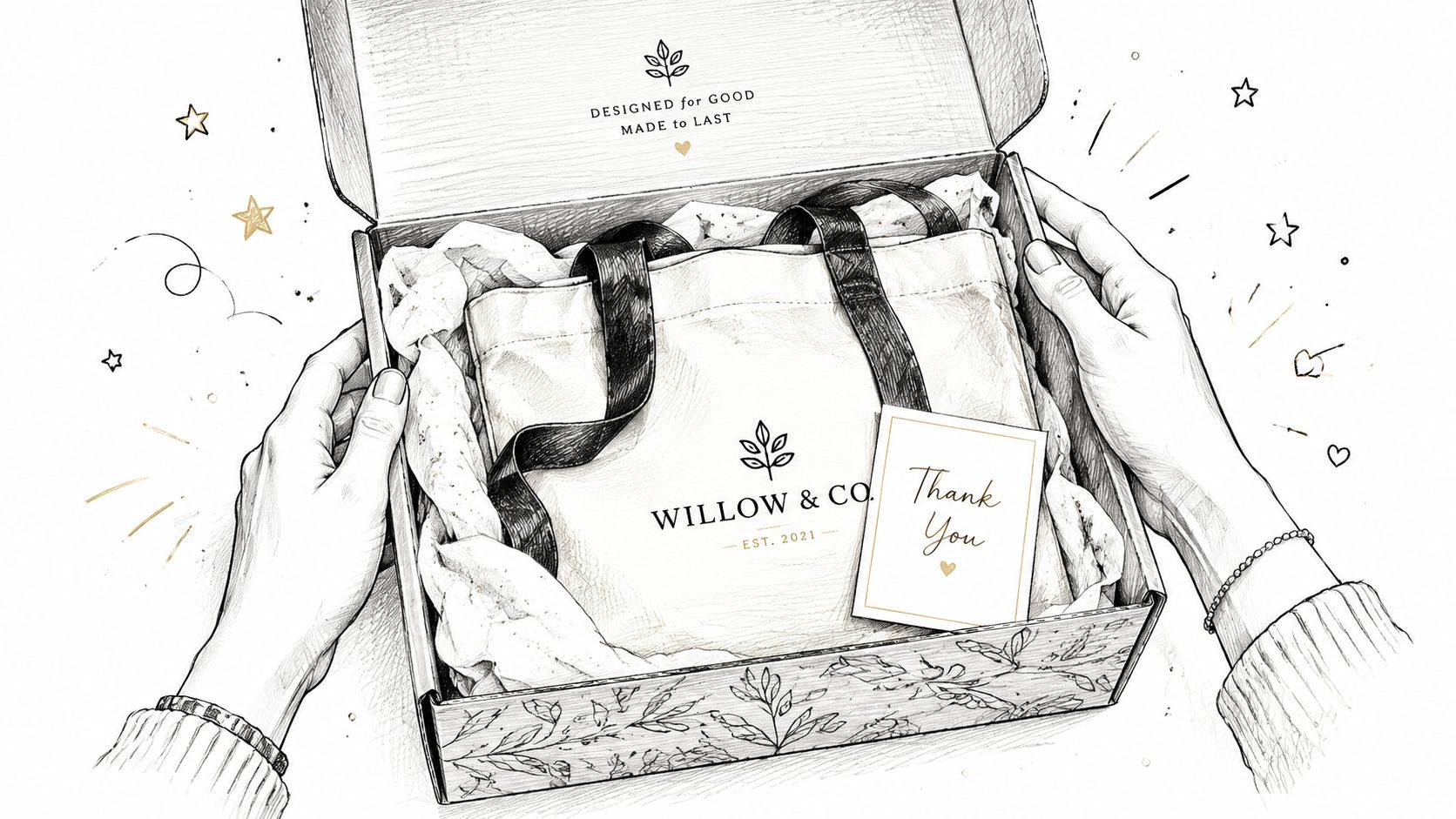
Presentation changes perceived value
The same tote lands differently in a plain poly mailer versus a branded box with tissue, insert, and clean fold.
That doesn't mean every order needs elaborate packaging. It means the packaging should match the role of the tote. A giveaway tote can stay lean. A press send, employee welcome box, or premium client gift should feel assembled by someone who cared.
If you're shipping at scale, packaging also has a functional job. It needs to protect products with packaging while still holding onto the visual language of the brand.
What actually belongs in the box
Keep it intentional. More pieces doesn't automatically mean better.
A strong tote unboxing usually includes some mix of the following:
- Branded outer packaging: Box or shipper that doesn't feel generic.
- Tissue or sleeve: Helps the product arrive as product, not inventory.
- Card or insert: Short note, campaign context, or care guidance.
- Sticker or small extra: Works when it supports the world of the brand.
- Fold discipline: Sounds minor. It isn't.
What you should avoid is random filler. If the extras feel disconnected, the whole experience starts reading like leftover event stock.
There's also a practical side. If your tote includes embroidery, heavier canvas, or premium print finishes, packaging should protect those details from creasing and abrasion in transit. Good presentation isn't decoration layered on top. It's part of the product system.
A lot of brands spend real effort getting the tote design right, then hand fulfillment to someone who packs it like office supplies. That gap is where perceived value collapses.
How to Choose a Merch Production Partner
A tote supplier can print your logo on a bag. A production partner can help you avoid making a mediocre object in the first place. Those are different things.
The cleanest way to separate one from the other is to look at process. A professional tote-bag workflow includes template creation, fabric cutting, stitching, accessory attachment, printing, and final quality control, and buyers should insist on a detailed tech pack plus rigorous QC to catch defects like stitching faults or misaligned prints, as outlined in Totebagfactory's manufacturing process guide.
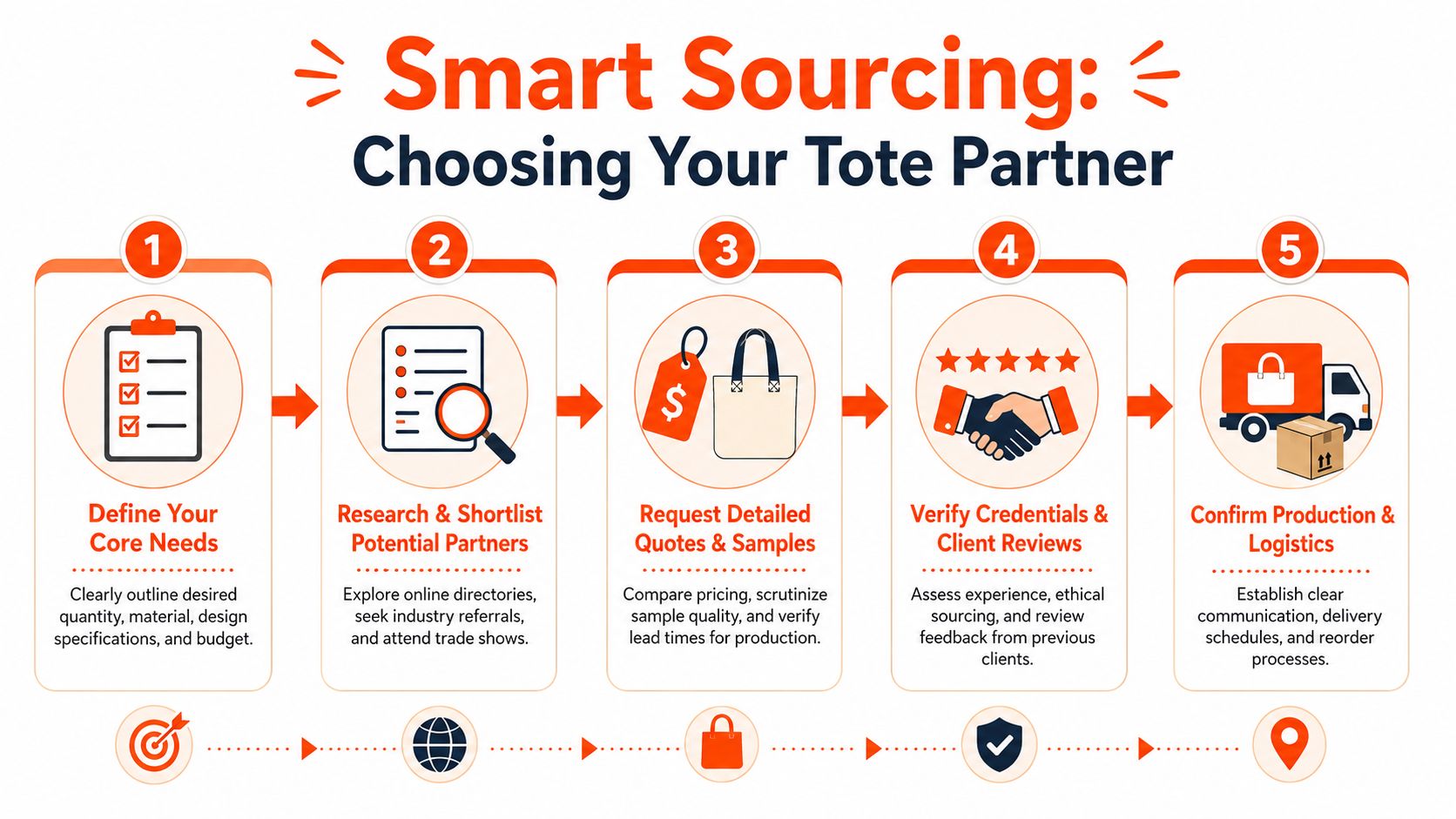
What separates a partner from a swag vendor
Look for evidence that the supplier understands product, not just print.
A real partner should be able to discuss:
- Construction choices: Not just available colors, but seams, handle attachment, and fabric behavior.
- Sampling discipline: They should know how to validate placement and finish before full production.
- Quality control: Ask what gets rejected and when.
- Fulfillment logic: Especially if you're shipping to multiple offices or recipients.
Full-stack merch teams can be highly effective. For example, Banger's merch fulfillment services cover production and global distribution, which is useful for brands shipping company tote bags to remote teams, events, or multi-address campaigns.
Questions worth asking before you sign off
Don't ask only for price. Ask for operating clarity.
Use questions like these:
- Can you show the tech pack? If they can't define panel size, handle length, seam allowance, and print placement clearly, expect confusion later.
- How do you handle proofs? You want realistic approval assets, not just a polished mockup.
- What defects trigger rejection? Stitching faults and print misalignment should not be shrugged off as normal.
- Who manages shipping and repacks? Especially important for kits, gifting, and international sends.
If a vendor talks more about “exposure” than construction, keep looking.
The best partner usually isn't the one with the biggest product catalog. It's the one that can hold design intent together from spec to delivery.
Frequently Asked Questions
Are company tote bags still worth it for startups?
Yes, if the tote is useful enough to stay in circulation. The bad version is forgettable event filler. The good version becomes part of someone's daily carry, which gives your brand repeated visibility without feeling like an ad.
What material is safest if I want a premium look?
Heavy canvas is usually the cleanest bet for a premium feel. It has structure, holds shape better, and tends to age well. But the right answer still depends on use case. A lighter or recycled option can make more sense for broad distribution or international shipping.
Should the logo be big?
Usually no. Most oversized logos make company tote bags feel cheaper, not stronger. Smaller placement, better artwork, and stronger material choices tend to create a better object.
Are recycled or organic totes automatically the most sustainable choice?
No. The safer approach is substantiation, not vibes. Verified data in the brief notes that a 2024 European Commission sweep found that more than half of reviewed environmental claims were vague, misleading, or unsupported. That's why buyers should ask for proof around fiber content, recycled-content claims, origin records, and related documentation rather than relying on broad eco language.
What should I ask for before approving production?
Ask for the complete spec. That includes dimensions, handle length, material confirmation, print placement, decoration method, and a proof that reflects the actual bag. If the order is meaningful, ask how QC is handled before packaging.
Are print-on-demand totes a good idea?
They can work for low-risk testing. They're weaker when you care about fabric quality, finishing, packaging, and overall brand feel. If the tote is supposed to act like merch with cultural value, not just a product listing, more production control usually helps.
If you want company tote bags that feel like product instead of promo, Banger can help you spec, design, produce, and ship them with premium customization, low minimums, and worldwide fulfillment. Explore the catalog, request a quote, and build merch people keep.